Agricultural and Biological Sciences

17 open-access papers in Agricultural and Biological Sciences, free to watch.

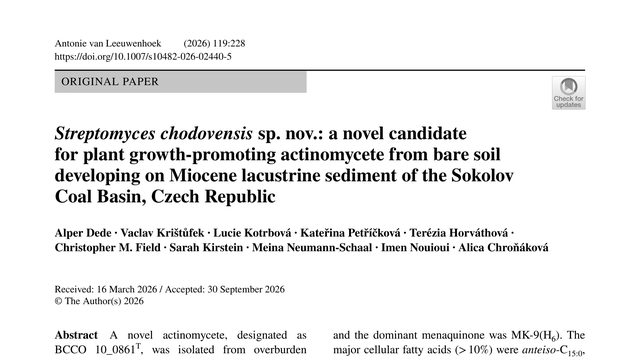
Streptomyces chodovensis sp. nov.: a novel candidate for plant growth-promoting actinomycete from bare soil developing on Miocene lacustrine sediment of the Sokolov Coal Basin, Czech Republic 4:09

Streptomyces chodovensis sp. nov.: a novel candidate for plant growth-promoting actinomycete from bare soil developing on Miocene lacustrine sediment of the Sokolov Coal Basin, Czech Republic

A place stripped bare by coal mining has yielded a bacterium that may help plants grow. It is not just another soil microbe: its traits suggest a possible ally for rebuilding damaged land.

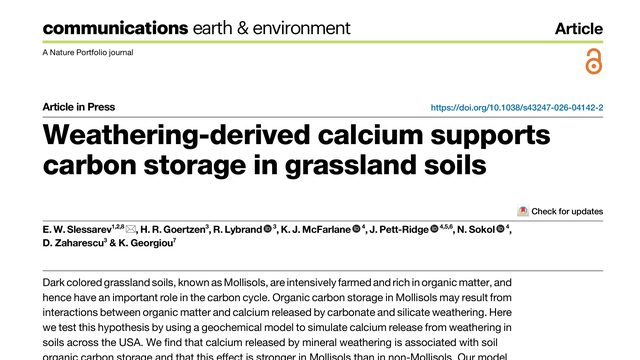
Weathering-derived calcium supports carbon storage in grassland soils 4:39

Weathering-derived calcium supports carbon storage in grassland soils

Some of the world’s best farmland may hold onto carbon not just because of its grasses, but because minerals slowly release calcium into the soil. Farming may have dramatically changed that hidden support system.

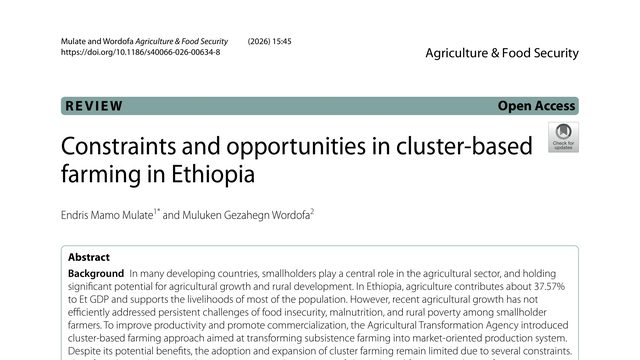
Constraints and opportunities in cluster-based farming in Ethiopia 4:01

Constraints and opportunities in cluster-based farming in Ethiopia

What if neighboring farmers could gain more power simply by farming side by side? In Ethiopia, bringing small plots together promises better harvests and stronger markets, but cooperation itself may be the hardest crop to grow.

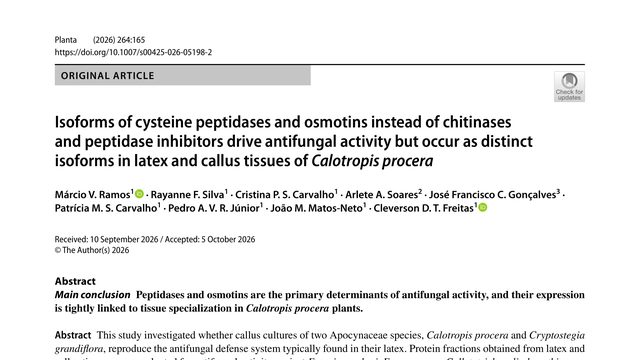
Isoforms of cysteine peptidases and osmotins instead of chitinases and peptidase inhibitors drive antifungal activity but occur as distinct isoforms in latex and callus tissues of Calotropis procera 3:31

Isoforms of cysteine peptidases and osmotins instead of chitinases and peptidase inhibitors drive antifungal activity but occur as distinct isoforms in latex and callus tissues of Calotropis procera

A plant's wound-sealing liquid can fight fungi, but when researchers grew plant tissue outside that liquid, the defense survived in one species and vanished in another. The surprise was not just which proteins worked, but where their versions came from.

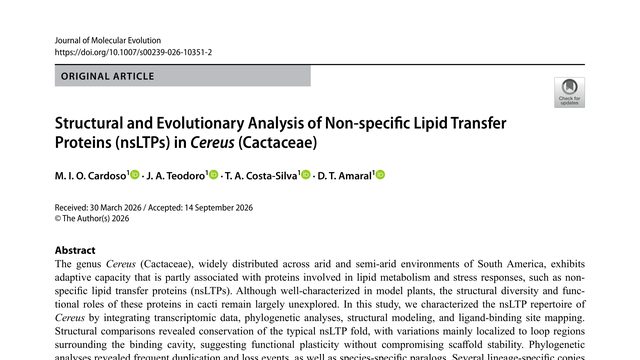
Structural and Evolutionary Analysis of Non-specific Lipid Transfer Proteins (nsLTPs) in Cereus (Cactaceae) 3:22

Structural and Evolutionary Analysis of Non-specific Lipid Transfer Proteins (nsLTPs) in Cereus (Cactaceae)

A cactus survives harsh heat and drought with proteins that may act like tiny gates: their main structure stays stable, while the entrances subtly change what can pass through.

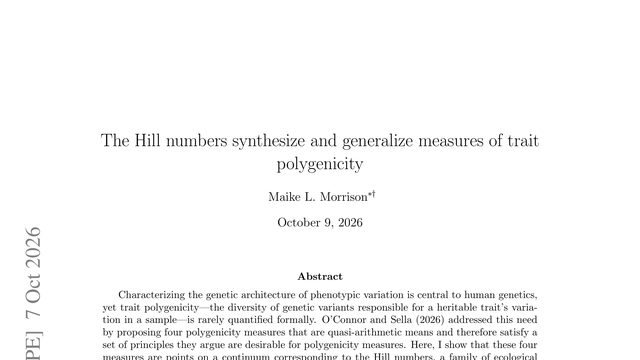
The Hill numbers synthesize and generalize measures of trait polygenicity 3:36

The Hill numbers synthesize and generalize measures of trait polygenicity

A trait can be shaped by many genetic variants, but counting them is not enough: tiny contributors and powerful ones should not necessarily count the same. This paper turns that problem into one adjustable picture.

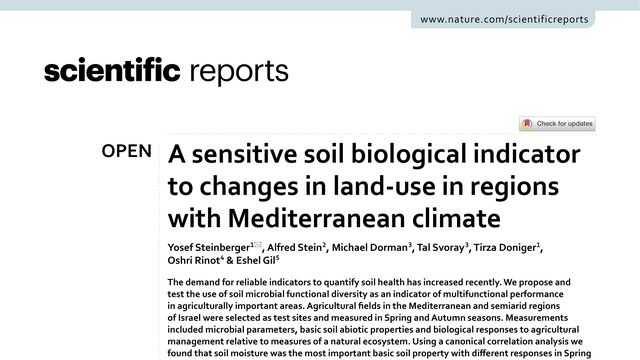
A sensitive soil biological indicator to changes in land-use in regions with Mediterranean climate 2:52

A sensitive soil biological indicator to changes in land-use in regions with Mediterranean climate

Healthy-looking soil can hide important damage when the weather is kind. This study finds that the clearest warning may appear when soil faces its hardest season: a dry spell.

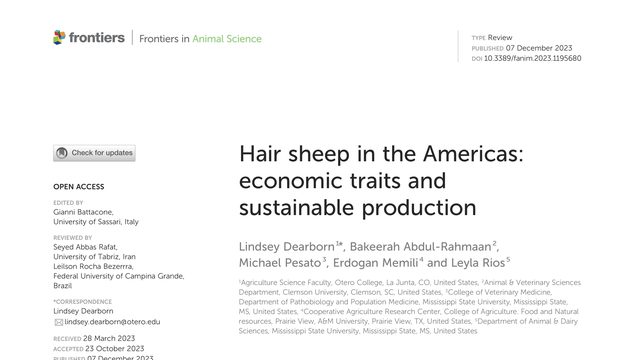
Hair sheep in the Americas: economic traits and sustainable production 3:52

Hair sheep in the Americas: economic traits and sustainable production

What if the best sheep for a warming world are not the ones with the thickest wool? Hair sheep can keep producing in heat, tolerate rough feed, and resist the parasites that destroy ordinary farm output.

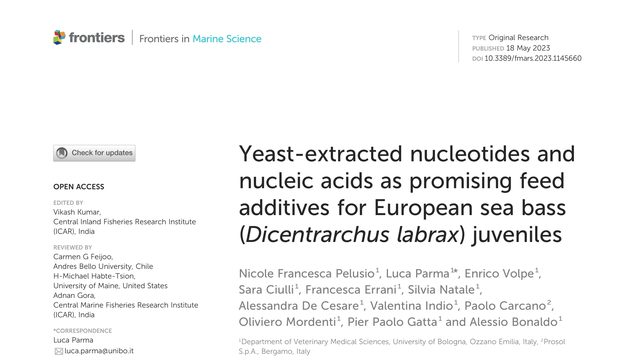
Yeast-extracted nucleotides and nucleic acids as promising feed additives for European sea bass (Dicentrarchus labrax) juveniles 4:51

Yeast-extracted nucleotides and nucleic acids as promising feed additives for European sea bass (Dicentrarchus labrax) juveniles

Fish farming depends heavily on fishmeal, but fishmeal is costly and difficult to sustain. This study asks whether a small yeast-derived food additive can help sea bass grow well on diets containing less of it.

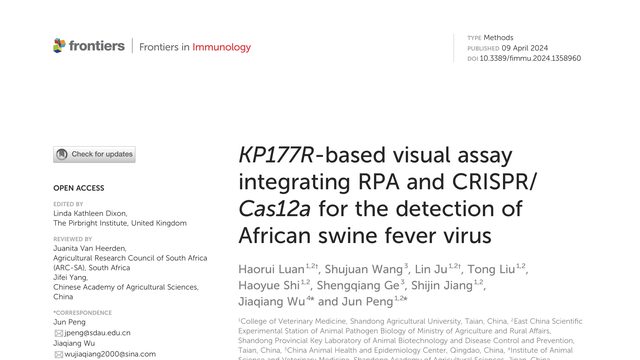
KP177R-based visual assay integrating RPA and CRISPR/Cas12a for the detection of African swine fever virus 3:42

KP177R-based visual assay integrating RPA and CRISPR/Cas12a for the detection of African swine fever virus

African swine fever can devastate pig herds, yet the crucial first step is simply knowing where the virus is. This study turns that search into a visible signal that can be read outside a full laboratory.

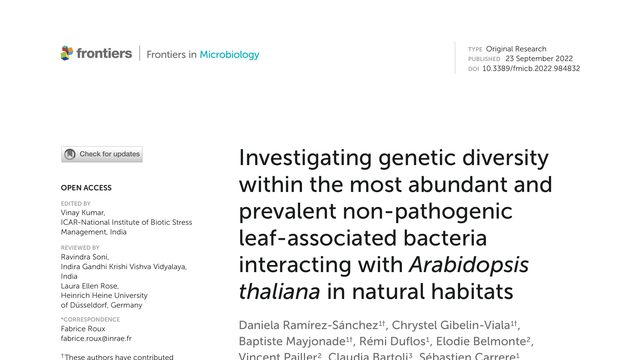
Investigating genetic diversity within the most abundant and prevalent non-pathogenic leaf-associated bacteria interacting with Arabidopsis thaliana in natural habitats 5:01

Investigating genetic diversity within the most abundant and prevalent non-pathogenic leaf-associated bacteria interacting with Arabidopsis thaliana in natural habitats

Two bacteria can be grouped as the same kind, yet carry different genes and make the same plant grow differently. That hidden variation may matter for healthier, more sustainable crops.

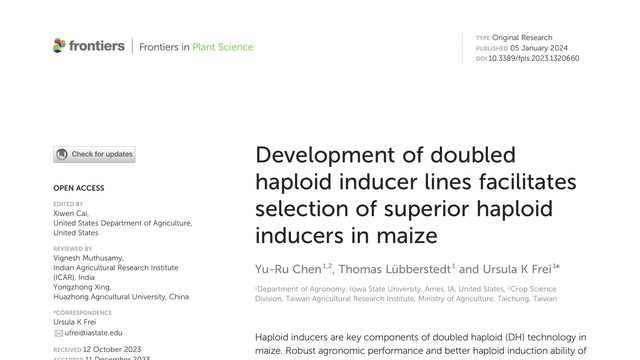
Development of doubled haploid inducer lines facilitates selection of superior haploid inducers in maize 3:05

Development of doubled haploid inducer lines facilitates selection of superior haploid inducers in maize

What if the plants used to create better maize could themselves be rebuilt from scratch? This study turns the breeding tool into a breeding target, and finds offspring that outperform their parents.