Yeast-extracted nucleotides and nucleic acids as promising feed additives for European sea bass (Dicentrarchus labrax) juveniles
Overview4:51CCAI
paperi.ai
0:00 / 0:00
Nicole Francesca Pelusio, Luca Parma, Enrico Volpe, Sara Ciulli, Francesca Errani, Silvia Natale, Alessandra De Cesare, Valentina Indio, Paolo Carcano, Oliviero Mordenti, Pier Paolo Gatta, Alessio Bonaldo
Fish farming depends heavily on fishmeal, but fishmeal is costly and difficult to sustain. This study asks whether a small yeast-derived food additive can help sea bass grow well on diets containing less of it.
Fish farming depends heavily on fishmeal, but fishmeal is costly and difficult to sustain. This study asks whether a small yeast-derived food additive can help sea bass grow well on diets containing less of it. Mediterranean aquafeed can account for up to seventy percent of running expenses and relies heavily on fishmeal as a major but unsustainable protein source.
Replacing fishmeal with agricultural crop-derived ingredients can create problems involving anti-nutritional factors and nutrient requirements. Nucleotides and nucleic acids are constituents of the repositories of genetic information, deoxyribonucleic acid and ribonucleic acid, in cellular genetic material.
Because internal synthesis is metabolically costly, yeast-derived nucleotides and nucleic acids may optimize cell proliferation and promote rapid growth. Fishmeal is one of the richest natural feed sources of nucleotides, supplying some of the biological building materials available to fish.
Because making nucleotides internally is metabolically costly, yeast-derived nucleotides and nucleic acids may support cell proliferation and rapid growth. These additives are organic molecules involved in life-supporting pathways and form the building blocks of nucleic acids, which store genetic information.
When fishmeal-derived nucleotide sources are seriously limited, fast-growing carnivorous fish might fall below their minimum nucleotide requirements. The study therefore tested young European sea bass on diets containing two fishmeal levels, ten and twenty percent, with yeast-derived nucleotide or nucleic acid supplementation.
The fish were later exposed to high temperature and low dissolved oxygen, allowing the study to examine gut microbiome changes and immune responses under stress. The diets used two low fishmeal levels, with or without the yeast-derived additives.
The additives were included at the same dose in the diets being compared. This created a direct test of whether the additives could compensate for a lower fishmeal supply, rather than simply testing a richer diet against a poorer one.
The first practical sign was appetite: the nucleotide additive increased feed intake in fish receiving either of the two fishmeal levels. The fish were not merely given the additive; they ate more of the feed containing it.
The reason is not fully known, but these compounds can act as taste stimulants, and attraction to them differs between fish species. So the additive may help partly by making the food more appealing. Growth improved most clearly when the higher of the two low fishmeal diets was combined with either additive.
Those fish were heavier, grew faster, and used the feed more efficiently than fish on the same fishmeal level without the additive. Growth results favored supplemented fish at the higher fishmeal level, with heavier fish and faster growth than those receiving the unsupplemented diet.
The nucleotide additive increased feed intake at both fishmeal levels, so fish ate more of the supplemented feed. Survival did not differ among treatments, indicating that the result reflected feeding and growth rather than simply keeping more fish alive.
The key message is that feed additives changed parts of the fish’s immune response after eighty days, especially signals linked to inflammation and its control, while most differences faded after the stressful rearing period. The gut community stayed broadly dominated by Firmicutes and Proteobacteria across diets and over time, while the balance of less common groups shifted after the fish faced harsher rearing conditions.
That matters because feed changes may influence gut health without replacing its main bacterial residents. The overall result is not that less fishmeal is always better with an additive. Growth and efficient use of fat improved when the additives were paired with the higher low-fishmeal level, while the lower level appeared to require more nutritional support.
The results suggest a more flexible feed strategy: nucleotide or nucleic acid supplements promoted growth and lipid efficiency when paired with twenty percent fishmeal. But the exact diet still mattered: with ten percent fishmeal, supplementation favored beneficial gut bacterial taxa after heat and low oxygen, alongside changes in intestinal immune markers.
The additive helped fish eat more, and it improved growth most clearly when some fishmeal remained in the diet. Under stressful conditions, it also shifted gut bacteria toward types linked with a healthier gut.
A derivative work by Paperi · AI-generated script, voice and captions
· pages and figures unaltered
Made with Paperi.
Drop in a research PDF — get a narrated video walkthrough like this one,
with highlights that follow the narration. Free to start.
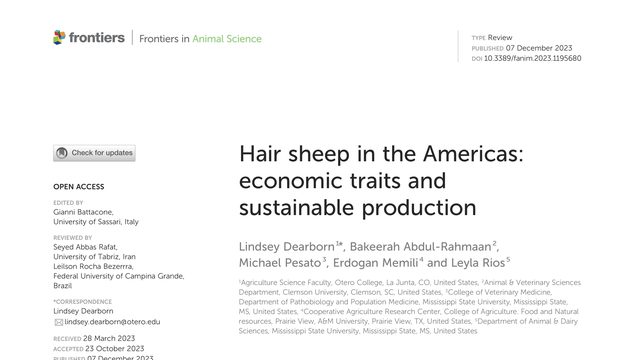
Lindsey Dearborn, Bakeerah Abdul-Rahmaan, Michael Pesato, Erdoğan Memili, Leyla Rios
What if the best sheep for a warming world are not the ones with the thickest wool? Hair sheep can keep producing in heat, tolerate rough feed, and resist the parasites that destroy ordinary farm output.What if the sheep best suited to a hotter, harsher future are not wool sheep at all? This review shows why hair sheep are gaining ground, while also making clear that their advantages come with real trade-offs.
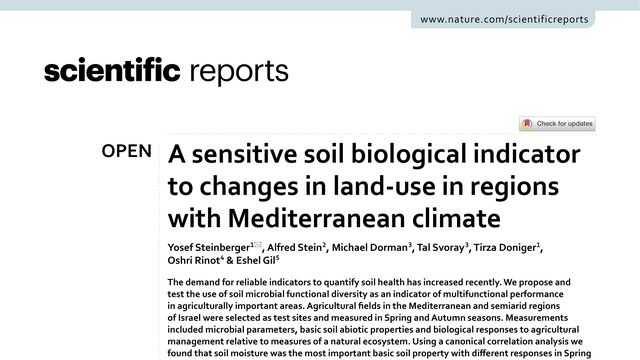
Yosef Steinberger, Alfred A. Stein, Michael Dorman, Tal Svoray, Tirza Doniger, Oshri Rinot, Gil Eshel
Healthy-looking soil can hide important damage when the weather is kind. This study finds that the clearest warning may appear when soil faces its hardest season: a dry spell.What if one simple measurement could reveal how agricultural soil is functioning, and the best clue turned out to be soil moisture? This study tests whether microbial activity can serve as a fast biological health indicator.
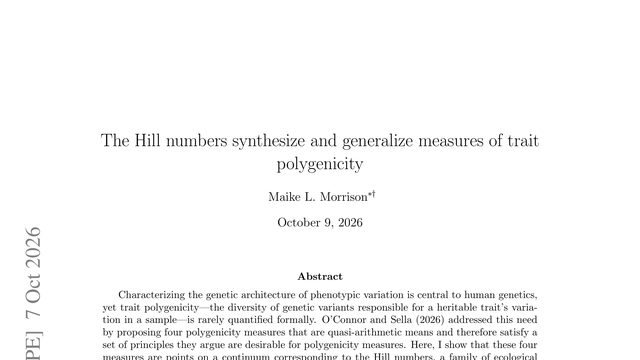
A trait can be shaped by many genetic variants, but counting them is not enough: tiny contributors and powerful ones should not necessarily count the same. This paper turns that problem into one adjustable picture.Trait polygenicity is usually treated like a single number, but this paper shows that four familiar measures are really just points along a continuous scale, one that changes how strongly major and minor variants count.
 3:52