Isoforms of cysteine peptidases and osmotins instead of chitinases and peptidase inhibitors drive antifungal activity but occur as distinct isoforms in latex and callus tissues of Calotropis procera
Overview3:31CCAI
paperi.ai
0:00 / 0:00
Marcio Viana Ramos, Rayanne Farias da Silva, Cristina P. S. Carvalho, Arlete Aparecida Soares, José Francisco C. Gonçalves, Patrícia M. S. Carvalho, Pedro A. V. R. Júnior, Joao Maria Matos-Neto, Cléverson D.T. Freitas
A plant's wound-sealing liquid can fight fungi, but when researchers grew plant tissue outside that liquid, the defense survived in one species and vanished in another. The surprise was not just which proteins worked, but where their versions came from.
This study investigated whether callus cultures of two Apocynaceae species, Calotropis procera and Cryptostegia grandiflora, reproduce the antifungal defense system typically found in their latex. Protein fractions obtained from latex and callus tissues were evaluated for antifungal activity against Fusarium solani, F. oxysporum, Colletotrichum lindemuthianum, and C. gloeosporioides, as well as the presence of pathogenesis-related (PR) proteins was investigated. Callus proteins from C. procera (CPCp) exhibited antifungal activity, inhibiting both mycelial growth and spore germination of all tested fungi. In contrast, callus proteins from C. grandiflora (CPCg) showed no detectable antifungal activity. Mechanistic assays demonstrated that CPCp induced plasma membrane permeabilization and the accumulation of reactive oxygen species in fungal spores. Biochemical analyses further revealed that antifungal activity was associated with the presence of peptidases and osmotins but not of peptidase inhibitors and chitinases. Immunological recognition and gene expression analyses indicated that the peptidases and osmotins expressed in callus tissues differ from those present in the latex of C. procera, suggesting the occurrence of distinct protein isoforms. Collectively, these findings demonstrate that peptidases and osmotins are key determinants of antifungal activity in latex plants and reveal that their expression is closely linked to tissue specialization, highlighting the differential regulation of defense protein isoforms between latex and other plant tissues.
Transcript
A plant's wound-sealing liquid can fight fungi—but when researchers grew plant tissue outside that liquid, the defense survived in one species and vanished in another. The surprise was not just which proteins worked, but where their versions came from.
Latex is released when plant tissue is damaged. It contains many active compounds and proteins linked to plant defense. The accumulation of these molecules at high concentrations has led to the idea that latex forms a defensive barrier, both by sealing damage and by storing toxic or antimicrobial compounds.
The study asked whether callus cultures of two latex-producing species could reproduce the antifungal defense system found in their latex. The central finding was that antifungal activity was associated with protein-cutting enzymes and osmotin-related proteins, while the versions expressed in callus tissue differed from those in latex.
That points to a defense system whose activity is tightly linked to the tissue in which it is made. The researchers evaluated antifungal activity against four disease-causing fungi in the reported experiment. The fungi were maintained in the laboratory, then scraped from cultures, filtered, and counted to prepare spore suspensions for testing.
The study compared protein fractions from callus and latex of both plant species for antifungal activity against the fungal species. Proteins from callus tissue of one species strongly inhibited the growth of every fungus tested, while callus proteins from the other species did not inhibit any of them.
The same pattern appeared when the test looked at spore germination: the first callus protein mixture stopped it, while the second showed no inhibition. Latex protein mixtures from both species, however, showed antifungal activity against all the fungi tested.
The results indicate that callus proteins from C. grandiflora contained inhibitors that blocked two kinds of protein-cutting activity in the assay. The active callus mixture blocked one protein-cutting activity but did not affect the other, suggesting that a detectable inhibitor of the second kind was absent.
When the researchers blocked cysteine protein-cutting enzymes, the protein mixtures almost completely lost their ability to cut proteins. At the same time, previously active mixtures lost most of their antifungal activity, supporting a major contribution from these enzymes.
The defense proteins found in latex were also examined at the level of the instructions cells use to make proteins. Those instructions were detected in latex but not in the corresponding callus samples under the conditions tested. This pattern matched the earlier results from the protein tests and immune-based detection.
The results suggest that callus-derived proteins from C. procera retain antifungal activity associated with peptidases and osmotins, whereas callus proteins from C. grandiflora lack that activity. For someone interested in plant-based protection, the results suggest that callus-derived proteins retain antifungal activity in one species but lack it in another.
The antifungal defense was tied mainly to protein-cutting enzymes and osmotin-related proteins, and the versions found in callus tissue differed from those in latex. That helps explain why plant defenses depend on the tissue carrying them.
A derivative work by Paperi · AI-generated script, voice and captions
· pages and figures unaltered
Made with Paperi.
Drop in a research PDF — get a narrated video walkthrough like this one,
with highlights that follow the narration. Free to start.
What if neighboring farmers could gain more power simply by farming side by side? In Ethiopia, bringing small plots together promises better harvests and stronger markets, but cooperation itself may be the hardest crop to grow.What if the route from subsistence farming to commercial agriculture is not a bigger farm, but neighboring smallholders working together? In Ethiopia, cluster farming promises gains across five dimensions, but the same review finds serious barriers to making it work.
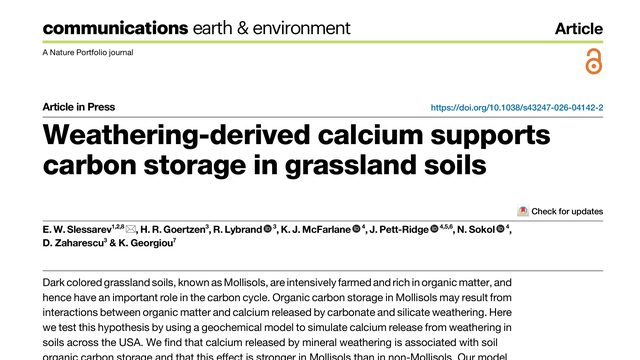
E. W. Slessarev, H. R. Goertzen, Rebecca A. Lybrand, Karis J. McFarlane, Jennifer Pett‐Ridge, Noah W. Sokol, D. G. Zaharescu, K. Georgiou
Some of the world’s best farmland may hold onto carbon not just because of its grasses, but because minerals slowly release calcium into the soil. Farming may have dramatically changed that hidden support system.What if part of the carbon stored in America’s richest grassland soils depends on something as ordinary as calcium? This study links mineral weathering, agriculture, and soil carbon across the entire conterminous United States.
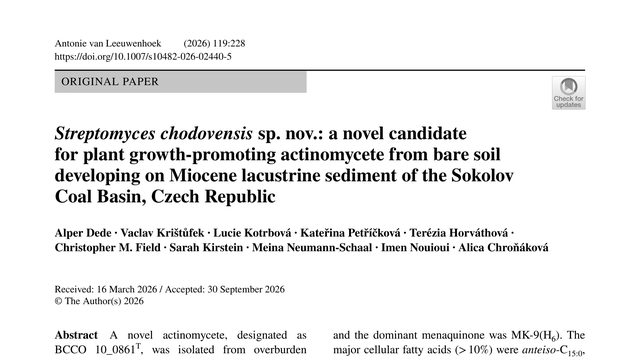
Alper Dede, Václav Krištůfek, Lucie Kotrbová, Kateřina Petřı́čková, Terézia Horváthová, Christopher M. Field, Sarah Kirstein, Meina Neumann‐Schaal, Imen Nouioui, A. Chroňáková
A place stripped bare by coal mining has yielded a bacterium that may help plants grow. It is not just another soil microbe: its traits suggest a possible ally for rebuilding damaged land.A bare soil patch left by coal mining has yielded a candidate for a completely new Streptomyces species, with unusual chemistry and thousands of predicted plant-growth-promoting genes.
 4:01