Current and preservice teachers' views and beliefs regarding martial arts and the inclusion of martial arts in Australian school settings: A cross‐sectional study
Curious3:14CCAI
paperi.ai
0:00 / 0:00
Louis David Burt, Nicholas Riley, Narelle Eather
Schools may be missing an activity that teachers already see as valuable. The surprising barrier is not widespread opposition—it is that many teachers support martial arts in schools while feeling unprepared to teach it.
Schools may be missing an activity that teachers already see as valuable. The surprising barrier is not widespread opposition—it is that many teachers support martial arts in schools while feeling unprepared to teach it.
Martial arts is a collective term for combat sports, self-defense, and hand-to-hand combat systems developed around the world. Studies of participation have identified a wide range of benefits to school-aged children. Those reported benefits include increased flexibility, muscular fitness, and balance, while emerging evidence points to positive changes in psychological, cognitive, and academic outcomes.
That promise matters because active participation has been linked with psychological, cognitive, and academic benefits for school-aged children, yet martial arts remains nonexistent or a fringe activity in many schools around Australia. So the central question becomes practical: what do current and future teachers think about bringing martial arts into school settings?
To answer that question, the research team developed a questionnaire designed to investigate teachers' and future teachers' views about martial arts and its inclusion in schools. The survey included questions about participants, questions about the topic, and two open-ended questions, giving respondents room to explain their views.
The results show that practicing and preservice teachers perceived little government recognition of martial arts in New South Wales schools. Most participants believed martial arts training could improve students’ muscular fitness, aerobic fitness, and mental health, with each benefit receiving strong support.
The vast majority would support including martial arts in the curriculum. But most had never participated in martial arts training and would not feel comfortable teaching it. The hesitation was not simply indifference.
Two concerns stood out, with the most common being the perceived risk of injury and the question of how teachers could control activities so no one gets hurt. Other concerns involved promoting violence at school and students using the skills incorrectly on the playground without supervision.
There is an important limit to what these results can establish: no school principals agreed to invite their teachers, and the responses came through social media or university courses. Because of that, the sample is too small to make conclusive generalizations, although it does provide insight into a diverse group of teachers and future teachers.
Even with that limitation, the study found a high level of support for martial arts in school settings among the Australian teachers and future teachers surveyed. The results show that teachers and preservice teachers viewed martial arts as worthwhile, with physiological and psychological benefits, and supported including it in school settings.
Teachers and future teachers in this study largely supported martial arts at school and saw physical and mental benefits, but safety, violence, and limited training remain practical barriers. That points to a need for clearer guidance and teacher preparation.
A derivative work by Paperi · AI-generated script, voice and captions
· pages and figures unaltered
Made with Paperi.
Drop in a research PDF — get a narrated video walkthrough like this one,
with highlights that follow the narration. Free to start.
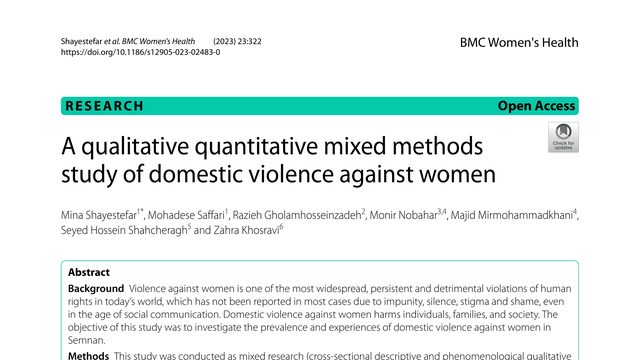
Domestic violence is not only a private crisis. This study finds that it can be widespread, hidden by silence, and tied to beliefs that make harmful behavior seem ordinary.In this study, nearly two-thirds of the participating women were classified as experiencing severe violence. The mixed-methods design also shows how social norms can keep that violence unspoken.
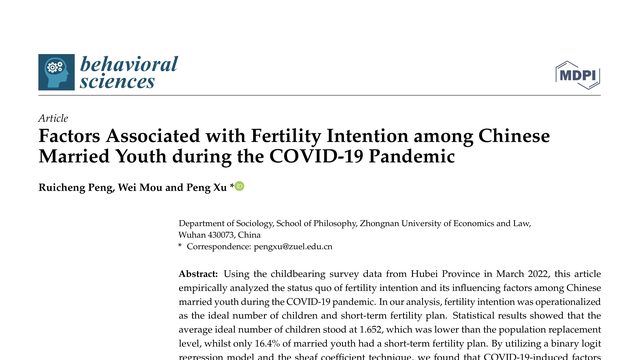
Why would married young people want fewer children even when governments encourage larger families? This study points to an unexpected answer: pandemic-related worries may matter more than money or job security.During the COVID-19 pandemic, having more money or a stable job did not necessarily mean stronger fertility intentions. The most stable influence came from pandemic-related changes in marriage and delayed pregnancy preparation after vaccination.
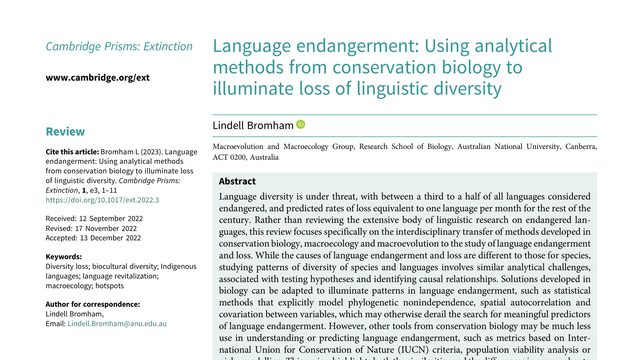
A language can disappear even while its community grows. This paper asks what the science of disappearing species can teach us about protecting the words, stories, and knowledge carried by human languages.What if methods designed to predict species extinction could help explain disappearing languages—but only after being carefully redesigned? This review shows where the analogy is powerful, and where it breaks down.
 3:59
3:59