Integrating ICT in education: A scoping review of pre-service teachers’ ICT beliefs
Curious4:11CCAI
paperi.ai
0:00 / 0:00
Honghuan Li
A classroom can be filled with modern technology and still teach in the old way. This review finds that what future teachers believe about technology may shape whether it actually changes learning.
This scoping review aims to map the current understanding of pre-service teachers’ beliefs about ICT, identify critical research gaps, and provide actionable insights for teacher education policy and practice. A comprehensive search of seven electronic databases yielded 1366 studies, of which 277 were included. The review identified seven key themes, including a predominant focus on general ICT beliefs and the limited exploration of cutting-edge technologies or regional variations. Quantitative methods dominated the research landscape, often employing standardized instruments like the Technology Attitude Scale. The findings highlight the need for greater emphasis on underrepresented regions, innovative technologies, and qualitative methodologies to deepen contextual understanding. This review offers a foundational resource for stakeholders in teacher education and sets the stage for future research to bridge identified gaps, ultimately enhancing the integration of ICT in teacher training and classroom practice.
Transcript
A classroom can be filled with modern technology and still teach in the old way. This review finds that what future teachers believe about technology may shape whether it actually changes learning. Technology has become an important part of teaching and learning.
It can move lessons beyond blackboards and chalk toward more interactive experiences, helping student performance, motivation, and problem-solving. It can also make teaching and learning more flexible, personalized, and accessible.
But the technology itself is not the whole story: future teachers’ proficiency and attitudes are critical because they form the backbone of future education. Their beliefs influence how prospective teachers will use technology in classrooms, affecting the quality of education and the success of bringing technology into teaching.
Significant gaps remain across methods and regions. That is why understanding future teachers’ beliefs is vital for promoting effective teaching practices in the future and enhancing those practices once they begin teaching. The review uses a systematic framework to bridge these gaps, showing how beliefs shape teaching practices and identifying directions for future research and policy.
The review maps what is known about future teachers’ beliefs about technology, identifies research gaps, and offers useful guidance for teacher education policy and practice. A search of seven electronic databases found a large body of research, but only the studies that met the review’s criteria were included.
Here is the catch: the research mostly examined general beliefs, while newer technologies and regional differences received limited attention. Most studies also relied on numerical measures rather than richer accounts of context.
Across the included studies, seven topic categories appeared, and most focused on technology beliefs in general. Other topics included teacher training, technology competence, comparisons, relationships, models, and views of technology-based teaching and learning.
The review also found that numerical research dominated, while studies combining approaches or using qualitative methods made up smaller parts of the research landscape. These seven themes represent the most discussed issues regarding future teachers’ beliefs about technology.
The most frequent topic was describing those beliefs in general. Another frequent topic was measuring beliefs during teacher training. Research on technology competence mainly focused on future teachers’ confidence and belief in their own ability to use digital tools. So the review followed a systematic approach to identify studies about future teachers’ beliefs regarding technology.
By bringing together a considerable volume of research and organizing its key information, the review identified important factors in measuring beliefs and unresolved questions about different technologies. The review mapped perspectives, research approaches, and findings across different educational settings and geographic contexts.
It confirmed broad agreement that technology matters in teacher education. But agreement about importance does not mean agreement about usefulness or implementation. Beliefs differ, and they are influenced by individual confidence, institutional support, and exposure to technology during teacher training.
The biggest unanswered question is what happens after training. Limited research follows future teachers into the workforce to examine how their beliefs affect their actual teaching practices. Few studies examine cultural and regional differences, and more research is needed on whether specific interventions can change or strengthen future teachers’ beliefs and abilities with technology.
Technology training cannot stop at teaching people which buttons to press. Future teachers’ confidence, support, and experience with technology can influence how ready they are to use it, but important questions about real classrooms remain unanswered.
A derivative work by Paperi · AI-generated script, voice and captions
· pages and figures unaltered
Made with Paperi.
Drop in a research PDF — get a narrated video walkthrough like this one,
with highlights that follow the narration. Free to start.
Social disconnection often becomes visible only after it has taken hold. This study looks earlier, at whether someone can reach people—and whether those encounters actually leave them feeling connected.Social disconnection is usually measured after it has become obvious. This study takes a different approach: use thirteen questions to detect threats to connection earlier, before isolation and loneliness fully take hold.
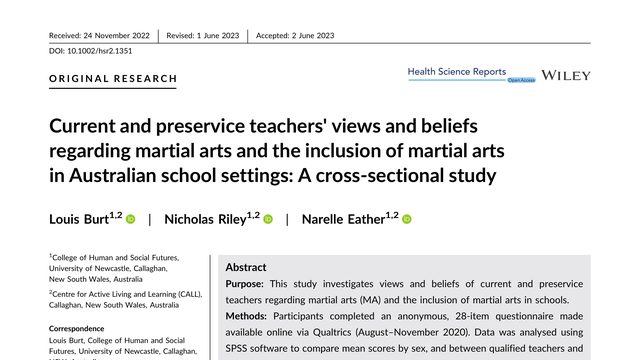
Schools may be missing an activity that teachers already see as valuable. The surprising barrier is not widespread opposition—it is that many teachers support martial arts in schools while feeling unprepared to teach it.Martial arts are often associated with fighting, yet this study found strong support for bringing them into Australian schools—even though most participants had never trained in martial arts themselves.
Domestic violence is not only a private crisis. This study finds that it can be widespread, hidden by silence, and tied to beliefs that make harmful behavior seem ordinary.In this study, nearly two-thirds of the participating women were classified as experiencing severe violence. The mixed-methods design also shows how social norms can keep that violence unspoken.
 3:44
3:44