DeepsmirUD: Prediction of Regulatory Effects on microRNA Expression Mediated by Small Molecules Using Deep Learning
Curious5:10CCAI
paperi.ai
0:00 / 0:00
Jianfeng Sun, Jinlong Ru, Lorenzo Ramos‐Mucci, Fei Qi, Zihao Chen, Suyuan Chen, Adam P. Cribbs, Li Deng, Xia Wang
A drug may affect a tiny genetic message by turning its activity up or down—but finding out which direction it takes can require slow, expensive experiments. This study asks whether a computer can make that prediction first.
Aberrant miRNA expression has been associated with a large number of human diseases. Therefore, targeting miRNAs to regulate their expression levels has become an important therapy against diseases that stem from the dysfunction of pathways regulated by miRNAs. In recent years, small molecules have demonstrated enormous potential as drugs to regulate miRNA expression (i.e., SM-miR). A clear understanding of the mechanism of action of small molecules on the upregulation and downregulation of miRNA expression allows precise diagnosis and treatment of oncogenic pathways. However, outside of a slow and costly process of experimental determination, computational strategies to assist this on an ad hoc basis have yet to be formulated. In this work, we developed, to the best of our knowledge, the first cross-platform prediction tool, DeepsmirUD, to infer small-molecule-mediated regulatory effects on miRNA expression (i.e., upregulation or downregulation). This method is powered by 12 cutting-edge deep-learning frameworks and achieved AUC values of 0.843/0.984 and AUCPR values of 0.866/0.992 on two independent test datasets. With a complementarily constructed network inference approach based on similarity, we report a significantly improved accuracy of 0.813 in determining the regulatory effects of nearly 650 associated SM-miR relations, each formed with either novel small molecule or novel miRNA. By further integrating miRNA–cancer relationships, we established a database of potential pharmaceutical drugs from 1343 small molecules for 107 cancer diseases to understand the drug mechanisms of action and offer novel insight into drug repositioning. Furthermore, we have employed DeepsmirUD to predict the regulatory effects of a large number of high-confidence associated SM-miR relations. Taken together, our method shows promise to accelerate the development of potential miRNA targets and small molecule drugs.
Transcript
A drug may affect a tiny genetic message by turning its activity up or down—but finding out which direction it takes can require slow, expensive experiments. This study asks whether a computer can make that prediction first. Changes in these tiny genetic messages, called microRNAs, have been associated with many human diseases.
Drugs that regulate them could therefore help treat diseases caused by disturbed biological pathways. Small molecules have shown strong potential as drugs that regulate microRNA expression. But determining whether they raise or lower that expression is slow and costly by experiment, and practical computer help has been missing.
DeepsmirUD was developed to predict the regulatory effect of a small molecule on microRNA expression, specifically whether it raises or lowers that expression. The researchers used microRNA and cancer relationships to build a database of potential pharmaceutical drugs covering 1343 small molecules and 107 cancer diseases.
They also used DeepsmirUD to predict regulatory effects for a large number of high-confidence associated small-molecule and microRNA relationships for further study. Checking whether a small molecule and a microRNA bind is normally time-consuming and costly, because researchers cannot test every possible pairing.
Only a small fraction of all possible pairs have been experimentally verified. Earlier computer methods mainly asked whether a pairing existed. The harder question—whether the small molecule turns the microRNA up or down—remained largely unexplored.
That missing direction matters because it can speed the search for evidence about microRNAs involved in cancer and treatment. The system uses twelve deep-learning frameworks to predict how small molecules regulate microRNA expression, with models selected from curated biological relationships.
The models were selected and trained using known pairings together with physical and chemical information about them. One combined model performed best on experimentally resolved relationships, while another group gave the most stable predictions during long training.
Combining the models reduced the influence of their individual errors and improved performance further. The predicted increases and decreases were then connected with disease information to suggest possible drugs. The system was then tested on relationships involving either a new microRNA or a new small molecule.
Its performance was unsatisfactory, especially when the small molecule was new. Changing how the test examples were selected produced the same observation, so the weakness was not explained by that sampling choice.
In practice, nearly all of the deep-learning methods struggled with new small molecules, while their performance was better when the new element was a microRNA. The map suggests that small molecules are more often predicted to raise microRNA activity than lower it: around two-thirds of the indirectly linked relationships point upward.
That matters because reversing disease-related microRNA changes could reveal how drugs work and suggest new treatment uses. The system predicted regulatory effects for 224 indirectly linked small-molecule and microRNA relationships selected from pharmacological information.
Around two-thirds of those relationships were predicted to increase microRNA expression. This extends the search beyond relationships already directly linked, using indirect evidence to propose additional pairings for study. The researchers describe two cases in which drug-like small molecules identified by the analysis had anticancer effects supported by other studies.
One approved antibiotic had been found to inhibit breast-cancer growth and spread, and another compound had been verified to suppress a type of skin cancer. Many highly ranked links between individual small molecules and several cancers were also predicted correctly in line with earlier studies.
For example, an orange-peel compound has been reported to inhibit cervical, lung, and colon cancers, matching the analysis’s negative connectivity scores. The researchers point to a practical limitation: published pharmaceutical studies may contain more verified small-molecule and microRNA relationships than the current collection captures.
A larger publication-based database could improve the computer models. That database is identified as an important direction for future work. The same approach might also be extended to other kinds of genetic messages. The system can help suggest how small molecules may change these genetic messages, but its weakest point is unfamiliar drugs.
That makes it a guide for experiments and possible drug reuse, not a replacement for testing.
A derivative work by Paperi · AI-generated script, voice and captions
· pages and figures unaltered
Made with Paperi.
Drop in a research PDF — get a narrated video walkthrough like this one,
with highlights that follow the narration. Free to start.
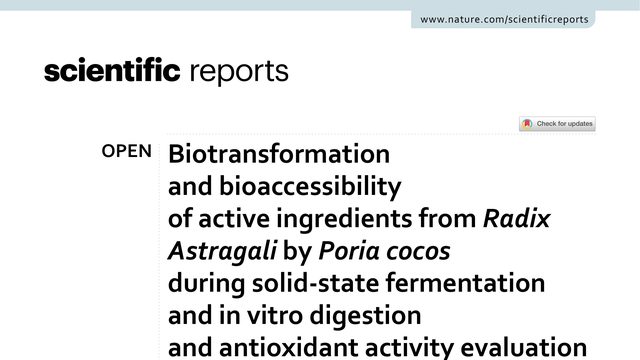
A traditional herbal root contains a valued protective compound, but only a small amount is normally available. This study found that growing a food fungus on the root could make much more of that compound accessible after digestion.A medicinal fungus turns a hard-to-access Astragalus compound into something far more abundant—and the fermented material still shows stronger antioxidant activity after simulated digestion.
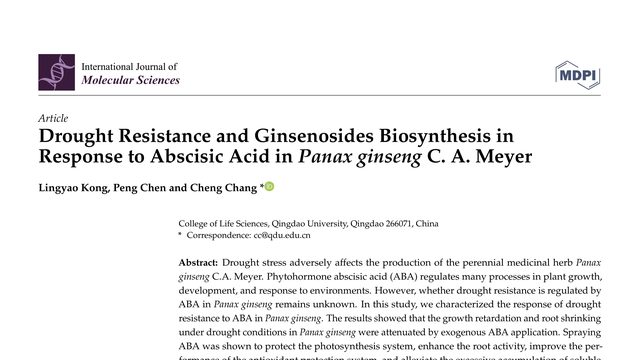
A dry spell can damage ginseng twice: it weakens the plant and threatens the valuable compounds in its roots. This study found that one natural plant signal may help with both problems.What if the same hormone that helps ginseng conserve water during drought also boosts its valuable medicinal compounds? This study tests that connection—and finds ABA strengthens both drought resistance and ginsenoside biosynthesis.
Byungju Kim, Jincheol Seol, Yoon Ki Kim, Jong‐Bong Lee
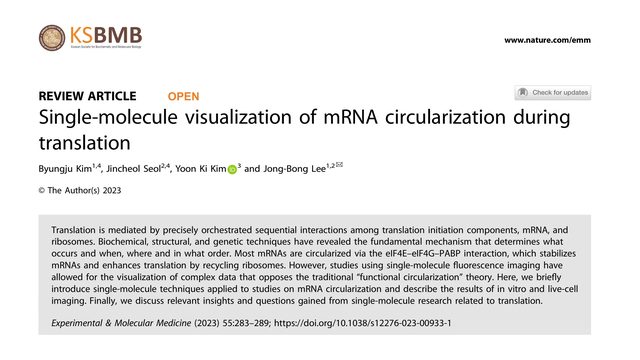
Inside every living cell, tiny messages are read to build proteins. Scientists thought many of those messages formed helpful loops—but watching them one at a time suggests the loop may be an illusion of motion.For years, mRNA circularization has been treated as a functional closed loop that helps translation. But single-molecule imaging reveals a striking possibility: translating mRNA can look compact without being physically connected at its ends.
 3:49
3:49