Drought Resistance and Ginsenosides Biosynthesis in Response to Abscisic Acid in Panax ginseng C. A. Meyer
Curious4:09CCAI
paperi.ai
0:00 / 0:00
Lingyao Kong, Peng Chen, Cheng Chang
A dry spell can damage ginseng twice: it weakens the plant and threatens the valuable compounds in its roots. This study found that one natural plant signal may help with both problems.
Drought stress adversely affects the production of the perennial medicinal herb Panax ginseng C.A. Meyer. Phytohormone abscisic acid (ABA) regulates many processes in plant growth, development, and response to environments. However, whether drought resistance is regulated by ABA in Panax ginseng remains unknown. In this study, we characterized the response of drought resistance to ABA in Panax ginseng. The results showed that the growth retardation and root shrinking under drought conditions in Panax ginseng were attenuated by exogenous ABA application. Spraying ABA was shown to protect the photosynthesis system, enhance the root activity, improve the performance of the antioxidant protection system, and alleviate the excessive accumulation of soluble sugar in Panax ginseng under drought stress. In addition, ABA treatment leads to the enhanced accumulation of ginsenosides, the pharmaceutically active components, and causes the up-regulation of 3-hydroxy-3-methylglutaryl CoA reductase (PgHMGR) in Panax ginseng. Therefore, this study supports that drought resistance and ginsenosides biosynthesis in Panax ginseng were positively regulated by ABA, providing a new direction for mitigating drought stress and improving ginsenosides production in the precious medicinal herb.
Transcript
A dry spell can damage ginseng twice: it weakens the plant and threatens the valuable compounds in its roots. This study found that one natural plant signal may help with both problems. Ginseng spends four to six years growing, so drought is not a brief inconvenience: over that long period, it can damage the crop.
That damage threatens ginseng production, so the study asks whether abscisic acid, a plant signal known to regulate drought resistance elsewhere, can help. The question matters because abscisic acid already regulates drought resistance in other plants, but its role in ginseng—and its effect on ginsenoside production—was still unknown.
So they tried something simple: the plants went without water, while one group also received abscisic acid. After thirty-five days, untreated drought-stressed leaves were badly wilted, while treated leaves stayed firm. The roots told the same story.
Drought caused serious shrinking of the outer root layer, but adding abscisic acid prevented a significant change. The soil water was no different between groups, so the protection was not simply extra water. The weather was the same for both groups: their soil water content showed no obvious difference, like facing the same dry wind.
Yet the plants given the signal were better prepared, because exogenous abscisic acid significantly enhanced drought resistance in ginseng under these conditions. But the visible protection had an internal counterpart. Drought reduced the green leaf material needed for photosynthesis, while abscisic acid-treated leaves kept that level, suggesting their photosynthesis system was protected.
The leaves therefore retained an important sign of function: chlorophyll, and the photosynthesis system, were protected by abscisic acid during drought. The roots also stayed more active with abscisic acid than with drought alone, adding a second sign that important plant functions were retained.
When water is scarce, these leaf pores close, limiting water loss; adding ABA, a plant signal that helps trigger this response, makes them close even further. That matters because it links the treatment directly to a stronger drought-protection response.
After prolonged water shortage, spraying the leaves with ABA preserved leaf chlorophyll, boosted root activity and strengthened protective enzymes. It also reduced membrane damage and partly restored stored sugars, suggesting ABA helped ginseng keep functioning while limiting drought injury.
Ginsenosides are the valuable compounds people seek from ginseng, and water shortage already increases them. Adding the plant’s drought signal pushes the total to about ten units, suggesting this treatment could further boost ginseng’s prized compounds.
In ginseng, three-hydroxy-three-methylglutaryl coenzyme A reductase, or HMGR, is known as a rate-controlling enzyme for ginsenoside biosynthesis. Abscisic acid treatment increased expression of the HMGR genes, suggesting this step may help drive ginsenoside accumulation under drought.
That link suggests the treatment may help the roots make more ginsenosides by turning up an important step in their production, although the passage describes this as a possible contribution. Earlier evidence found that drought increased ginsenoside accumulation and biosynthesis-gene expression, while also potentiating ginseng's own abscisic acid accumulation and signaling.
Together, these findings strongly support a positive connection between drought, this abscisic acid signal, and ginsenoside production in ginseng. The practical promise is that abscisic acid might govern biosynthesis while opening a new avenue for enhancing drought resistance and ginsenoside production.
In ginseng, abscisic acid helped plants withstand drought while increasing ginsenosides, the compounds prized in the medicinal root. That points toward a way to protect crops and preserve their value as water becomes less reliable.
A derivative work by Paperi · AI-generated script, voice and captions
· pages and figures unaltered
Made with Paperi.
Drop in a research PDF — get a narrated video walkthrough like this one,
with highlights that follow the narration. Free to start.
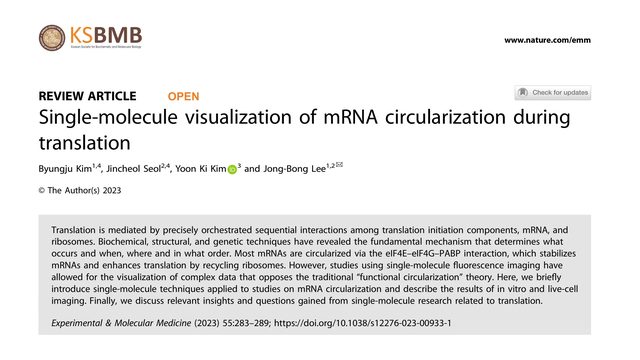
Byungju Kim, Jincheol Seol, Yoon Ki Kim, Jong‐Bong Lee
Inside every living cell, tiny messages are read to build proteins. Scientists thought many of those messages formed helpful loops—but watching them one at a time suggests the loop may be an illusion of motion.For years, mRNA circularization has been treated as a functional closed loop that helps translation. But single-molecule imaging reveals a striking possibility: translating mRNA can look compact without being physically connected at its ends.
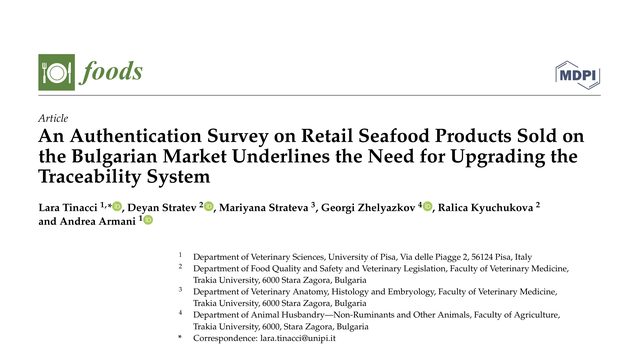
Lara Tinacci, Deyan Stratev, Mariyana Strateva, G. Zhelyazkov, Ralica Kyuchukova, Andrea Armani
A seafood label can promise one species while the food inside is another. In Bulgaria, a broad check of shop-bought seafood found that this was not a rare mistake, but a problem affecting about one product in nine.A seafood label can look perfectly ordinary while naming the wrong species. In Bulgaria, DNA testing found that eleven percent of the sampled products were mislabeled, exposing both consumer risks and weaknesses in traceability.
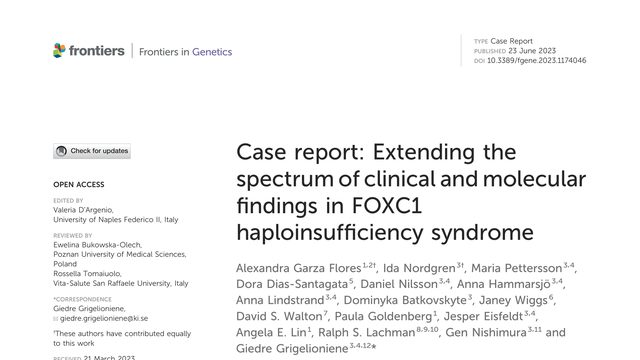
Alexandra Garza Flores, I. Nordgren, Maria Pettersson, Dora Dias‐Santagata, Daniel Nilsson, Anna Hammarsjö, Anna Lindstrand, Dominyka Batkovskyte, Janey L. Wiggs, David S. Walton, Paula Goldenberg, Jesper Eisfeldt, Angela E. Lin, Ralph S. Lachman, Gen Nishimura, Giedré Grigelioniené
A condition often recognized through the eyes can reach far beyond vision. In two adults, the same missing genetic instruction was linked to glaucoma, unusual bones, loose joints, and problems that became clearer with age.What happens when losing one copy of a developmental gene produces not just eye disease, but a much broader skeletal and neurologic picture? This case report shows how genome sequencing exposed that expanded spectrum.
 4:22
4:22