Biotransformation and bioaccessibility of active ingredients from Radix Astragali by Poria cocos during solid-state fermentation and in vitro digestion and antioxidant activity evaluation
A traditional herbal root contains a valued protective compound, but only a small amount is normally available. This study found that growing a food fungus on the root could make much more of that compound accessible after digestion.
Radix Astragali is one of the most famous and frequently used health food supplements and herbal medicines. Among more than 227 components of Radix Astragali, Astragaloside IV (AG IV) is famous functional compound and is commonly used as a quality marker for Radix Astragali. However, the relatively low content of AG IV in Radix Astragali (< 0.04%, w/w) severely limits its application. The purpose of this study is to improve the biotransformation of AG IV and its bioaccessibility during in vitro digestion by Poria cocos solid fermenting Radix Astragali. The optimum fermentation conditions were as follows: Inoculation amount 8 mL; fermentation time 10 d; fermentation humidity 90%. Through fermentation, the content of AG IV was increased from 384.73 to 1986.49 μg/g by 5.16fold. After in vitro digestion, the contents of genistin, calycosin, formononetin, AG IV, Astragaloside II (AG II) and total flavonoids in fermented Radix Astragali (FRA) of enteric phase II (ENTII) were 34.52 μg/g, 207.32 μg/g, 56.76 μg/g, 2331.46 μg/g, 788.31 μg/g, 3.37 mg/g, which were 2.08-fold, 2.51-fold, 1.05-fold, 8.62-fold, 3.22-fold and 1.50-fold higher than those of control, respectively. The Scanning electron microscopy (SEM) of FRA showed rough surface and porous structure. The DPPH and ABTS radical scavenging rate of FRA were higher than those of control. These results showed that the Poria cocos solid fermentation could increase the content of the AG IV in Radix Astragali and improve the bioaccessibility and antioxidant activity of Radix Astragali, which is providing new ideas for future development and utilization of Radix Astragali.
Transcript
A traditional herbal root contains a valued protective compound, but only a small amount is normally available. This study found that growing a food fungus on the root could make much more of that compound accessible after digestion. Radix Astragali is one of the most famous and frequently used health food supplements and herbal medicines.
Among its many components, one compound is commonly used as a quality marker, but its relatively low content severely limits the root’s application. So the study asked whether growing Poria cocos, a fungus used to ferment the root, could change that compound and make it more available during digestion.
The root’s bioactive compounds are tightly bound within its structure, creating a barrier that inhibits their release into the digestive system. That plant structure includes lignin, cellulose, and pectin, which enzymes can hydrolyze to promote release of AG IV from the root.
Fermentation offers a way around that barrier. The fungus produces many enzymes that can transform related compounds into the valued compound, while also breaking down parts of the plant structure and promoting its release. The fermented root was then tested in a laboratory digestion system and in antioxidant tests.
The comparison was the same root before and after fungus fermentation, so the question was whether the change survived digestion and altered activity. Under the selected conditions, the root was kept very moist and fermented for ten days.
The amount of the quality-marker compound rose to 1986.49 micrograms per gram, which was 5.16 times higher than in the untreated root. But a larger amount in the fermented root is not enough by itself. After digestion, several important compounds had greater bioaccessibility than in the control, meaning more of them remained available from the fermented material.
The fermented material showed lower bioaccessibility for three sugar-linked compounds—calycosin-glucoside, genistin, and ononin—when compared with the untreated control. The fungus’s enzymes hydrolyzed cellulose and promoted glucoside biotransformation, while digestive enzymes converted glucosides into simpler aglycones during in vitro digestion.
The biological test pointed in the same direction. After fermentation and laboratory digestion, the fermented root had higher antioxidant capacity than the control in both tests used. Digestion reduced antioxidant activity in both materials, but the fermented root still remained stronger than the untreated root.
Fermentation increased the root’s main active compound, AG IV, from three hundred eighty-four point seven three to one thousand nine hundred eighty-six point four nine micrograms per gram, a five point one six-fold increase. Finally, the fermented root showed stronger antioxidant activity than the control, and it still retained good antioxidant activity after in vitro digestion.
For someone developing a herbal food product, these findings suggest fermentation can increase the root’s main active compound, AG IV, under optimized conditions. The fermented material also retained good antioxidant activity after in vitro digestion, giving product developers a measurable function to evaluate.
Fermentation changed the root’s chemical contents and structure, leaving more of several compounds available after digestion and producing stronger antioxidant activity than the untreated root. That points toward better use of this familiar herbal ingredient.
A derivative work by Paperi · AI-generated script, voice and captions
· pages and figures unaltered
Made with Paperi.
Drop in a research PDF — get a narrated video walkthrough like this one,
with highlights that follow the narration. Free to start.
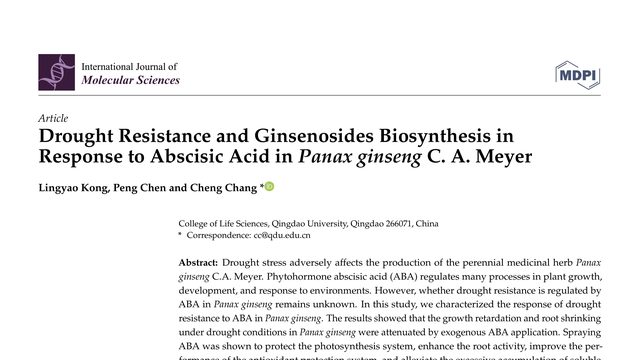
A dry spell can damage ginseng twice: it weakens the plant and threatens the valuable compounds in its roots. This study found that one natural plant signal may help with both problems.What if the same hormone that helps ginseng conserve water during drought also boosts its valuable medicinal compounds? This study tests that connection, and finds ABA strengthens both drought resistance and ginsenoside biosynthesis.
Byungju Kim, Jincheol Seol, Yoon Ki Kim, Jong‐Bong Lee
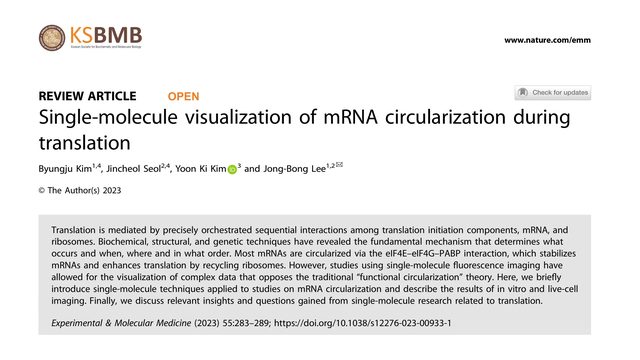
Inside every living cell, tiny messages are read to build proteins. Scientists thought many of those messages formed helpful loops, but watching them one at a time suggests the loop may be an illusion of motion.For years, mRNA circularization has been treated as a functional closed loop that helps translation. But single-molecule imaging reveals a striking possibility: translating mRNA can look compact without being physically connected at its ends.
Lara Tinacci, Deyan Stratev, Mariyana Strateva, G. Zhelyazkov, Ralica Kyuchukova, Andrea Armani
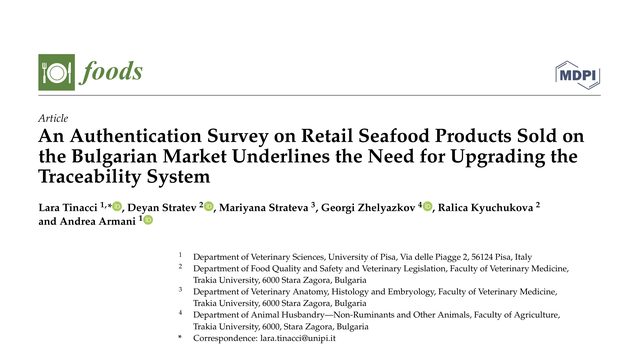
A seafood label can promise one species while the food inside is another. In Bulgaria, a broad check of shop-bought seafood found that this was not a rare mistake, but a problem affecting about one product in nine.A seafood label can look perfectly ordinary while naming the wrong species. In Bulgaria, DNA testing found that eleven percent of the sampled products were mislabeled, exposing both consumer risks and weaknesses in traceability.
 4:09
4:09