Biotransformation and bioaccessibility of active ingredients from Radix Astragali by Poria cocos during solid-state fermentation and in vitro digestion and antioxidant activity evaluation
A medicinal fungus turns a hard-to-access Astragalus compound into something far more abundant—and the fermented material still shows stronger antioxidant activity after simulated digestion.
Radix Astragali is one of the most famous and frequently used health food supplements and herbal medicines. Among more than 227 components of Radix Astragali, Astragaloside IV (AG IV) is famous functional compound and is commonly used as a quality marker for Radix Astragali. However, the relatively low content of AG IV in Radix Astragali (< 0.04%, w/w) severely limits its application. The purpose of this study is to improve the biotransformation of AG IV and its bioaccessibility during in vitro digestion by Poria cocos solid fermenting Radix Astragali. The optimum fermentation conditions were as follows: Inoculation amount 8 mL; fermentation time 10 d; fermentation humidity 90%. Through fermentation, the content of AG IV was increased from 384.73 to 1986.49 μg/g by 5.16fold. After in vitro digestion, the contents of genistin, calycosin, formononetin, AG IV, Astragaloside II (AG II) and total flavonoids in fermented Radix Astragali (FRA) of enteric phase II (ENTII) were 34.52 μg/g, 207.32 μg/g, 56.76 μg/g, 2331.46 μg/g, 788.31 μg/g, 3.37 mg/g, which were 2.08-fold, 2.51-fold, 1.05-fold, 8.62-fold, 3.22-fold and 1.50-fold higher than those of control, respectively. The Scanning electron microscopy (SEM) of FRA showed rough surface and porous structure. The DPPH and ABTS radical scavenging rate of FRA were higher than those of control. These results showed that the Poria cocos solid fermentation could increase the content of the AG IV in Radix Astragali and improve the bioaccessibility and antioxidant activity of Radix Astragali, which is providing new ideas for future development and utilization of Radix Astragali.
Transcript
A medicinal fungus turns a hard-to-access Astragalus compound into something far more abundant—and the fermented material still shows stronger antioxidant activity after simulated digestion. Radix Astragali is one of the most famous and frequently used health food supplements and herbal medicines.
Among more than two hundred twenty-seven components, Astragaloside IV, or AG IV, is a famous functional compound and a quality marker. The problem is that AG IV has a relatively low content in Radix Astragali—less than zero point zero four percent by weight—which severely limits its application.
Bioactive compounds in Radix Astragali can be tightly bound, and these substances inhibit the release of bioactive compounds into the digestive system. Microbial fermentation can produce a multienzyme system that transforms other astragalosides to AG IV, while enzymes can hydrolyze lignin, cellulose and pectin and promote the release of AG IV.
Poria cocos is the dried sclerotium of an important edible and medicinal fungus with a long history of medicinal use in China and other Asian countries. During fermentation, Poria cocos uses cellulose and other components as a carbon source to degrade plant cell walls, which contributes to releasing plant bioactive compounds.
The combined use of Radix Astragali and Poria cocos has a long history, but there had been no reports about fermenting Radix Astragali using Poria cocos. In vitro digestion techniques are commonly used to study bioaccessibility and the physicochemical changes and metabolism of functionally active substances during digestion.
The in vitro digestion system models human gastrointestinal processes and can evaluate digestibility, bioaccessibility, release kinetics and structural changes under in vitro conditions. The optimum fermentation conditions used twenty grams of Radix Astragali, ninety percent humidity and an eight milliliter inoculation amount, fermented at twenty-seven degrees Celsius for ten days.
Under those optimum conditions, AG IV reached one thousand nine hundred eighty-six point forty-nine micrograms per gram, five point sixteen times higher than the control. Table one examines how inoculation amount, from four to nine milliliters, affected bioactive compounds in fermented Radix Astragali, alongside an uninoculated control.
The authors report means plus or minus standard error from three replications, with different superscript letters indicating significant differences within each row at P less than zero point zero five. The table matters because compounds show distinct responses: for example, total flavonoids range from one point forty-eight in the control to two point seventy-two at nine milliliters, while AG IV reaches two hundred seventy point eighty-two micrograms per gram at eight milliliters.
Bioaccessibility is the quantity released from the food matrix in the gastrointestinal tract and made available for absorption. The simulated gastrointestinal method consists of four phases: oral, gastric, enteric phase one and enteric phase two. After digestion, the contents of genistin, calycosin, formononetin, AG IV and AG II in fermented Radix Astragali increased significantly.
In enteric phase two, those contents were thirty-four point fifty-two, two hundred seven point thirty-two, fifty-six point seventy-six, two thousand three hundred thirty-one point forty-six and seven hundred eighty-eight point thirty-one micrograms per gram, respectively. The proposed explanation is that fermentation destroyed the cell wall, while gastrointestinal enzymes destroyed cellular structures and chemical bonds and released combined flavonoids and saponins.
Table four tracks compounds in the control and fermented FRA through oral, gastric, and two enteric digestion stages, then reports bioaccessibility. Fermentation is accompanied by higher final values for calycosin, formononetin, AG four, AG two, total saponins, and total flavonoids than the control, while calycosin-glu, genistin, and ononin show the opposite pattern in the bioaccessibility columns.
Superscript letters mark statistically significant differences within each row. For fermented Radix Astragali, bioaccessibility was two hundred seventy-four point thirty-four percent for calycosin, two hundred sixty point sixty-one percent for formononetin and one hundred seventeen point thirty-six percent for AG IV.
The corresponding control values were fifty-three point thirty-seven, ninety point forty-eight and seventy point twenty-nine percent, respectively, for those three compounds. Bioaccessibility of calycosin, formononetin, AG IV, AG II, total saponins and total flavonoids was higher in fermented Radix Astragali, while calycosin-glucoside, genistin and ononin were lower than in the control.
Figure two uses scanning electron microscopy at two-thousand-times magnification to compare Radix Astragali before and after fermentation and simulated digestion. The untreated control appears relatively smooth, while the fermented sample and the digested samples show rougher, more fragmented surfaces with visible particles and pores.
After gastric digestion, both materials are visibly damaged, with the fermentation sample described as showing more extensive disruption; this supports the authors’ interpretation that fermentation and digestion alter the sample structure. The control surface was smooth, basically without holes, and had a small amount of particulate matter attached.
After fermentation, the microstructures were disorganized, and the fermented Radix Astragali residues had a rough, porous and reticular structure. These results may be due to Poria cocos mycelium directly entering the drug residue and destroying internal Radix Astragali cells.
Figure three plots DPPH radical scavenging rates against concentration for Radix Astragali extracts, in vitro digestion products, controls, and reference compounds. At zero point four milligrams per milliliter, the reported rates include ninety-eight point two five percent for Vc, eighty-seven point eight six percent for calycosin, and sixty-three point eight one percent for FRA, alongside the other samples shown in the figure.
The authors use these comparisons to frame antioxidant capacity and select standards for subsequent experiments. The DPPH results show an IC fifty value of zero point one four zero milligrams per milliliter for fermented Radix Astragali. That value was higher than vitamin C at zero point zero zero two milligrams per milliliter and calycosin at zero point zero three four, but better than the control at zero point three six seven.
At zero point four milligrams per milliliter, the DPPH scavenging rates included ninety-eight point twenty-five percent for vitamin C, eighty-seven point eighty-six percent for calycosin, sixty-three point eighty-one percent for fermented Radix Astragali and fifty-one point forty-three percent for the control.
Figure four plots ABTS radical-scavenging rates against extract concentration, from zero to zero point thirty milligrams per milliliter, for fermented Radix Astragali, control samples, standards, and vitamin C. The authors report that scavenging generally increased with concentration; the fermented extract had an IC fifty of zero point zero six four milligrams per milliliter, compared with zero point zero zero two for vitamin C, zero point zero zero three for calycosin, zero point zero three zero for genistin, and zero point two zero seven for the control.
This supports the study’s assessment of antioxidant activity before and after in-vitro digestion. After fermentation and in vitro digestion, the DPPH and ABTS antioxidant capacities of fermented Radix Astragali were all higher than those of the control.
However, antioxidant activity of both fermented Radix Astragali and the control decreased after in vitro digestion. The text suggests this may be because the extractum from digestive fluid had a higher weight, so antioxidant-component contents decreased at the same dry-mass concentration.
The study proposes solid fermentation of Radix Astragali with Poria cocos to increase the content of AG IV, using an inoculation amount of eight milliliters, ten days of fermentation and ninety percent humidity. Under optimal conditions, AG IV increased from three hundred eighty-four point seventy-three to one thousand nine hundred eighty-six point forty-nine micrograms per gram, a five point sixteen-fold increase.
After in vitro digestion, fermented Radix Astragali had higher bioaccessibility for calycosin, formononetin, AG IV, AG II, total saponins and total flavonoids than the control. The DPPH and ABTS IC fifty values for fermented Radix Astragali were zero point one four zero and zero point zero six four milligrams per milliliter, better than the control values of zero point three six seven and zero point two zero seven.
The data were presented as means plus or minus standard error from three independent parallel experiments. Significant differences among sample means were analyzed by Duncan’s test with a ninety-five percent confidence level, and Origin twenty-eighteen was used to graph the results.
Poria cocos solid fermentation increased Astragalus’s AG IV content, improved the bioaccessibility of several aglycones and saponins, and produced stronger antioxidant activity than the unfermented control, supporting further development of fermented Radix Astragali.
A derivative work by Paperi · AI-generated script, voice and captions
· pages and figures unaltered
Made with Paperi.
Drop in a research PDF — get a narrated video walkthrough like this one,
with highlights that follow the narration. Free to start.
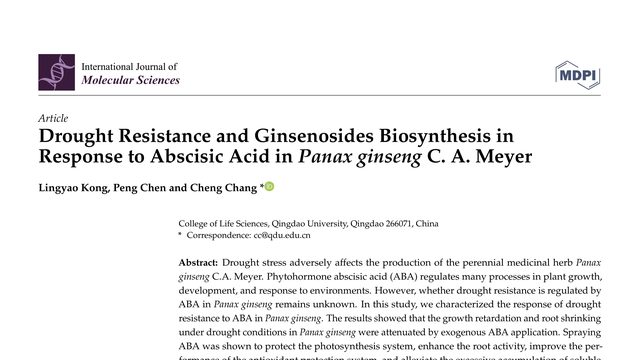
A dry spell can damage ginseng twice: it weakens the plant and threatens the valuable compounds in its roots. This study found that one natural plant signal may help with both problems.What if the same hormone that helps ginseng conserve water during drought also boosts its valuable medicinal compounds? This study tests that connection—and finds ABA strengthens both drought resistance and ginsenoside biosynthesis.
Byungju Kim, Jincheol Seol, Yoon Ki Kim, Jong‐Bong Lee
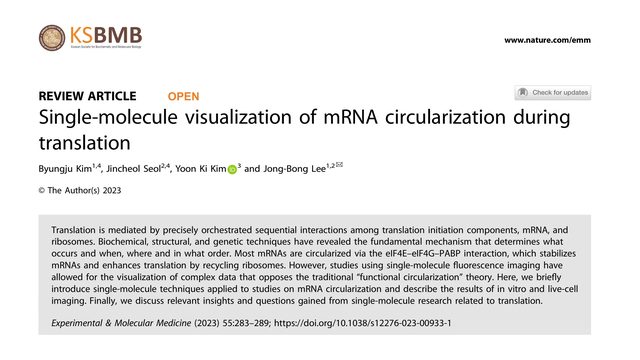
Inside every living cell, tiny messages are read to build proteins. Scientists thought many of those messages formed helpful loops—but watching them one at a time suggests the loop may be an illusion of motion.For years, mRNA circularization has been treated as a functional closed loop that helps translation. But single-molecule imaging reveals a striking possibility: translating mRNA can look compact without being physically connected at its ends.
Lara Tinacci, Deyan Stratev, Mariyana Strateva, G. Zhelyazkov, Ralica Kyuchukova, Andrea Armani
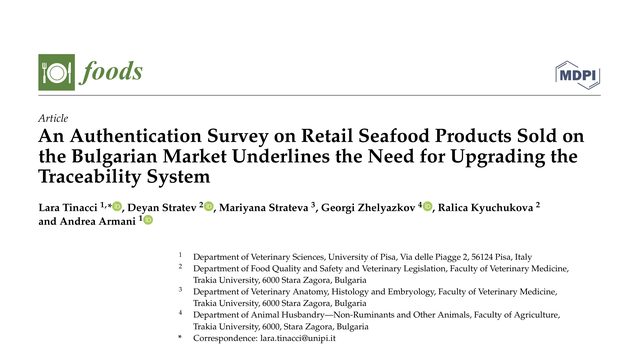
A seafood label can promise one species while the food inside is another. In Bulgaria, a broad check of shop-bought seafood found that this was not a rare mistake, but a problem affecting about one product in nine.A seafood label can look perfectly ordinary while naming the wrong species. In Bulgaria, DNA testing found that eleven percent of the sampled products were mislabeled, exposing both consumer risks and weaknesses in traceability.
 4:09
4:09