Characteristics of autonomic dysfunction in neuronal intranuclear inclusion disease
Overview3:58CCAI
paperi.ai
0:00 / 0:00
Lu Zhou, Yun Tian, Sizhe Zhang, Bin Jiao, Xinxin Liao, Yafang Zhou, Qiao Xiao, Jin Xue, Ranhui Duan, Beisha Tang, Lu Hua Shen
Some body functions run without permission: digestion, urination, temperature, and heartbeat. In this disease, those automatic systems may be sending one of the clearest clues that something deeper is wrong.
Background: This study aimed to investigate the features of autonomic dysfunction (AutD) in a large cohort of patients with neuronal intranuclear inclusion disease (NIID). Methods: A total of 122 patients with NIID and 122 controls were enrolled. All participants completed the Scales for Outcomes in Parkinson’s DiseaseAutonomic Questionnaire (SCOPA-AUT) and genetic screening for GGC expanded repeats within the NOTCH2NLC gene. All patients underwent neuropsychological and clinical assessments. SCOPA-AUT was performed to compare AutD between patients and controls. The associations between AutD and disease-related characteristics of NIID were studied. Results: 94.26% of patients had AutD. Compared with controls, patients had more severe AutD in total SCOPA-AUT, gastrointestinal, urinary, cardiovascular, thermoregulatory, pupillomotor and sexual domains (all p < 0.05). The area under the curve (AUC) value for the total SCOPA-AUT (AUC = 0.846, sensitivity = 69.7%, specificity = 85.2%, cutoff value = 4.5) was high in differentiating AtuD of patients with NIID from controls. The total SCOPA-AUT was significantly and positively associated with age (r = 0.185, p = 0.041), disease duration (r = 0.207, p = 0.022), Neuropsychiatric Inventory (NPI) (r = 0.446, p < 0.01), and Activities of Daily Living (ADL) (r = 0.390, p < 0.01). Patients with onset-of-AutD had higher SCOPA-AUT scores than patients without onset-of-AutD (p < 0.001), especially in the urinary system (p < 0.001) and male sexual dysfunction (p < 0.05). Conclusion: SCOPA-AUT can be used as a diagnostic and quantitative tool for autonomic dysfunction in NIID. The high prevalence of AutD in patients suggests that NIID diagnosis should be considered in patients with AutD, especially in those with unexplained AutD alone. AutD in patients is related to age, disease duration, impairment of daily living ability, and psychia
Transcript
Some body functions run without permission: digestion, urination, temperature, and heartbeat. In this disease, those automatic systems may be sending one of the clearest clues that something deeper is wrong. Neuronal intranuclear inclusion disease is a rare neurodegenerative disease affecting the brain and peripheral nerves, and its symptoms can vary widely.
These symptoms can include problems with thinking and movement, sensory and peripheral nerve function, and the body’s automatic systems too. Those automatic systems are reflected in autonomic dysfunction, one of the varied problems reported in NIID alongside cognitive, movement, sensory, and peripheral nerve symptoms.
The study set out to find how common these automatic problems are in this disease and what clinical features they are linked with. The team used a questionnaire designed to measure automatic-function problems, then compared those problems with other symptoms of the disease.
The striking result was that automatic dysfunction affected 94.26 percent of patients with this disease. Urinary problems were most common, followed by digestive, temperature-control, heart-and-blood-vessel, pupil, and sexual problems.
Compared with people without the disease, patients had more severe problems overall and in the digestive, urinary, heart-and-blood-vessel, temperature-control, and pupil systems. The questionnaire was also useful for separating patients with the disease from healthy people.
The overall score had the strongest performance, while digestive and urinary symptoms also helped distinguish the groups. The results suggest that this questionnaire can both measure automatic dysfunction and help identify it in people with this disease. Urinary and digestive symptoms each help distinguish autonomic problems linked to NIID from their absence, while combining all symptoms gives the clearest separation.
This matters because a simple symptom checklist could help identify affected people before the disease is advanced. The pattern was not identical to that seen in another degenerative nerve disease. That comparison had more urinary and sexual problems, while this disease had higher scores for digestive problems.
So automatic dysfunction is not one fixed pattern shared by every nerve disease; which body systems are affected can differ between diseases. The findings need care because the study did not combine questionnaire-based assessment with corresponding objective tests of autonomic nerve function.
The study also acknowledges that SCOPA-AUT has limitations when assessing autonomic dysfunction in NIID, so its questionnaire-based results require caution. It also omitted episodic vomiting, a symptom frequently observed in many patients with NIID, from the SCOPA-AUT assessment of autonomic dysfunction.
The study therefore says objective testing of autonomic nerve function is still necessary when evaluating patients with NIID in practice. It also calls for longitudinal research to understand the mechanisms and how these problems change during the course of disease. The overall conclusion is that the questionnaire can help evaluate automatic dysfunction in this disease.
Because automatic dysfunction was so common, the disease should be considered when those symptoms are unexplained, especially when they appear by themselves. For a patient, autonomic dysfunction may be related to age, how long the disease has lasted, limitations in daily living, and psychiatric symptoms.
Automatic body problems were extremely common in this group and were linked with other difficulties in daily life and thinking. That makes unexplained automatic symptoms a reason to consider this disease, not dismiss them as unrelated.
A derivative work by Paperi · AI-generated script, voice and captions
· pages and figures unaltered
Made with Paperi.
Drop in a research PDF — get a narrated video walkthrough like this one,
with highlights that follow the narration. Free to start.
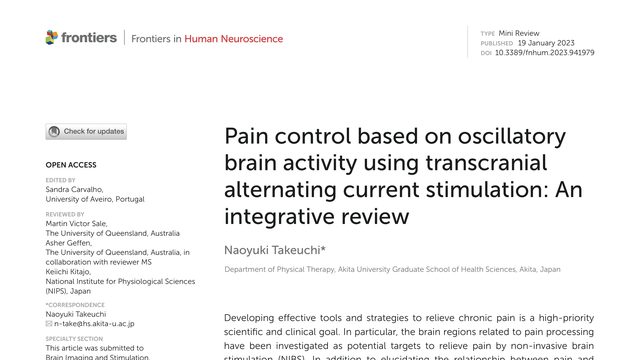
What if chronic pain is not only an alarm in the body, but also a rhythm in the brain? This review explores whether gently matching or reshaping those rhythms could turn the volume down.What if pain control is partly a problem of timing? This review asks whether gently steering the brain’s rhythms, and even synchronizing two brains, could open new routes to relief.
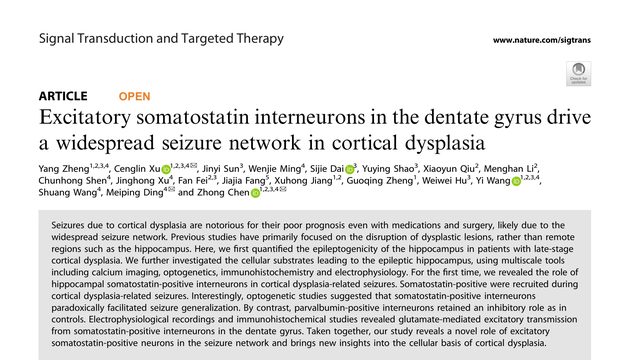
Some brain cells are supposed to act like brakes during seizures. But in a form of epilepsy linked to abnormal brain development, one group of those supposed brakes may instead help a seizure spread.What if a neuron class famous for inhibiting brain activity actually helps seizures spread? This study links a remote hippocampal circuit to widespread seizures in cortical dysplasia, and identifies somatostatin-positive interneurons as an unexpected driver.
Justin W. Andrushko, Jacob M. Levenstein, Catharina Zich, Evan Edmond, Jon Campbell, William T. Clarke, Uzay E. Emir, Jonathan P. Farthing, Charlotte Jane Stagg
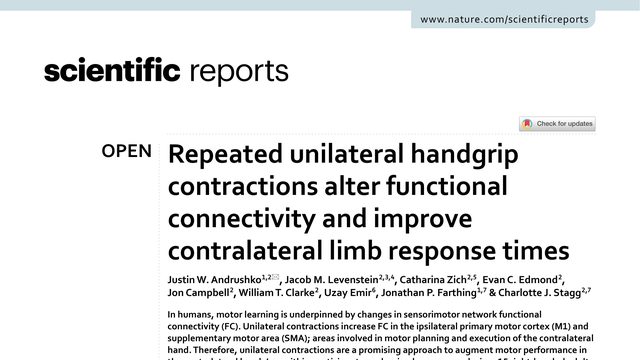
What if tiring out one hand could make the other hand respond faster? This study found that repeated squeezing with the right hand was followed by better performance in the left.What if tiring out your right hand for nine minutes could make your left hand respond faster and grip harder? This study tested that counterintuitive possibility with behaviour, functional connectivity, and brain chemistry.
 3:55