The Curse of Black Sigatoka: A Backward Bifurcation Perspective
Overview4:55CCAI
paperi.ai
0:00 / 0:00
Bernard Asamoah Afful, Luis F. Gordillo
A disease can keep spreading even after its estimated spread rate falls below one. That unsettling possibility may help explain why Black Sigatoka remains so difficult to eliminate from banana plantations.
A disease can keep spreading even after its estimated spread rate falls below one. That unsettling possibility may help explain why Black Sigatoka remains so difficult to eliminate from banana plantations. Black Sigatoka disease, also called black leaf streak disease, is an airborne fungal infection that severely impacts global banana and plantain production.
Its persistence and resistance to eradication make it one of the most challenging plant diseases to manage. The model shows that control strategies aimed only at reducing the disease’s spread may fail, because dual transmission pathways and mate limitation in sexual reproduction can sustain disease under some conditions.
Black Sigatoka is not a single event: spores land on young leaves, infection develops quietly, and damaged tissue later produces new spores. That repeating cycle explains how disease can move from one banana leaf to the next and persist across the plant.
The model includes both spore types and accounts for the fact that compatible mating types are needed to produce one of them. It finds that a stable infected state can coexist with a disease-free state even when the basic reproduction number is below one. That bistability offers a theoretical explanation for the disease’s extraordinary resilience and for the failure of control strategies aimed solely at reducing the basic reproduction number below one.
At high densities of infected leaf biomass, mating opportunities are abundant, allowing spore production to approach its maximum rate. At low densities, including during early invasion, after sanitation, or in small or fragmented plantations, encounters between compatible mating types decline sharply.
The rate of successful mating therefore decreases nonlinearly as infected biomass declines, as represented by the model’s density-dependent mating function. Think of a crowded party: at high density, compatible partners are easier to find, but in a nearly empty room, reduced encounters can make mating stall.
The model says disease invasion can occur when the basic reproduction number is below one but infected biomass is above a critical threshold and spore production is sufficiently rapid. In biological terms, sexual spore production can help an outbreak advance once the threshold of infected biomass is crossed.
This pattern suggests two possible long-term states: the disease may disappear, or it may persist. The numerical results clearly show the occurrence of a backward bifurcation, and they show that the basic reproductive number is an inadequate predictor of disease eradication.
Reducing that number below one may not be enough because the pathogen can persist through its repeated life cycle, two spore pathways, reinfection, and long-distance dispersal. The bistable behavior arises predominantly from nonlinear dynamics in the sexual reproduction cycle, which creates an unstable boundary between the possible outcomes.
The infected leaf biomass is driven mainly by the continuous supply of susceptible leaf biomass. Removing infected biomass shows a negative correlation with the infected state, indicating that it is the most effective control mechanism among the practices examined.
Natural leaf decay also contributes negatively by reducing available host biomass. The results have implications for monitoring after sanitation. As host biomass rises, the probability of eradication declines and the mean time to eradication increases, suggesting that follow-up sanitation and surveillance work best below critical host-density thresholds.
Maintaining plantations below those post-intervention host-biomass levels may improve the chance that the pathogen fades out and reduce the monitoring period needed to confirm eradication. Sustainable management of Black Sigatoka disease requires an integrated strategy that includes cultural practices and genetic resistance.
The backward bifurcation, caused by nonlinear limits on mating, explains the limited success of strategies focused only on transmissibility. Prioritizing resistant cultivars and strategically reducing susceptible host tissue offer the most promising path toward reducing reliance on intensive fungicide applications while safeguarding banana and plantain production.
The key lesson is that lowering transmission alone may not clear the disease. Keeping vulnerable leaves scarce and planting resistant varieties could give farmers a better chance of protecting bananas while reducing reliance on intensive fungicide use.
A derivative work by Paperi · AI-generated script, voice and captions
· pages and figures unaltered
Made with Paperi.
Drop in a research PDF — get a narrated video walkthrough like this one,
with highlights that follow the narration. Free to start.
Taking tuberculosis medicine regularly is not just a knowledge problem. In this Indonesian study, more information was linked with fewer treatment-related skills, while motivation was linked with better skills, the opposite directions make the story surprisingly complicated.What if more information about tuberculosis treatment is linked to weaker adherence-related skills, while motivation points in the opposite direction? This Indonesian study found exactly that pattern, but only explained a small part of the behavior.
Malika Felton, Stephanie Grigsby, Vanora A. Hundley
High blood pressure during pregnancy can threaten both mother and baby, yet medication is not always welcome. This study asks whether changing the pace of breathing can briefly bring the pregnant heart’s responses closer to those seen outside pregnancy.Pregnancy lowers the baseline amplitude of respiratory sinus arrhythmia, but slow and deep breathing can raise it to the level seen in non-pregnant women during spontaneous breathing. The surprising part is how strongly breathing frequency matters.
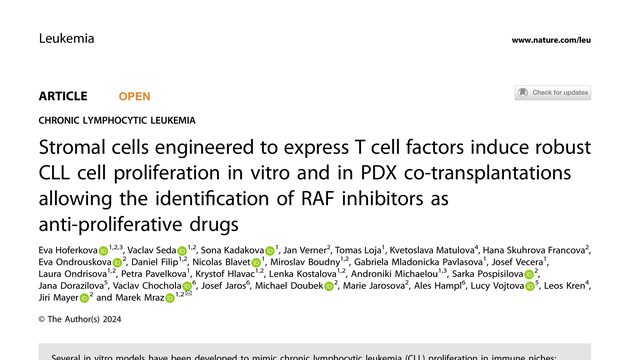
Eva Hoferkova, Václav Šeda, Sona Kadakova, Jan Verner, Tomáš Loja, Kvetoslava Matulova, Hana Skuhrová Francová, Eva Ondroušková, Daniel Filip, Nicolas Blavet, Miroslav Boudný, Gabriela Mladonická Pavlasová, Josef Večeřa, Laura Ondrišová, Petra Pavelkova, Krystof Hlavac, Lenka Košťálová, Androniki Michaelou, Šárka Pospíšilová, Jana Dorazilová, Václav Chochola, Josef Jaroš, Michael Doubek, Marie Jarošová, Aleš Hampl, Lucy Vojtová, Leoš Křen, Jiří Mayer, Marek Mráz
Chronic leukemia cells often stop growing when removed from the body, making them hard to study. This study rebuilt the neighborhood around them, and made their hidden growth behavior visible, then found a drug class that stopped it.What if the missing ingredient in chronic lymphocytic leukemia research is not another drug, but the right neighborhood? By engineering stromal cells to deliver T-cell signals, this study makes CLL cells proliferate, and reveals a vulnerability that ordinary survival assays can miss.
 3:00