Stromal cells engineered to express T cell factors induce robust CLL cell proliferation in vitro and in PDX co-transplantations allowing the identification of RAF inhibitors as anti-proliferative drugs
Overview4:33CCAI
paperi.ai
0:00 / 0:00
Eva Hoferkova, Václav Šeda, Sona Kadakova, Jan Verner, Tomáš Loja, Kvetoslava Matulova, Hana Skuhrová Francová, Eva Ondroušková, Daniel Filip, Nicolas Blavet, Miroslav Boudný, Gabriela Mladonická Pavlasová, Josef Večeřa, Laura Ondrišová, Petra Pavelkova, Krystof Hlavac, Lenka Košťálová, Androniki Michaelou, Šárka Pospíšilová, Jana Dorazilová, Václav Chochola, Josef Jaroš, Michael Doubek, Marie Jarošová, Aleš Hampl, Lucy Vojtová, Leoš Křen, Jiří Mayer, Marek Mráz
Chronic leukemia cells often stop growing when removed from the body, making them hard to study. This study rebuilt the neighborhood around them, and made their hidden growth behavior visible, then found a drug class that stopped it.
Several in vitro models have been developed to mimic chronic lymphocytic leukemia (CLL) proliferation in immune niches; however, they typically do not induce robust proliferation. We prepared a novel model based on mimicking T-cell signals in vitro and in patient-derived xenografts (PDXs). Six supportive cell lines were prepared by engineering HS5 stromal cells with stable expression of human CD40L, IL4, IL21, and their combinations. Co-culture with HS5 expressing CD40L and IL4 in combination led to mild CLL cell proliferation (median 7% at day 7), while the HS5 expressing CD40L, IL4, and IL21 led to unprecedented proliferation rate (median 44%). The co-cultures mimicked the gene expression fingerprint of lymph node CLL cells (MYC, NFκB, and E2F signatures) and revealed novel vulnerabilities in CLL-T-cell-induced proliferation. Drug testing in co-cultures revealed for the first time that pan-RAF inhibitors fully block CLL proliferation. The co-culture model can be downscaled to five microliter volume for large drug screening purposes or upscaled to CLL PDXs by HS5-CD40L-IL4 ± IL21 co-transplantation. Co-transplanting NSG mice with purified CLL cells and HS5-CD40L-IL4 or HS5-CD40L-IL4-IL21 cells on collagen-based scaffold led to 47% or 82% engraftment efficacy, respectively, with ~20% of PDXs being clonally related to CLL, potentially overcoming the need to co-transplant autologous T-cells in PDXs.
Transcript
Chronic leukemia cells often stop growing when removed from the body, making them hard to study. This study rebuilt the neighborhood around them—and made their hidden growth behavior visible, then found a drug class that stopped it. Chronic lymphocytic leukemia depends on interactions with its surrounding environment, with lymph nodes being the primary site of leukemia-cell growth.
But simply activating the cell's main receptor is not enough. The strongest candidates for the missing growth signals are interactions with helper T cells, because contact with those cells can stimulate leukemia cells to divide. In mice, successful leukemia-cell growth also depends on adding activated T cells.
That creates a practical problem: when leukemia cells are taken out of the body, they usually do not divide, making this process difficult to study. Most existing support-cell models help CLL cells survive by overcoming spontaneous cell death, but they still do not trigger CLL-cell proliferation.
Adding costly recombinant growth signals to co-cultures can produce some division, but the resulting CLL proliferation rate remains relatively low and highly variable. So the study engineered support cells to mimic T-cell signals, inducing CLL proliferation without adding recombinant factors to the co-culture.
Support cells carrying two immune signals produced mild leukemia-cell growth. Adding a third signal led to consistently high growth, reaching about forty-four percent after seven days. Signals from supportive neighboring cells were enough to make the leukemia cells divide: about seven percent divided with two signals, compared with forty-four percent when a third signal was added.
This support also kept more cells alive over time, revealing how the surrounding tissue can drive disease growth. The high-growth support cells produced more division than the loose combination of the same immune signals. This fits observations in ordinary immune cells that one of these signals works best when it is presented on a cell surface.
With a model that finally makes leukemia cells grow, the study could test drugs aimed at stopping growth rather than simply killing cells. The researchers compared medicines acting on several internal signaling routes. The surprise was that two drugs blocking the RAF route reduced growth in every tested case, while the commonly used pathway blockers had only a mild effect in some samples.
The RAF-blocking drugs reduced CLL-cell proliferation in every tested case, producing at least a fifty percent reduction in proliferation. Because RAF inhibitors did not affect CLL cell viability, their growth-blocking activity would be missed by classical cytotoxicity screens focused on cell death.
That distinction matters: the model could overcome the obstacle of testing anti-proliferative drugs when CLL proliferation is absent in vitro. RAF inhibitors left CLL viability unchanged, meaning their ability to block proliferation would be missed by classical cytotoxicity screens focused on cell death.
The same engineered support cells also helped leukemia cells establish growth in mice without transplanting activated human T cells. A small artificial structure loaded with support cells acted as a replacement neighborhood, imitating part of a lymph node. But this mouse model has an important warning: many growing tumors were not directly related to the main original leukemia clone, and healthy virus-carrying immune cells could outcompete the leukemia cells.
Together, the results create a practical bridge from biology to treatment testing: the support-cell system can be made small for drug screens or expanded into a mouse model, while preserving the immune signals that drive leukemia-cell growth. The model can be downscaled to microliter volumes, creating a practical platform for screening candidate drugs in CLL research studies.
The study also showed, for the first time, that RAF inhibitors can disturb proliferation induced by T-cell factors in CLL cells. Signals from immune-supporting cells can push chronic leukemia cells into active growth, while RAF inhibitors can block that growth without killing the cells outright.
That creates a more realistic way to search for treatments.
A derivative work by Paperi · AI-generated script, voice and captions
· pages and figures unaltered
Made with Paperi.
Drop in a research PDF — get a narrated video walkthrough like this one,
with highlights that follow the narration. Free to start.
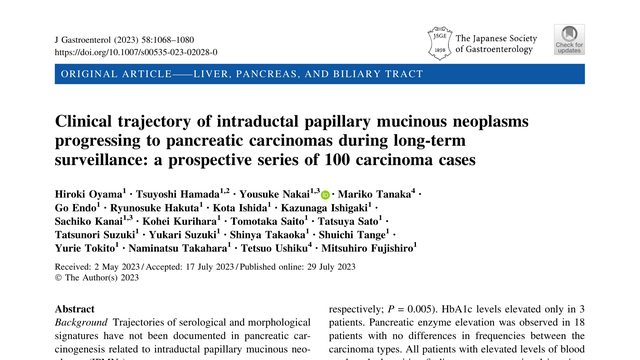
Regular scans can watch a pancreatic cyst for years, yet a dangerous cancer may still appear without the warning signs doctors expect. This study reveals why surveillance is harder than it looks.Patients with pancreatic cysts can be monitored for years, yet cancer may still appear at an advanced stage. This study asks whether blood markers and imaging show a recognizable warning trajectory before diagnosis.
Laura Medina‐Perucha, Tomás López‐Jiménez, Georgina Pujolar-Díaz, Cristina Martínez-Bueno, Jordina Munrós-Feliu, Carme Valls-Llobet, Constanza Jacques‐Aviñó, Anna Sofie Holst, Diana Pinzón-Sanabria, María Mercedes Vicente-Hernández, Andrea García-Egea, Anna Berenguera
A period is not only a monthly event to manage. It may also act as a warning light for health, and the warning can be shaped by money, education, caregiving, and everyday living conditions.What if menstrual patterns are not just individual biology, but also reflect financial hardship, education, and overall health? This large Spanish survey finds striking links between social circumstances and menstrual experiences.
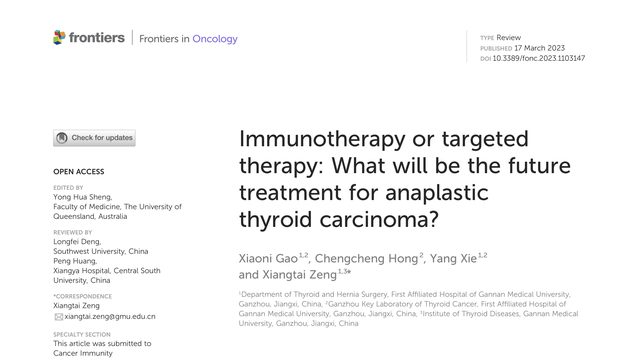
Xiaoni Gao, Chengcheng Hong, Yang Xie, Xiangtai Zeng
A rare thyroid cancer causes more than half of all deaths from thyroid cancer, yet makes up only a small fraction of cases. This review asks whether the answer is to target the cancer’s weak spots, awaken the immune system, or combine both.Anaplastic thyroid carcinoma makes up only about two percent of thyroid cancers, yet causes more than half of thyroid-cancer deaths. This review asks whether targeted drugs, immunotherapy, or their combination can change that outlook.
 4:19
4:19