Acute cardiovascular responses to slow and deep breathing in normotensive non-pregnant and pregnant women
Overview4:40CCAI
paperi.ai
0:00 / 0:00
Malika Felton, Stephanie Grigsby, Vanora A. Hundley
High blood pressure during pregnancy can threaten both mother and baby, yet medication is not always welcome. This study asks whether changing the pace of breathing can briefly bring the pregnant heart’s responses closer to those seen outside pregnancy.
Objective: To compare the acute cardiovascular responses of non-pregnant and pregnant women to slow and deep breathing (SDB) at a range of breathing frequencies. Participants: Forty-one women (23 non-pregnant and 18 pregnant). Methods: Participants completed five different breathing conditions in a randomised order (5-min duration); spontaneous breathing (Sfr), dynamic SDB breathing frequency (Dfr), and three fixed breathing frequencies of 4 breaths. min−1 (4Ffr), 6 breaths. min−1 (6Ffr), and 8 breaths. min−1 (8Ffr). Main Outcome Measures: Non-invasive beat-to-beat arterial blood pressure, heart rate and respired airflow were monitored continuously. Results: The maximum amplitude of respiratory sinus arrhythmia (RSA) during SDB was 2.1 times higher than during spontaneous breathing (Sfr) for both groups, maximising at 6 breaths. min−1 (0.25s ± 0.1 non-pregnant, 0.15s ± 0.1 pregnant). Although absolute RSA was significantly lower in pregnant women during spontaneous breathing (Sfr; 0.07s vs. 0.12s non-pregnant), SDB increased RSA to the same level as non-pregnant women’s spontaneous breathing levels. In both groups, the amplitude of blood pressure oscillations (both systolic and diastolic blood pressure) increased as breathing frequency declined, reaching a peak at 4 breaths. min−1 (4Ffr), which was up to 4.5 times higher (14.3%, 10 mmHg) than during spontaneous breathing (Sfr). Conclusion: Cardiovascular responses maximised at ≤6 breaths. min−1 and acute haemodynamic responses to SDB are similar in pregnant and non-pregnant women, despite absolute differences under spontaneous breathing conditions. If blood pressure oscillations underpin the anti-hypertensive effect of SDB, the data indicate that these can be amplified in pregnant women at frequencies between 4 and 6 breaths. min−1.
Transcript
High blood pressure during pregnancy can threaten both mother and baby, yet medication is not always welcome. This study asks whether changing the pace of breathing can briefly bring the pregnant heart’s responses closer to those seen outside pregnancy.
High blood pressure that begins during pregnancy can increase the risk of serious complications. It appears after twenty weeks in women who did not have high blood pressure before pregnancy. Pharmaceutical treatments for gestational hypertension exist, but giving birth is the only cure described here once it occurs during pregnancy.
Because many women have an aversion to medication during pregnancy, pregnant women are motivated to investigate and undertake non-drug approaches for this condition. Before slow, deep breathing can be tested as a treatment, its immediate effects in pregnant women need to be understood and compared with those in non-pregnant women.
The study treats the body less like a collection of separate machines and more like a band: breathing and circulation interact and synchronize as breathing changes. So the central question was how pregnant and non-pregnant women respond to slow, deep breathing at different breathing speeds.
Participants completed five breathing conditions: spontaneous breathing, three fixed slower rates, and a dynamic rate selected by an optimisation algorithm to maximise respiratory sinus arrhythmia. The app delivered each slow-breathing condition, using fixed rates or a personalised dynamic frequency selected by its bespoke algorithm for participants.
The changing breathing speed was chosen by an algorithm that maximized the size of the heart’s breathing-linked changes. The heart’s breathing-linked changes were smaller in pregnant women than in non-pregnant women under every breathing condition. But slow, deep breathing raised that response in pregnant women to a level similar to non-pregnant women’s normal-breathing level, and the response stopped increasing around six breaths per minute.
At six breaths per minute or slower, the response was two point one times higher than during normal breathing in both groups, although its absolute level remained lower in pregnant women. The plotted points make the pattern visible: the breathing-linked heart response rises toward a broad peak, then levels off, while normal breathing sits apart.
Slow, deep breathing also made blood pressure rise and fall more strongly within each breath, during both breathing in and breathing out. That pattern appeared in both pregnant and non-pregnant women. The slower the breathing, the larger the blood-pressure swings became, reaching their highest level at four breaths per minute—up to four and a half times higher than during normal breathing.
But the difference between four and six breaths per minute was small enough that it is unlikely to create a meaningful clinical difference in a long-term breathing program. The pattern may reflect stronger coordination between breathing and circulation, with near-maximal coordination around six breaths per minute.
The groups were relatively small, limiting what the study could determine, including whether cardiovascular responses change at different stages of pregnancy. The study also did not record or control for menstrual-cycle timing or contraceptive use, leaving those possible influences unexamined here.
Future research needs to test whether these responses also occur in pregnant women who have high blood pressure, because responses can differ between people with and without high blood pressure. Overall, healthy pregnant and non-pregnant women had similar relative cardiovascular responses to slow, deep breathing.
In pregnant women, the heart’s breathing-linked response, which is lower during normal breathing, rose briefly to non-pregnant levels. The strongest short-term changes appeared at six breaths per minute or slower, while ten breaths per minute was not enough to produce the maximum response.
In pregnant women, slow breathing can acutely raise respiratory sinus arrhythmia to levels similar to those observed in non-pregnant women during spontaneous breathing. Daily practice remains worth testing, because future studies should examine long-term changes to RSA, blood pressure, and other cardiovascular variables.
Slow breathing produced similar short-term cardiovascular responses in healthy pregnant and non-pregnant women, and breathing at about six breaths per minute produced near-maximal changes. That makes it a promising subject for future testing—not a proven treatment yet.
A derivative work by Paperi · AI-generated script, voice and captions
· pages and figures unaltered
Made with Paperi.
Drop in a research PDF — get a narrated video walkthrough like this one,
with highlights that follow the narration. Free to start.
Eva Hoferkova, Václav Šeda, Sona Kadakova, Jan Verner, Tomáš Loja, Kvetoslava Matulova, Hana Skuhrová Francová, Eva Ondroušková, Daniel Filip, Nicolas Blavet, Miroslav Boudný, Gabriela Mladonická Pavlasová, Josef Večeřa, Laura Ondrišová, Petra Pavelkova, Krystof Hlavac, Lenka Košťálová, Androniki Michaelou, Šárka Pospíšilová, Jana Dorazilová, Václav Chochola, Josef Jaroš, Michael Doubek, Marie Jarošová, Aleš Hampl, Lucy Vojtová, Leoš Křen, Jiří Mayer, Marek Mráz
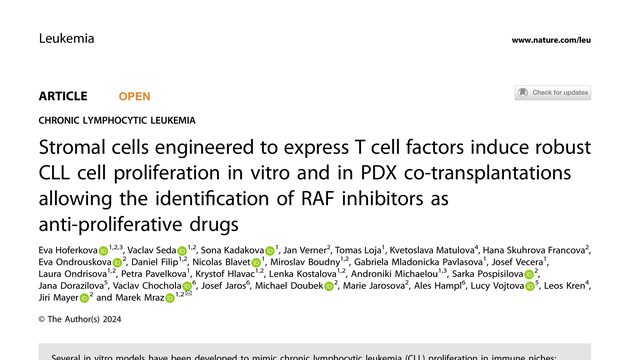
Chronic leukemia cells often stop growing when removed from the body, making them hard to study. This study rebuilt the neighborhood around them, and made their hidden growth behavior visible, then found a drug class that stopped it.What if the missing ingredient in chronic lymphocytic leukemia research is not another drug, but the right neighborhood? By engineering stromal cells to deliver T-cell signals, this study makes CLL cells proliferate, and reveals a vulnerability that ordinary survival assays can miss.
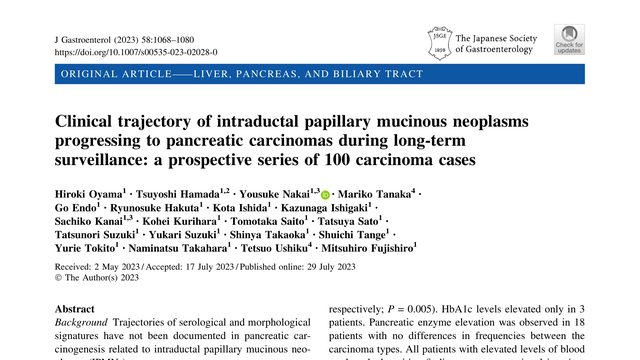
Regular scans can watch a pancreatic cyst for years, yet a dangerous cancer may still appear without the warning signs doctors expect. This study reveals why surveillance is harder than it looks.Patients with pancreatic cysts can be monitored for years, yet cancer may still appear at an advanced stage. This study asks whether blood markers and imaging show a recognizable warning trajectory before diagnosis.
Laura Medina‐Perucha, Tomás López‐Jiménez, Georgina Pujolar-Díaz, Cristina Martínez-Bueno, Jordina Munrós-Feliu, Carme Valls-Llobet, Constanza Jacques‐Aviñó, Anna Sofie Holst, Diana Pinzón-Sanabria, María Mercedes Vicente-Hernández, Andrea García-Egea, Anna Berenguera
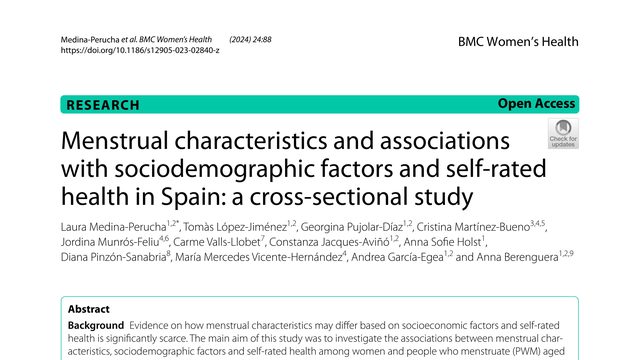
A period is not only a monthly event to manage. It may also act as a warning light for health, and the warning can be shaped by money, education, caregiving, and everyday living conditions.What if menstrual patterns are not just individual biology, but also reflect financial hardship, education, and overall health? This large Spanish survey finds striking links between social circumstances and menstrual experiences.
 4:33