Explaining adherence to tuberculosis treatment through the information-motivation-behavioral skills model: a PLS - SEM study in Indonesia
Overview3:00CCAI
paperi.ai
0:00 / 0:00
Nixson Manurung
Taking tuberculosis medicine regularly is not just a knowledge problem. In this Indonesian study, more information was linked with fewer treatment-related skills, while motivation was linked with better skills, the opposite directions make the story surprisingly complicated.
Taking tuberculosis medicine regularly is not just a knowledge problem. In this Indonesian study, more information was linked with fewer treatment-related skills, while motivation was linked with better skills—the opposite directions make the story surprisingly complicated.
Tuberculosis remains an unresolved public health issue at the global, national, and local levels. It is not only an infectious disease; it can also reduce the productivity, quality of life, and social functioning of people affected.
The study organizes treatment support around three parts: what patients know, what encourages them, and what practical skills help them act. The IMB framework has already been used to study behavioral factors related to tuberculosis treatment adherence, so this study’s novelty lies in its contextual and methodological contributions.
Here, the framework was adapted to tuberculosis care in patients, families, healthcare workers, and local communities in Indonesia. The study surveyed tuberculosis patients receiving the first category of treatment in community health centers across Serdang Bedagai, North Sumatra.
The questions covered the three parts of the framework, using responses from strongly agree to strongly disagree. Before interpreting the relationships, the researchers found that internal consistency and convergent validity were acceptable for every construct they measured in the study.
The results supported the adequacy of those measures. In the tested model, Information was significantly negatively associated with Behavioral Skills, while Motivation was significantly positively associated with them. Information had a statistically significant negative association with behavioral skills, while motivation had a statistically significant positive association with them.
The information relationship was larger in absolute size, but it cannot be called a stronger positive influence because its direction was negative. But the model did not show strong global fit, as SRMR exceeded the benchmark and NFI was far from values close to one.
The findings support using the framework to identify information, motivation, and practical skill targets in tuberculosis care, but not claims of strong explanatory power. In real life, support should combine accurate treatment information, family and community support, and practical help with medication schedules, follow-up visits, mask use, and sputum disposal.
That means a patient may need more than instructions: they may need encouragement and help turning treatment into manageable daily actions. Treatment support may work best when it combines clear information with encouragement and practical help.
The study offers a useful way to organize that support, but its results are exploratory rather than a complete explanation of adherence.
A derivative work by Paperi · AI-generated script, voice and captions
· pages and figures unaltered
Made with Paperi.
Drop in a research PDF — get a narrated video walkthrough like this one,
with highlights that follow the narration. Free to start.
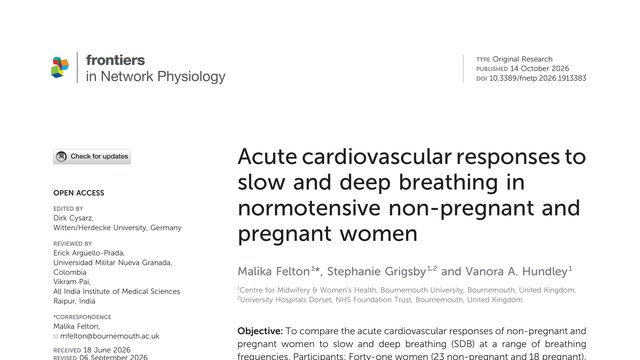
Malika Felton, Stephanie Grigsby, Vanora A. Hundley
High blood pressure during pregnancy can threaten both mother and baby, yet medication is not always welcome. This study asks whether changing the pace of breathing can briefly bring the pregnant heart’s responses closer to those seen outside pregnancy.Pregnancy lowers the baseline amplitude of respiratory sinus arrhythmia, but slow and deep breathing can raise it to the level seen in non-pregnant women during spontaneous breathing. The surprising part is how strongly breathing frequency matters.
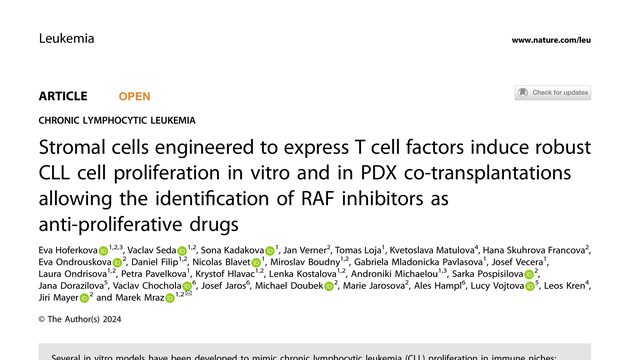
Eva Hoferkova, Václav Šeda, Sona Kadakova, Jan Verner, Tomáš Loja, Kvetoslava Matulova, Hana Skuhrová Francová, Eva Ondroušková, Daniel Filip, Nicolas Blavet, Miroslav Boudný, Gabriela Mladonická Pavlasová, Josef Večeřa, Laura Ondrišová, Petra Pavelkova, Krystof Hlavac, Lenka Košťálová, Androniki Michaelou, Šárka Pospíšilová, Jana Dorazilová, Václav Chochola, Josef Jaroš, Michael Doubek, Marie Jarošová, Aleš Hampl, Lucy Vojtová, Leoš Křen, Jiří Mayer, Marek Mráz
Chronic leukemia cells often stop growing when removed from the body, making them hard to study. This study rebuilt the neighborhood around them, and made their hidden growth behavior visible, then found a drug class that stopped it.What if the missing ingredient in chronic lymphocytic leukemia research is not another drug, but the right neighborhood? By engineering stromal cells to deliver T-cell signals, this study makes CLL cells proliferate, and reveals a vulnerability that ordinary survival assays can miss.
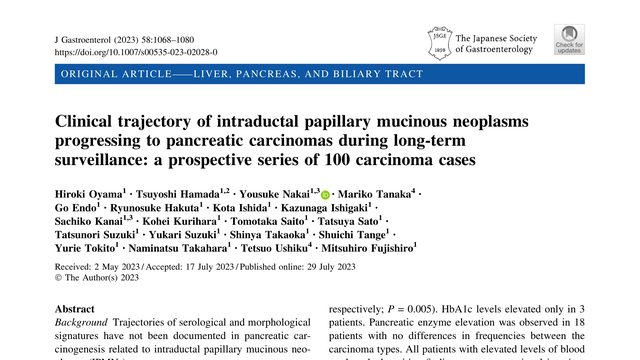
Regular scans can watch a pancreatic cyst for years, yet a dangerous cancer may still appear without the warning signs doctors expect. This study reveals why surveillance is harder than it looks.Patients with pancreatic cysts can be monitored for years, yet cancer may still appear at an advanced stage. This study asks whether blood markers and imaging show a recognizable warning trajectory before diagnosis.
 4:40