The coordinated management of ribosome and translation during injury and regeneration
Curious3:12CCAI
paperi.ai
0:00 / 0:00
Thanh Nguyen, Jason C. Mills, Charles J. Cho
When the gut is injured, cells do not simply switch on repair. They first shut down their protein-making machinery, dismantle part of it, and only then prepare to rebuild.
Diverse acute and chronic injuries induce damage responses in the gastrointestinal (GI) system, and numerous cell types in the gastrointestinal tract demonstrate remarkable resilience, adaptability, and regenerative capacity in response to stress. Metaplasias, such as columnar and secretory cell metaplasia, are well-known adaptations that these cells make, the majority of which are epidemiologically associated with an elevated cancer risk. On a number of fronts, it is now being investigated how cells respond to injury at the tissue level, where diverse cell types that differ in proliferation capacity and differentiation state cooperate and compete with one another to participate in regeneration. In addition, the cascades or series of molecular responses that cells show are just beginning to be understood. Notably, the ribosome, a ribonucleoprotein complex that is essential for translation on the endoplasmic reticulum (ER) and in the cytoplasm, is recognized as the central organelle during this process. The highly regulated management of ribosomes as key translational machinery, and their platform, rough endoplasmic reticulum, are not only essential for maintaining differentiated cell identity, but also for achieving successful cell regeneration after injury. This review will cover in depth how ribosomes, the endoplasmic reticulum, and translation are regulated and managed in response to injury (e.g., paligenosis), as well as why this is essential for the proper adaptation of a cell to stress. For this, we will first discuss how multiple gastrointestinal organs respond to stress through metaplasia. Next, we will cover how ribosomes are generated, maintained, and degraded, in addition to the factors that govern translation. Finally, we will investigate how ribosomes and translation machinery are dynamically regulated in response to injury. Our increased understanding of this overlooked cell fate decision mechanism will facilitate the discovery of novel therapeutic targets for gastrointestinal tract tumors, focusing on ribosomes and translation machinery.
Transcript
When the gut is injured, cells do not simply switch on repair. They first shut down their protein-making machinery, dismantle part of it, and only then prepare to rebuild. Injury can make gut cells remarkably resilient and adaptable, but the same changes can also raise cancer risk.
Different cell types cooperate and compete as damaged tissue tries to regenerate. The central player is the ribosome, a cell structure essential for making proteins. Managing ribosomes and the membrane network that supports them helps cells preserve their identity and regenerate after injury.
Some mature cells normally sit quietly and contain abundant equipment for releasing substances. After injury, they become more flexible: they can start dividing and can turn into other cell types. Think of a specialist workshop after a disaster.
Its workers stop making their usual product, clear space, retrain, and help rebuild the whole neighborhood. Injured gut cells can make a similarly dramatic change. This response follows a step-by-step process called paligenosis, the name given to how secretory cells respond to injury.
It is conserved across evolution. First, cells break down some internal structures. Next, they switch on programs linked with an earlier, more flexible state. Finally, they re-enter the cell cycle and begin preparing to multiply.
But one crucial piece has been missing from this picture: the ribosome. Cells need enough ribosomes to carry out their main job of making proteins. Here is the surprising turn.
An injured cell first reduces production of new ribosomes and shuts down protein making, lowering the work and energy costs of both processes. The cell’s existing ribosomes can also be broken down, while the membrane network around some of them changes.
Disturbing ribosome balance can stabilize p53. So during injury, protein making is generally slowed. At the same time, cells keep sensing their supplies of nutrients and energy and prepare for the rebuilding phase. Breaking down ribosomes and the membrane network around them is not simply waste disposal.
These processes help cells adjust to stress and preserve the internal balance needed to respond to injury. Taken together, the review places ribosomes at the center of the injury response. They are not passive machines; their regulation helps determine how cells cope with damage and regenerate.
This view brings several injury observations together, including slowed protein production, ribosome breakdown, cell death, and renewed cell division, with ribosomes and the ER at the center. Addressing remaining questions about ribosome regulation across cell types may expand understanding of regeneration and tumor formation across diverse tissues.
The paper’s central message is that ribosomes—the cell’s protein-making machines—help decide whether an injured cell pauses, changes identity, survives, or regenerates. That may point toward better ways to understand and treat gut cancers.
A derivative work by Paperi · AI-generated script, voice and captions
· pages and figures unaltered
Made with Paperi.
Drop in a research PDF — get a narrated video walkthrough like this one,
with highlights that follow the narration. Free to start.
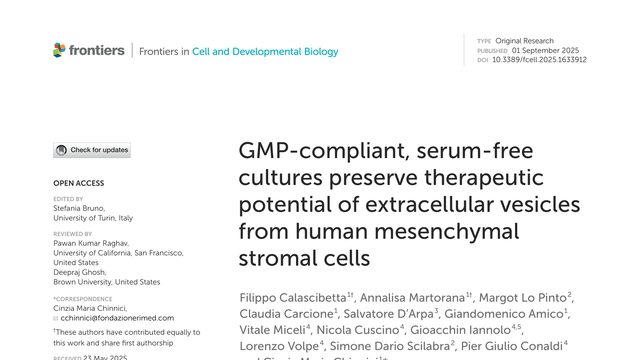
Filippo Calascibetta, Annalisa Martorana, Margot Lo Pinto, Claudia Carcione, Salvatore D’Arpa, Giandomenico Amico, Vitale Miceli, Nicola Cuscino, Gioacchin Iannolo, L. Volpe, Simone Dario Scilabra, Pier Giulio Conaldi, Cinzia Maria Chinnici
Tiny packages released by human cells can help calm the process that scars a liver. But before such treatments reach patients, scientists need a way to make those packages cleanly and consistently.What if the culture medium used to grow therapeutic cells quietly changes the quality of the vesicles they release? This study tests whether a GMP-compliant, serum-free medium can make production more standardized without sacrificing anti-fibrotic activity.
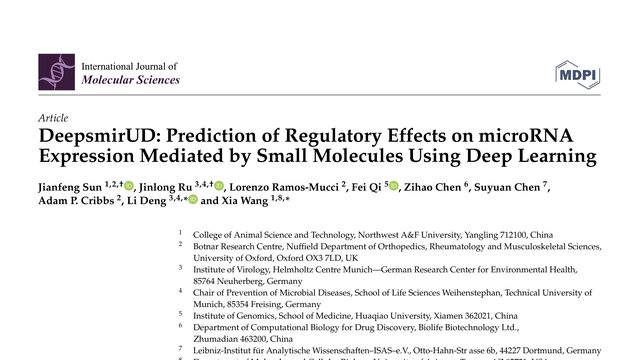
Jianfeng Sun, Jinlong Ru, Lorenzo Ramos‐Mucci, Fei Qi, Zihao Chen, Suyuan Chen, Adam P. Cribbs, Li Deng, Xia Wang
A drug may affect a tiny genetic message by turning its activity up or down—but finding out which direction it takes can require slow, expensive experiments. This study asks whether a computer can make that prediction first.A drug may bind a microRNA, but binding alone does not tell you whether that microRNA goes up or down. DeepsmirUD tackles that missing direction using an ensemble of twelve deep-learning frameworks.
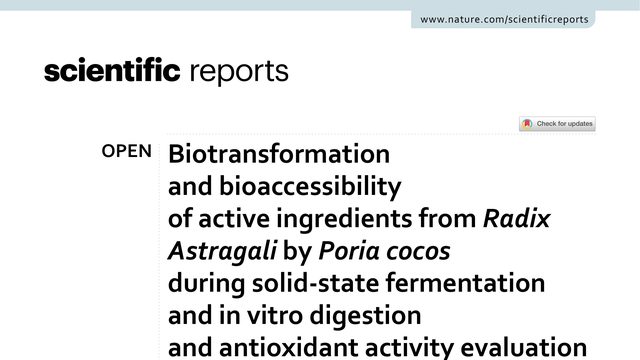
A traditional herbal root contains a valued protective compound, but only a small amount is normally available. This study found that growing a food fungus on the root could make much more of that compound accessible after digestion.A medicinal fungus turns a hard-to-access Astragalus compound into something far more abundant—and the fermented material still shows stronger antioxidant activity after simulated digestion.
 4:08
4:08