Rabies vaccinations at the rural–urban divide: successes and barriers to dog rabies vaccination programs from a rural and urban campaign in Zambia
Curious4:00CCAI
paperi.ai
0:00 / 0:00
Ricky Chazya, Chilufya Mulenga, Andrew D. Gibson, Frederic Lohr, Cassandra Boutelle, Sarah Bonaparte, Oline Sinywibulula, Gareth J. Thomas, Patricia Bwalya, George Dautu, Linous Munsimbwe, Geoffrey Muuka, Luke Gamble, Ryan M. Wallace, Michelle A. Waltenburg
A rabies campaign can succeed in a rural community yet fall short in a city—not because people do not care, but because the distance to one vaccination point can decide which dogs are protected.
A rabies campaign can succeed in a rural community yet fall short in a city—not because people do not care, but because the distance to one vaccination point can decide which dogs are protected. Rabies is one of the most lethal infectious diseases, with the highest case fatality rate of all zoonoses.
Bites from dogs are responsible for approximately 95% of the estimated 70,000 human rabies deaths globally. Over 70% of the world’s population resides in areas where dogs are a reservoir for rabies. Asia and Africa have the highest risk because dog protection is relatively low and dogs often roam freely within the community.
To understand what gets in the way, the study examined dog vaccination coverage after two mass campaigns: one in urban Lusaka and one in rural Itezhi tezhi. It also estimated and described the dog populations in those areas. That comparison matters because the same campaign design may work very differently where dogs and people are spread far apart than where they live close together.
In Lusaka, survey teams looked for free-roaming dogs in vaccination zones and recorded whether each dog had a visible vaccination mark, such as wax paint. This helped estimate how many roaming dogs there were and how many had been vaccinated.
They repeated those dog sight surveys over two consecutive days, enabling a sight-re-sight analysis to estimate the free-roaming dog population. The closer dogs lived to a central vaccination site, the more likely they were to be vaccinated.
Dogs within 200 metres had 58% coverage, compared with 41% farther away. The pattern links vaccination coverage to distance from the campaign-post site, showing that coverage differed across distances in the Lusaka campaign.
After allowing for possible overreporting in the survey, the central-site approach did not reach the level of protection needed at any distance, and coverage declined rapidly after 1,500 metres. Reported coverage closely matched how far households said they were willing to walk, linking what people said they would do with the protection actually recorded.
When the relationship between people and dogs was extended across Zambia, the estimated dog population was about 3.2 million, including about 1.2 million free-roaming dogs. Most dogs lived in rural communities: 62% there, 24% in peri-urban communities, and only 14% in urbanized communities.
The rural campaign reached the needed level of protection, while Lusaka reached only 35%. The rural campaign combined central sites with door-to-door vaccination, and it invested heavily in making people aware of the campaign beforehand.
Only 9% of dog owners in the rural community said they were unaware of the campaign before it began, and difficulty reaching the campaign was rarely reported as a barrier. The findings need caution because some information was missing, and the study sometimes assumed that dogs in one household had the same roaming and vaccination status.
The researchers say that approach may be reasonable but is prone to error. People may also have misremembered vaccinations or overstated how far they would walk, which could make coverage and willingness look higher than they really were.
The study compared a very low-density community with a very high-density community, leaving a large gap in the middle. Future studies should examine those middle-density communities to test whether the same trends hold. The study suggests that Zambia will need different vaccination strategies for different communities: bring teams to households in hard-to-reach rural areas, make city sites easier to reach, and work with private veterinarians.
A derivative work by Paperi · AI-generated script, voice and captions
· pages and figures unaltered
Made with Paperi.
Drop in a research PDF — get a narrated video walkthrough like this one,
with highlights that follow the narration. Free to start.
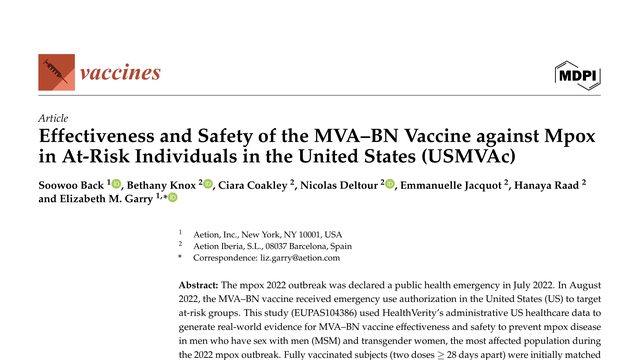
Soowoo Back, Bethany Knox, Ciara Coakley, Nicolas Deltour, Emmanuelle Jacquot, Hanaya Raad, Elizabeth M. Garry
Mpox seemed to fade from the headlines, but the risk did not disappear. In U.S. health records, people who received both recommended vaccine doses had far less mpox than similar unvaccinated people.In a small real-world US cohort, two doses of the MVA–BN vaccine were associated with eighty-nine percent effectiveness against mpox. But the same study also shows why that impressive number needs careful interpretation.
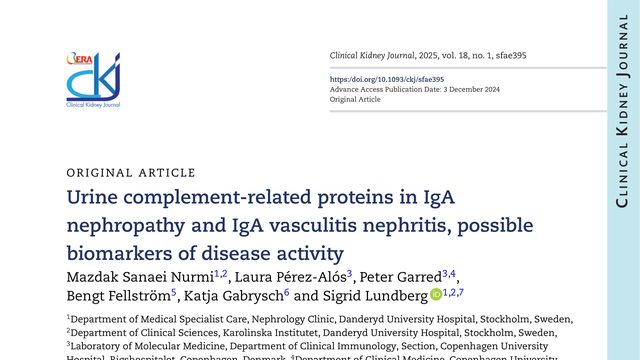
Mazdak Sanaei Nurmi, Laura Pérez‐Alós, Peter Garred, Bengt Fellström, Katja Gabrysch, Sigrid Lundberg
A kidney biopsy gives doctors a snapshot of damage, but it carries risks. This study asks whether urine can reveal something more useful: whether kidney disease is active now, or quietly leaving lasting scars.A urine sample may carry two different signals in IgA kidney disease: PTX-3 and MBL may point to active proliferative lesions, while C4c may point toward chronic damage and future decline.
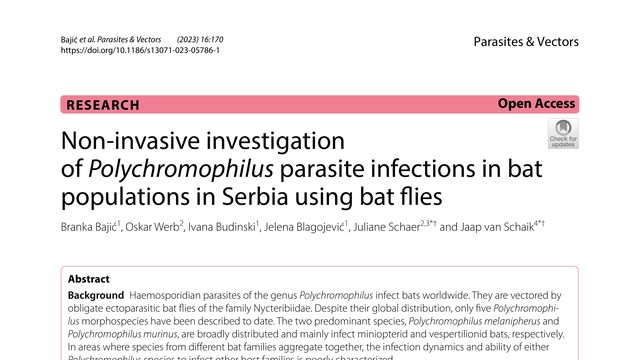
Branka Bajić, Oskar Werb, Ivana Budinski, Jelena Blagojević, Juliane Schaer, Jaap van Schaik
A bat can carry a hidden infection without giving researchers an easy way to check. This study finds that the bat fly riding on its body can act like a tiny, non-invasive warning signal.What if researchers could survey bat infections without drawing blood from the bats themselves? This study shows how the bats’ own tiny, blood-feeding flies can reveal widespread and genetically diverse Polychromophilus parasites.
 4:36
4:36