What if a tumor could receive a temporary genetic message telling several immune-stimulating cytokines to appear exactly where they are needed? This study tests that idea with a local mRNA cocktail.
Immunotherapy using inflammatory cytokines, such as interleukin (IL)-2 and interferon (IFN)-a, has been clinically validated in treating various cancers. However, systemic immunocytokine-based therapies are limited by the short half-life of recombinant proteins and severe dose-limiting toxicities. In this study, we exploited local immunotherapy by intratumoral administration of lipid nanoparticle (LNP)-encapsulated mRNA cocktail encoding cytokines IL-12, IL7, and IFN-a. The cytokine mRNA cocktail induced tumor regression in multiple syngeneic mouse models and anti-tumor immune memory in one syngeneic mouse model. Additionally, immune checkpoint blockade further enhanced the anti-tumor efficacy of the cytokine mRNAs. Furthermore, human cytokine mRNAs exhibited robust anti-tumor efficacy in humanized mouse tumor models. Mechanistically, cytokine mRNAs induced tumor microenvironment inflammation, characterized by robust T cell infiltration and significant inflammatory cytokine and chemokine production.
Transcript
What if a tumor could receive a temporary genetic message telling several immune-stimulating cytokines to appear exactly where they are needed? This study tests that idea with a local mRNA cocktail. Cancer immunotherapy eliminates tumor cells by boosting host immunity, and it has remarkably altered the paradigm of cancer therapy and significantly improved the clinical outcomes of cancer patients.
Immune checkpoint blockade with anti-PD-1, anti-PD-L1, and anti-cytotoxic T-lymphocyte associated protein 4 monoclonal antibodies can confer durable clinical responses and prolong survival in various solid tumors. However, the overall response rate of immune checkpoint inhibitors is relatively low, with many tumors being resistant to immune checkpoint inhibitors.
Combination therapy with immune checkpoint inhibitors and chemotherapy, radiotherapy, or targeted therapy has shown synergistic clinical response and improved clinical benefits in several metastatic malignancies. Inflammatory cytokines play an important role in regulating innate and adaptive immune responses, and some cytokines show potent anti-tumor activity in animal models and clinical studies.
IL-12 is a central mediator of the Th1 immune response, enhancing the activation and cytotoxicity of CD8-positive T cells, natural killer cells, and natural killer T cells. IL-7 is essential for T cell homeostasis and promotes memory T cell survival and expansion, while IL-12 and IL-7 synergistically induce T cell activation and NK cell maturation.
Type I interferons such as IFN-a can directly induce tumor cell apoptosis, stimulate dendritic cell maturation, and enhance antigen processing and presentation. Systemic administration of recombinant IL-12 has promising clinical anti-cancer efficacy, but it is limited by poor tolerability.
Intratumoral IL-12 delivered by adenovirus, oncolytic virus, or plasmid DNA can increase local IL-12 production and lead to anti-tumor immune responses in preclinical mouse models and clinical trials. Those approaches may induce deleterious genomic rearrangements and anti-viral vector immunity.
In contrast, local mRNA therapy could ensure transient and local translation of cytokines without viral vectors or gene integration in host genomic DNA. The study generated lipid nanoparticle-encapsulated cytokine mRNAs encoding IL-12, IL-7, and IFN-a as anti-tumor drug candidates and evaluated intratumoral administration of the IL-12, IL-7, and IFN-a triplet.
In most tested murine tumor models, the LNP-encapsulated mRNA cocktail induced significant tumor shrinkage and prolonged animal survival. Combination therapy with cytokine mRNAs and immune checkpoint blockade synergistically induced potent anti-tumor efficacy. The triplet altered the tumor microenvironment by boosting inflammatory immune responses, including a significant increase in T cell infiltration and cytokine and chemokine production.
Tumor width and length were measured two to three times a week by caliper, and tumor volumes were calculated from length and width. Mice were randomly grouped for in vivo drug administration when average tumor volume was approximately eighty to one hundred cubic millimeters.
LNP-encapsulated cytokine mRNAs were injected intratumorally in a fixed volume of fifty microliters once a week for three consecutive weeks, unless stated otherwise. Firefly luciferase mRNA served as the negative control in most experiments, while anti-mouse PD-1 or anti-human PD-L1 antibodies were injected intraperitoneally at ten milligrams per kilogram twice a week for three consecutive weeks.
Figure one tests whether LNP-encapsulated mRNA can produce protein locally in tumors. Mice bearing subcutaneous MDA-MB-231 tumors received twelve milligrams of luciferase mRNA by intratumoral injection once a week for three weeks; panel A shows tumor-localized bioluminescence at six and twenty-four hours after each dose, while panel B quantifies the corresponding regions of interest.
The persistence of signal through twenty-four hours, with no obvious distant signal reported, supports localized in vivo mRNA translation. The study demonstrated in vivo translation of local mRNA delivery by intratumorally injecting LNP-encapsulated mRNA encoding firefly luciferase and monitoring bioluminescence as a measure of exogenous gene expression.
Strong luciferase signals appeared locally within the tumor six hours after each injection and lasted for at least twenty-four hours. No obvious bioluminescence was detected distally in other tissues, confirming protein expression after intratumoral mRNA administration. Figure two first maps the engineered messenger RNAs: interleukin twelve, interleukin seven, and interferon alpha, each with untranslated regions and a poly-A tail.
In cultured Jurkat cells, each construct led to secretion of its corresponding cytokine, as measured by ELISA. In CT26 tumor-bearing mice, intratumoral delivery of the triplet produced detectable cytokines in tumor tissue, while interleukin twelve and interferon alpha were also detected in serum; interleukin seven was undetectable there.
This supports the feasibility of local cytokine mRNA expression in tumors, with some peripheral release. After demonstrating the feasibility of intratumoral LNP-encapsulated mRNA delivery, the study explored the therapeutic potential of the IL-12, IL-7, and IFN-a mRNA triplet.
A mouse cytokine mRNA triplet was generated because human IL-12 and IFN-a are not bioactive in mice. The cytokine mRNAs encoding IL-12, IL-7, or IFN-a were individually transfected into Jurkat cells, and expression of the corresponding cytokines was observed by ELISA.
All three cytokines were well expressed and secreted in the Jurkat cell culture supernatant. Figure three compares weekly intratumoral cytokine mRNA triplet treatment with control mRNA in CT26, B16F10, and 4T1 tumor-bearing mice.
Across the left and middle panels, the treatment curves show reduced tumor growth and prolonged survival in CT26 and B16F10, with reported tumor growth inhibition of 71.04 percent and 81.01 percent; the 4T1 model shows a more limited effect, with 16.24 percent inhibition. Body weights remain broadly stable, supporting tolerability during treatment.
In the CT26 colorectal tumor model, the B16F10 melanoma model, and the 4T1 breast cancer model, cytokine mRNA treatment inhibited tumor growth by 71.04 percent, 81.01 percent, and 16.24 percent, respectively. The treatment also prolonged survival, and it was well tolerated, with no notable body weight loss or obvious adverse reactions during the experimental period.
Figure four shows that three weekly intratumoral doses of the IL-twelve, IL-seven, and interferon-alpha mRNA triplet restrained CT26 tumor growth, while the control group’s tumors continued expanding, and survival curves were significantly different. When treated mice were rechallenged with CT26 cells on day forty-seven, tumors remained controlled compared with naïve controls, indicating anti-tumor immune memory.
Panel D also compares the individual cytokines, the triplet, PBS, and anti-PD-one treatment, showing distinct tumor-volume trajectories. In the CT26 syngeneic model, a high dose of cytokine mRNA triplet, thirty milligrams per mouse per injection with ten milligrams for each cytokine mRNA, led to complete tumor regression in all treated mice.
The treatment prolonged survival, and eighty-seven point five percent of mice remained tumor-free for at least forty-seven days. Mice with complete regression showed resistance to rechallenge with autologous CT26 tumors at distal sites, while all naive mice experienced significant tumor progression.
Figure five tests cytokine mRNA combinations in B16F10 tumor-bearing mice, measuring tumor volume and survival. In panels A and B, the cytokine formulations include individual cytokines, doublets, and a one-to-one-to-one IL-12, IL-7, and IFN-alpha triplet, alongside control mRNA and anti-PD-1.
Panels C and D directly examine the triplet with or without anti-PD-1, with statistical annotations indicating significant differences for selected tumor-volume and survival comparisons. Because IL-12 exhibited the highest efficacy among the three cytokines, its mRNA was compared with cytokine mRNA combinations at the same total dose in subcutaneous B16F10 tumors.
IL-12 mRNA produced an eighty-four point sixty-three percent tumor growth inhibition index at day eighteen and a thirty-three point thirty-three percent survival rate at the end of the study. The IL-12 and IL-7 doublet, the IL-12 and IFN-a doublet, and the equal-quantity triplet were not significantly different from IL-12 mRNA monotherapy.
The triplet with a three-to-one-to-one mass ratio of IL-12, IL-7, and IFN-a produced ninety-three point eighty-four percent tumor growth inhibition at day eighteen and an eighty percent survival rate at the end of the study. IL-12 treatment has been reported to induce IFN-g release, which triggers PD-L1 expression in tumor and myeloid cells.
Because PD-1 and PD-L1 interaction can suppress anti-tumor immunity, the study tested whether combining the cytokine mRNA triplet with PD-1 or PD-L1 blockade would enhance efficacy. The combination of a low dose of mRNA triplet and anti-PD-1 antibodies produced eighty-four point eighty-six percent tumor growth inhibition on day seventeen and an eighty percent survival rate.
The corresponding tumor growth inhibition indexes were sixty-two point eighty-seven percent for mRNA triplet alone and twenty-nine point thirty-six percent for anti-PD-1 antibodies alone. Figure seven tests the cytokine mRNA triplet in two humanized mouse models bearing MDA-MB-231 tumors.
In both models, intratumoral treatment was associated with inhibited tumor growth, while the humanized stem-cell model also showed increased serum IFN-gamma and IP-ten after treatment, consistent with pharmacodynamic immune activation. This matters because the figure links local cytokine mRNA delivery not only to tumor control, but also to measurable systemic immune signaling.
In the human peripheral blood mononuclear cell model, zero point five and two point five milligrams of mRNA cytokines produced tumor growth inhibition indexes of sixty-seven point eighty-three percent and eighty-three point thirty-three percent at day twenty-eight. In the human hematopoietic stem cell model, zero point fifty-five, one point sixty-seven, and five milligrams of cytokine mRNA triplet inhibited tumor growth in a dose-dependent manner.
Those three doses produced tumor growth inhibition indexes of fifty-three point ninety-five percent, fifty-seven point zero five percent, and seventy-seven point fifty-six percent at day thirty. The cytokine mRNA triplet showed superior anti-tumor efficacy at all tested doses compared with IL-12 mRNA monotherapy and anti-PD-L1 therapy.
Figure eight compares CT26 tumors treated intratumorally with the cytokine mRNA triplet against luciferase mRNA control. The triplet is associated with increased leukocyte, total T-cell, CD4-positive T-cell, and CD8-positive T-cell infiltration, while macrophages are marked as significantly different; NK cells, granulocytic MDSCs, and monocytic MDSCs are labeled not significant.
These data support the authors’ conclusion that the treatment altered the tumor microenvironment by promoting inflammation and T-cell infiltration. In the CT26 tumor-bearing syngeneic mouse model, intratumoral cytokine mRNA triplet administration significantly increased leukocyte infiltration in the tumor microenvironment.
The increase was especially evident for CD4-positive and CD8-positive T cell infiltration. These results indicate that the cytokine mRNA triplet inhibited tumor growth by triggering inflammation and promoting T cell infiltration in the tumor microenvironment.
Although cytokine mRNA triplet treatment showed anti-tumor efficacy in CT26, B16F10, and MDA-MB-231 models, treatment sensitivity varied among the models. The 4T1 tumor-bearing mouse model was relatively insensitive, which may be attributed to a lack of T cell and NK cell infiltration in its tumor microenvironment.
T cells and NK cells are cytotoxic cells essential for tumor eradication and are primary responders to IL-12, IL-7, and IFN-a. The correlation suggests that hot tumors, characterized by high lymphocyte infiltration in the tumor microenvironment, may respond better to the cytokine mRNA triplet.
Intratumoral LNP-encapsulated IL-12, IL-7, and IFN-a mRNAs produced strong anti-tumor effects across several mouse models, enhanced checkpoint blockade, and increased T-cell infiltration, while responses varied by tumor model.
A derivative work by Paperi · AI-generated script, voice and captions
· pages and figures unaltered
Made with Paperi.
Drop in a research PDF — get a narrated video walkthrough like this one,
with highlights that follow the narration. Free to start.
Sylvia Rofael, Clara Leboreiro-Babe, Mehmet Davrandi, Alexandra L Kondratiuk, Leanne Cleaver, Naseem Ahmed, Claire Atkinson, Timothy D. McHugh, David M. Lowe
For people whose immune defenses are already weakened, antibiotics can be lifesaving. But this study finds that the bacteria living in their airways may already resist many of those drugs—and may even pass resistance between patients.Patients with antibody deficiency face frequent respiratory infections, but the antibiotics intended to protect them may also help select widespread resistance. This study traces that resistance and tests a possible way to guide treatment.
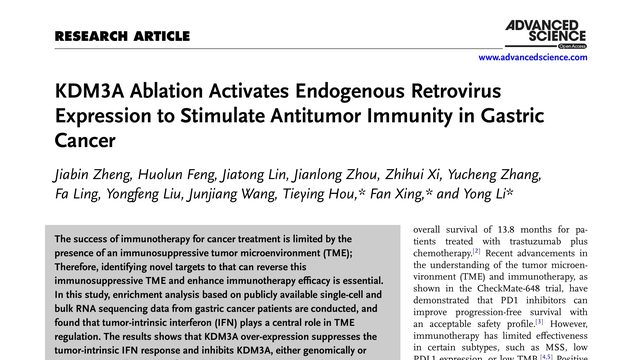
Jiabin Zheng, Huolun Feng, Jiatong Lin, Jianlong Zhou, Zhihui Xi, Yucheng Zhang, Fa Ling, Yongfeng Liu, Junjiang Wang, Tieying Hou, Fan Xing, Yong Li
Some stomach tumors are difficult for immune treatments to see. This study found that quieting one gene can make tumor cells sound an internal alarm, drawing stronger immune attacks and helping treatment work better.What if disabling one epigenetic regulator could make tumor cells behave as though they were infected by a virus? This study links KDM3A removal to endogenous retroviruses, interferon signaling, and stronger immunotherapy responses in gastric cancer.
Ricky Chazya, Chilufya Mulenga, Andrew D. Gibson, Frederic Lohr, Cassandra Boutelle, Sarah Bonaparte, Oline Sinywibulula, Gareth J. Thomas, Patricia Bwalya, George Dautu, Linous Munsimbwe, Geoffrey Muuka, Luke Gamble, Ryan M. Wallace, Michelle A. Waltenburg
A rabies campaign can succeed in a rural community yet fall short in a city—not because people do not care, but because the distance to one vaccination point can decide which dogs are protected.A rabies campaign can vaccinate thousands of dogs and still miss the herd-immunity target. In Zambia, the biggest obstacle was not simply vaccine supply—it was where dogs lived, how far owners had to travel, and whether communities knew the campaign was happening.
 3:19
3:19