KDM3A Ablation Activates Endogenous Retrovirus Expression to Stimulate Antitumor Immunity in Gastric Cancer
Curious4:31CCAI
paperi.ai
0:00 / 0:00
Jiabin Zheng, Huolun Feng, Jiatong Lin, Jianlong Zhou, Zhihui Xi, Yucheng Zhang, Fa Ling, Yongfeng Liu, Junjiang Wang, Tieying Hou, Fan Xing, Yong Li
Some stomach tumors are difficult for immune treatments to see. This study found that quieting one gene can make tumor cells sound an internal alarm, drawing stronger immune attacks and helping treatment work better.
The success of immunotherapy for cancer treatment is limited by the presence of an immunosuppressive tumor microenvironment (TME); Therefore, identifying novel targets to that can reverse this immunosuppressive TME and enhance immunotherapy efficacy is essential. In this study, enrichment analysis based on publicly available single-cell and bulk RNA sequencing data from gastric cancer patients are conducted, and found that tumor-intrinsic interferon (IFN) plays a central role in TME regulation. The results shows that KDM3A over-expression suppresses the tumor-intrinsic IFN response and inhibits KDM3A, either genomically or pharmacologically, which effectively promotes IFN responses by activating endogenous retroviruses (ERVs). KDM3A ablation reconfigures the dsRNA-MAVS-IFN axis by modulating H3K4me2, enhancing the infiltration and function of CD8 T cells, and simultaneously reducing the presence of regulatory T cells, resulting in a reshaped TME in vivo. In addition, combining anti-PD1 therapy with KDM3A inhibition effectively inhibited tumor growth. In conclusions, this study highlights KDM3A as a potential target for TME remodeling and the enhancement of antitumor immunity in gastric cancer through the regulation of the ERV-MAVS-IFN axis.
Transcript
Some stomach tumors are difficult for immune treatments to see. This study found that quieting one gene can make tumor cells sound an internal alarm, drawing stronger immune attacks and helping treatment work better. Cancer immunotherapy is limited when the tumor’s surroundings suppress immune activity.
The study found that a signal made inside tumor cells plays a central role in regulating those surroundings. The key switch is KDM3A. When it is overactive, it suppresses that internal immune signal; when KDM3A is blocked, hidden viral-like sequences become active and promote the signal instead.
That change strengthens immune cells that attack tumors, reduces immune cells that restrain attacks, and, together with anti-PD1 treatment, inhibits tumor growth. The analysis pointed to KDM3A as an important regulator of the immune signal made inside tumor cells, and as a possible target for changing the tumor’s surroundings.
So the central question became simple: could reducing KDM3A change the tumor cell’s own immune signal, which KDM3A was hypothesized to regulate? To test that idea, KDM3A was removed from both mouse and human stomach tumor cells.
Removing it, or blocking it with a chemical, increased genes switched on by immune signals. Removing KDM3A also increased release of the immune signal itself, while key proteins that pass this message through the cell became more active.
In other words, the change was not limited to one genetic readout: the whole internal immune response became stronger after KDM3A was blocked. The team tested whether the heightened interferon response relied on endogenous retroviruses, while comparing double-stranded RNA and DNA sensing pathways.
The resulting alarm travels through a messenger pathway called MAVS, which carries the warning from these double-stranded genetic fragments into the cell’s immune response. In sgKDM3A-treated human AGS cells, reducing MAVS significantly decreased immune-stimulated gene expression and phosphorylation of the key response protein IRF3.
When KDM3A is blocked, normally silent viral-like genetic material becomes more active, producing more double-stranded RNA inside the cells. That RNA switches on the MAVS–interferon alarm system, linking the treatment directly to the cells’ antiviral response.
The immune consequences appeared inside tumors. Tumors made from cells lacking KDM3A contained more immune cells capable of attacking, and fewer regulatory immune cells that hold attacks back. The findings also linked KDM3A with weaker internal immune signaling and poorer response to immunotherapy in people with gastric cancer.
The strongest test combined KDM3A removal with anti-PD1 treatment in mice. Tumor growth was significantly suppressed compared with the control group or either treatment alone. In C57BL/6 mice bearing MC38 tumors, combining KDM3A ablation with anti-PD-one significantly suppressed tumor growth compared with controls or either treatment alone.
The study notes that knocking down or knocking out a group of ERVs is technically challenging, and that specific KDM3A inhibitors are currently lacking. However, restoring KDM3A reversed the increases in the chemical mark, the viral-like sequences, and the immune-response activity, supporting the proposed chain of events.
For patients, the practical promise is not an available KDM3A treatment at present, because specific KDM3A inhibitors are currently lacking. The study instead points toward the future development of more specialized KDM3A inhibitors as a possible therapeutic direction for cancer treatment.
The central finding is that blocking KDM3A can awaken hidden viral-like signals inside tumor cells, strengthen immune activity, and improve anti-PD1 treatment in mice. That points toward a possible way to make resistant gastric tumors more treatable.
A derivative work by Paperi · AI-generated script, voice and captions
· pages and figures unaltered
Made with Paperi.
Drop in a research PDF — get a narrated video walkthrough like this one,
with highlights that follow the narration. Free to start.
Ricky Chazya, Chilufya Mulenga, Andrew D. Gibson, Frederic Lohr, Cassandra Boutelle, Sarah Bonaparte, Oline Sinywibulula, Gareth J. Thomas, Patricia Bwalya, George Dautu, Linous Munsimbwe, Geoffrey Muuka, Luke Gamble, Ryan M. Wallace, Michelle A. Waltenburg
A rabies campaign can succeed in a rural community yet fall short in a city—not because people do not care, but because the distance to one vaccination point can decide which dogs are protected.A rabies campaign can vaccinate thousands of dogs and still miss the herd-immunity target. In Zambia, the biggest obstacle was not simply vaccine supply—it was where dogs lived, how far owners had to travel, and whether communities knew the campaign was happening.
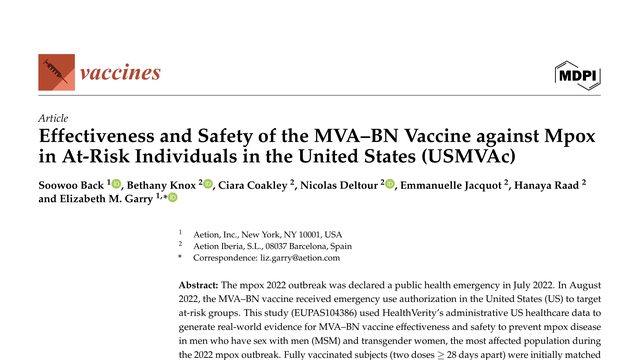
Soowoo Back, Bethany Knox, Ciara Coakley, Nicolas Deltour, Emmanuelle Jacquot, Hanaya Raad, Elizabeth M. Garry
Mpox seemed to fade from the headlines, but the risk did not disappear. In U.S. health records, people who received both recommended vaccine doses had far less mpox than similar unvaccinated people.In a small real-world US cohort, two doses of the MVA–BN vaccine were associated with eighty-nine percent effectiveness against mpox. But the same study also shows why that impressive number needs careful interpretation.
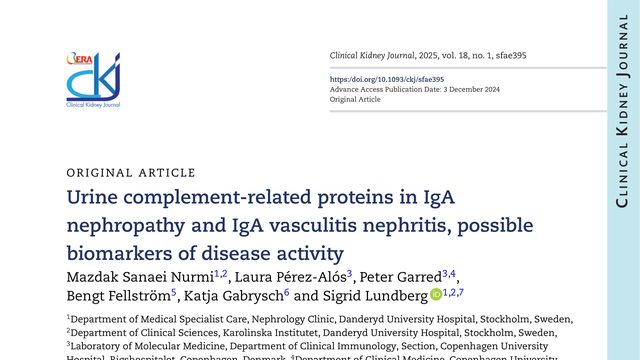
Mazdak Sanaei Nurmi, Laura Pérez‐Alós, Peter Garred, Bengt Fellström, Katja Gabrysch, Sigrid Lundberg
A kidney biopsy gives doctors a snapshot of damage, but it carries risks. This study asks whether urine can reveal something more useful: whether kidney disease is active now, or quietly leaving lasting scars.A urine sample may carry two different signals in IgA kidney disease: PTX-3 and MBL may point to active proliferative lesions, while C4c may point toward chronic damage and future decline.
 4:00
4:00