Cancer treatments often struggle with a basic problem: how do you wake up the immune system without inflaming the whole body? This study tries a more local answer—deliver the instructions directly inside the tumor.
Immunotherapy using inflammatory cytokines, such as interleukin (IL)-2 and interferon (IFN)-a, has been clinically validated in treating various cancers. However, systemic immunocytokine-based therapies are limited by the short half-life of recombinant proteins and severe dose-limiting toxicities. In this study, we exploited local immunotherapy by intratumoral administration of lipid nanoparticle (LNP)-encapsulated mRNA cocktail encoding cytokines IL-12, IL7, and IFN-a. The cytokine mRNA cocktail induced tumor regression in multiple syngeneic mouse models and anti-tumor immune memory in one syngeneic mouse model. Additionally, immune checkpoint blockade further enhanced the anti-tumor efficacy of the cytokine mRNAs. Furthermore, human cytokine mRNAs exhibited robust anti-tumor efficacy in humanized mouse tumor models. Mechanistically, cytokine mRNAs induced tumor microenvironment inflammation, characterized by robust T cell infiltration and significant inflammatory cytokine and chemokine production.
Transcript
Cancer treatments often struggle with a basic problem: how do you wake up the immune system without inflaming the whole body? This study tries a more local answer—deliver the instructions directly inside the tumor. Cancer immunotherapy using inflammatory cytokines has been clinically validated in various cancers, but systemic treatments are limited by severe toxicities and the short half-life of recombinant proteins.
So the treatment in this study placed messenger RNA directly inside the tumor. That RNA carried instructions for three immune signals, allowing the tumor site to receive the message instead of the whole body. The goal was to make the tumor shrink, create lasting immune memory, and strengthen the effect of another treatment that releases brakes on immune cells.
The researchers first checked whether instructions delivered into a tumor made cells produce a protein there, using a light-producing luciferase signal as a visible stand-in. The signal appeared strongly inside the tumor and lasted for at least a day after each injection, while no obvious signal appeared in distant tissues.
That result supports the central idea: intratumoral messenger RNA can produce protein locally, without detectable activity spreading to other tissues. The treatment combined messenger RNA carrying instructions for three immune signals and delivered it directly into tumors.
The researchers tested whether this three-part message could provide a useful anti-cancer effect. In most of the mouse tumor models tested, the treatment made tumors shrink and extended survival. It also changed the tumor surroundings by increasing immune activity, including more immune cells entering the tumor and more inflammatory signals being produced there.
A weekly injection of the three immune-signaling messages slowed tumor growth and extended survival in two of the three tumor settings, without notable weight loss. In the third setting, the treatment did not produce a clear survival benefit.
The researchers then asked whether the effect could last. In one mouse model, the treatment led to complete tumor regression in every treated mouse, and most remained tumor-free for at least forty-seven days. The result went beyond the original tumor.
Mice whose tumors had completely regressed resisted a later challenge with the same type of tumor, while untreated mice developed substantial tumor growth. There was a catch. One immune signal can also trigger a molecule that suppresses anti-tumor immunity, acting like a brake after the immune response begins.
That led to a combination: the local messenger-RNA treatment was paired with a drug that blocks the suppressing interaction between immune cells and tumors. The combination produced stronger tumor control and survival than either treatment alone, showing that releasing the brake augmented the effect of the local immune message.
The researchers also tested the treatment in mice engineered or engrafted to contain human immune components, with human tumor cells implanted in both models. In these humanized models, the cytokine messenger RNA treatment significantly slowed tumor growth, with inhibition reported across the tested doses.
In another humanized mouse model, stronger doses produced stronger tumor growth inhibition. The treatment outperformed a single immune signal and an immune-braking treatment at every dose tested. The models included human immune components and human tumor cells, rather than relying only on mouse immune systems and tumors.
In these models, the tested cytokine messenger RNA treatments significantly inhibited tumor growth, including clear dose-dependent effects in the human stem-cell model. In mice, a local messenger-RNA treatment made tumors shrink, helped some animals resist the cancer’s return, and worked even better alongside an existing immune treatment.
It points toward concentrating immune power where it is needed.
A derivative work by Paperi · AI-generated script, voice and captions
· pages and figures unaltered
Made with Paperi.
Drop in a research PDF — get a narrated video walkthrough like this one,
with highlights that follow the narration. Free to start.
Sylvia Rofael, Clara Leboreiro-Babe, Mehmet Davrandi, Alexandra L Kondratiuk, Leanne Cleaver, Naseem Ahmed, Claire Atkinson, Timothy D. McHugh, David M. Lowe
For people whose immune defenses are already weakened, antibiotics can be lifesaving. But this study finds that the bacteria living in their airways may already resist many of those drugs—and may even pass resistance between patients.Patients with antibody deficiency face frequent respiratory infections, but the antibiotics intended to protect them may also help select widespread resistance. This study traces that resistance and tests a possible way to guide treatment.
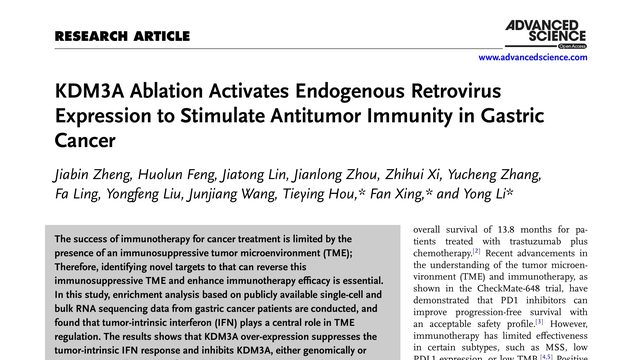
Jiabin Zheng, Huolun Feng, Jiatong Lin, Jianlong Zhou, Zhihui Xi, Yucheng Zhang, Fa Ling, Yongfeng Liu, Junjiang Wang, Tieying Hou, Fan Xing, Yong Li
Some stomach tumors are difficult for immune treatments to see. This study found that quieting one gene can make tumor cells sound an internal alarm, drawing stronger immune attacks and helping treatment work better.What if disabling one epigenetic regulator could make tumor cells behave as though they were infected by a virus? This study links KDM3A removal to endogenous retroviruses, interferon signaling, and stronger immunotherapy responses in gastric cancer.
Ricky Chazya, Chilufya Mulenga, Andrew D. Gibson, Frederic Lohr, Cassandra Boutelle, Sarah Bonaparte, Oline Sinywibulula, Gareth J. Thomas, Patricia Bwalya, George Dautu, Linous Munsimbwe, Geoffrey Muuka, Luke Gamble, Ryan M. Wallace, Michelle A. Waltenburg
A rabies campaign can succeed in a rural community yet fall short in a city—not because people do not care, but because the distance to one vaccination point can decide which dogs are protected.A rabies campaign can vaccinate thousands of dogs and still miss the herd-immunity target. In Zambia, the biggest obstacle was not simply vaccine supply—it was where dogs lived, how far owners had to travel, and whether communities knew the campaign was happening.
 3:19
3:19