How does consumer quality preference impact blockchain adoption in supply chains?
Overview3:38CCAI
paperi.ai
0:00 / 0:00
Benedict Jun, Shuai Liu, George Q. Huang, C.T. Ng
A blockchain label is not automatically valuable. This study finds that it becomes worth paying for mainly when enough shoppers care deeply about whether a product is genuinely high quality.
A blockchain label is not automatically valuable. This study finds that it becomes worth paying for mainly when enough shoppers care deeply about whether a product is genuinely high quality. Blockchain technology is increasingly used to ensure the authenticity of product information in supply chains.
The central question is when that transparency creates enough value to justify its cost. The analysis takes consumer quality preference into account and examines its impact on blockchain adoption. It also considers how blockchain improves consumers’ perceived product value.
The problem is that not all shoppers are sensitive to product quality, so treating everyone as quality-conscious can overestimate blockchain’s overall value. Even among quality-conscious consumers, people differ in how much they value blockchain’s additional benefits.
The analysis includes that variation in consumer behavior. Blockchain records production information, making product information more transparent and trustworthy and helping eliminate concerns about product quality among retailers and consumers. With blockchain, consumers gain more knowledge about the product, increasing its perceived value.
Retailers also develop greater trust in the quality supplied by manufacturers. The result changes with the way the retailer sells the product. Under the wholesale price model, the supply chain adopts blockchain only when product quality is high.
Under the marketplace model, the supply chain inevitably adopts blockchain. In other words, the two business arrangements do not respond to quality in the same way. In the marketplace model, a high blockchain cost makes the manufacturer increase the price.
When the cost is low, the benefits can offset the expense. When the cost of adopting blockchain is low, the manufacturer decreases the price. Greater transparency and efficiency reduce transaction costs, while trustworthy quality information raises consumers’ value of purchasing the product.
The strongest benefit appears when quality-conscious consumers dominate the market. In the wholesale price model, blockchain enhances manufacturer profitability; in the marketplace model, both manufacturer and retailer can benefit despite adoption costs.
As the perceived benefits of blockchain improve, the required proportion of quality-conscious consumers for achieving profitability decreases. Blockchain becomes worthwhile even when fewer shoppers strongly care about quality.
Blockchain also reduces the influence of commissions on pricing. Instead of prices changing with commission levels, both parties can eliminate the impact of commissions on pricing. The wholesale price model offers greater product transparency than the marketplace model, although that gap narrows with higher commissions and production costs.
Extended models confirm these findings. The practical advice is straightforward: manufacturers and retailers should assess consumer preferences for product quality and carefully weigh the cost of implementing blockchain. Blockchain reduces constraints from commission-driven pricing, offering greater flexibility in business model selection.
For shoppers, that can mean more trustworthy product information when quality really matters. Blockchain can help manufacturers and retailers protect trust, steady their prices, and sometimes even lower them. But the real-world payoff depends on how strongly shoppers care about quality and whether the cost is justified.
A derivative work by Paperi · AI-generated script, voice and captions
· pages and figures unaltered
Made with Paperi.
Drop in a research PDF — get a narrated video walkthrough like this one,
with highlights that follow the narration. Free to start.
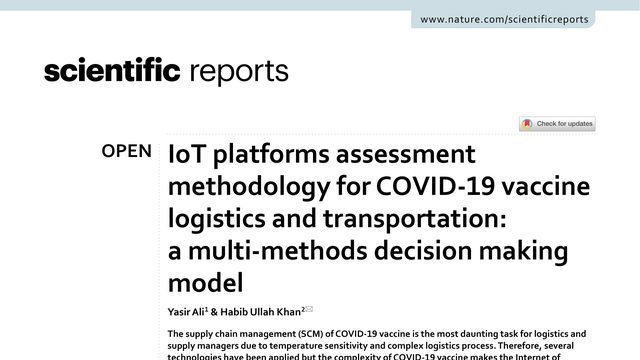
A vaccine can be perfectly made and still fail before reaching a patient. Its safety may depend on an invisible journey: keeping it cold, watched, and accounted for every step of the way.Keeping a COVID-19 vaccine cold is only part of the challenge. This study asks which Internet of Things platform can manage the wider logistics problem, and its model selects Microsoft Azure IoT.
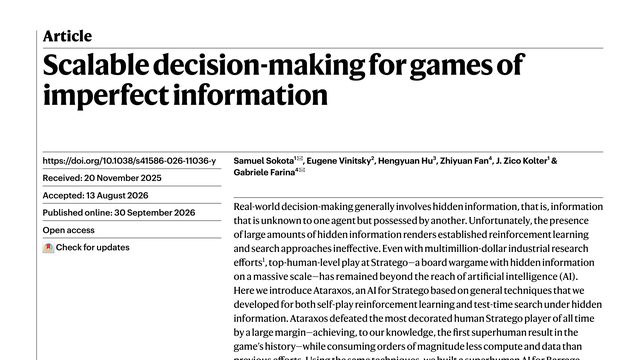
Samuel Sokota, Eugene Vinitsky, Hengyuan Hu, Zhiyuan Fan, J. Zico Kolter, Gabriele Farina
For years, computers could master games where everything was visible, but hidden information stopped them cold. Then one system beat Stratego’s most decorated human player by a margin never seen at the highest level.Stratego has enormous hidden information, and years of expensive AI research still could not beat its best humans. This paper introduces an approach that wins decisively, and does so with only a few thousand dollars of training.
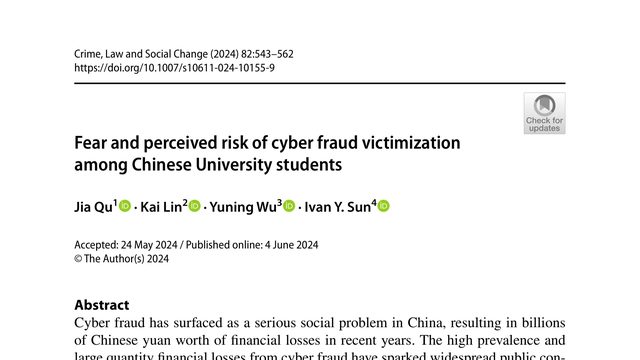
Imagine living with a threat that feels frightening, yet still seems unlikely to happen to you. Among Chinese university students, fear of cyber fraud was common, while expecting to be defrauded was not.Here’s the paper’s central tension: only ten percent of students thought cyber fraud was likely to happen to them, but about half said they felt afraid of it. Fear and perceived risk are not the same thing.
 3:58