Alteration of the N6-methyladenosine methylation landscape in a mouse model of polycystic ovary syndrome
Curious4:26CCAI
paperi.ai
0:00 / 0:00
Lingxiao Zou, Waixing Li, Dabao Xu, Shujuan Zhu, Bin Jiang
Polycystic ovary syndrome can affect periods, fertility, and long-term health, yet there is no single treatment for its underlying cause. This study points to a tiny chemical mark on genetic messages as one possible piece of the puzzle.
Objective To explore the N6-methyladenosine (m6A) methylation abnormality of mRNAs and its potential roles in the mouse model of polycystic ovary syndrome (PCOS). Methods The mouse model of PCOS were induced by injecting dehydroepiandrosterone (DHEA), and confirmed by observing the morphological structures of ovarian follicles. Subsequently, m6A-tagged mRNAs were identified via m6A epitranscriptomic microarray and its potential functional pathways were predicted in KEGG database. The expression and modification levels of key mRNAs in the most enriched pathway were evaluated and compared using western blot and methylated RNA immunoprecipitation-quantitative PCR (MeRIP-qPCR). Results Compared with the control group, 415 hypermethylated and downregulated mRNAs, 8 hypomethylated and upregulated mRNAs, and 14 hypermethylated and upregulated mRNAs were identified in the PCOS group (Fold change ≥ 1.5). Those mRNAs were mainly involved in insulin signaling pathway, type II diabetes mellitus, Fc epsilon RI signaling pathway, inositol phosphate metabolism, and GnRH secretion. In insulin signaling pathway, the expression levels of phosphorylated protein kinase B (p-AKT) were decreased, whereas that of upstream phosphorylated phosphatidylinositol 3-kinase (p-PI3K) were increased in PCOS group. Moreover, skeletal muscle and kidney-enriched inositol polyphosphate 5-phosphatease (SKIP), one of PIP3 phosphatases, was verified to be overexpressed, and Skip mRNAs were hypermethylated in PCOS group. Conclusion The altered m6A modification of mRNAs might play a critical role in PCOS process. The PI3K/AKT pathway is inhibited in the mouse model of PCOS. Whether it is caused by the m6A modification of Skip mRNAs is worthy of further exploration.
Transcript
Polycystic ovary syndrome can affect periods, fertility, and long-term health, yet there is no single treatment for its underlying cause. This study points to a tiny chemical mark on genetic messages as one possible piece of the puzzle. Polycystic ovary syndrome is a common condition affecting women of reproductive age.
It can lead to irregular menstruation, excess male hormones, infertility, and difficulty responding to insulin. People with this condition also face higher risks of diabetes, cardiovascular disease, and cancer of the uterine lining. There is no specific therapy; current care mainly manages symptoms.
The study focuses on a small chemical mark attached to genetic messages inside cells. Think of a genetic message as a recipe card: the mark can help determine whether the cell uses the recipe, changes how it reads it, or gets rid of it.
These marks can be added, removed, and recognized by different proteins. They can affect how messages are processed, moved, translated into proteins, or broken down. Earlier research linked these marks to egg development and other female reproductive diseases, including tumors, in studies of reproductive biology.
The proteins were involved in ovulation, but therapeutic targeting for abnormal ovulation remained unresolved, and little attention had been paid to PCOS mechanisms. In people with PCOS, levels of the marks were reported as higher, with several m6A modulators also dysfunctional.
To investigate that gap, the study examined changes in these marks on genetic messages in the ovaries of mice with PCOS-like disease. It then looked for the cell communication routes that might be connected to those changes. When changes in the chemical marks were compared with changes in the messages themselves, most of the affected messages carried more of the mark and were present at lower levels.
A smaller group carried more of the mark and was present at higher levels. The affected messages were analyzed through Gene Ontology and KEGG pathway analyses, linking them to cellular processes, cellular structures, and molecular binding; KEGG predicted participation in twenty-four pathways, with the ten most enriched reported.
The strongest connection was the insulin signaling pathway, which involved ten differentially expressed messages carrying methylation changes in the dataset. Changes in gene activity and its chemical marking converge on insulin signaling, a system that helps cells respond to blood sugar.
Among the linked genes, eight were both more active and less marked, while four hundred fifteen were less active and more marked, pointing to a broad shift in this control network. A chemical mark that helps control how messages are used was more abundant on Skip RNA in PCOS, and the sequence analysis found six likely places where that mark can attach.
That points to altered handling of this message as a possible link to the condition. The insulin-related signaling chain was weaker in the PCOS group at one key step, even though activity at an earlier step was higher. This shows that the pathway was not simply switched off from the beginning; its signals changed as they moved through the chain.
Skip was present at higher levels in the PCOS group. Because Skip is a protein that removes one of the cell's signal-carrying molecules, its increase could help explain the altered downstream signal. But the study stops short of proving that the extra mark on Skip messages causes Skip to rise or weakens the insulin-related pathway.
Other known blockers of that pathway, including PTEN and JNK, were not examined in this study, leaving those possible influences untested. The proposed link remains unvalidated: the study did not test whether hypermethylation of SKIP messages enhances its expression and inhibits the PI3K/AKT pathway.
In mice with PCOS-like changes, these marks and the cell signals that respond to insulin were altered together. The finding suggests a possible route toward better explanations and, eventually, more targeted treatment, but it does not yet prove cause and effect.
A derivative work by Paperi · AI-generated script, voice and captions
· pages and figures unaltered
Made with Paperi.
Drop in a research PDF — get a narrated video walkthrough like this one,
with highlights that follow the narration. Free to start.
Viorica Rarinca, Mircea Nicoară, Dorel Ureche, Alin Ciobîcă
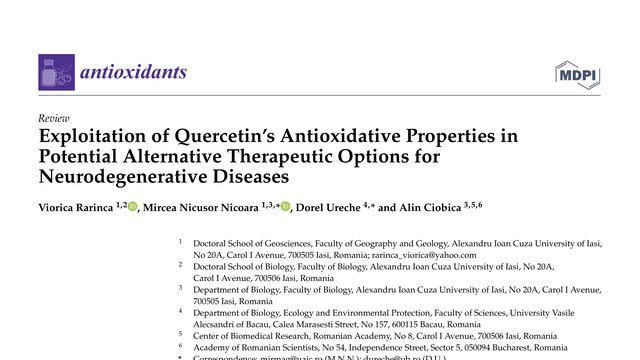
A compound found in fruits and vegetables may help protect nerve cells from damage linked to aging brain diseases. But the evidence is promising, uneven, and not yet a treatment people can rely on.A plant flavonoid found in ordinary foods may counter oxidative stress, amyloid formation, inflammation, and mitochondrial problems across several brain disorders—but the evidence also includes toxicity and failures.
Se Hee Kim, Yeokyung Shin, Yujin Choi, Kyung Min Lim, Yeojin Jeong, Ahmed Abdal Dayem, Yoon-Joo Lee, Jongyub An, Kwonwoo Song, Soo Bin Jang, Ssang‐Goo Cho
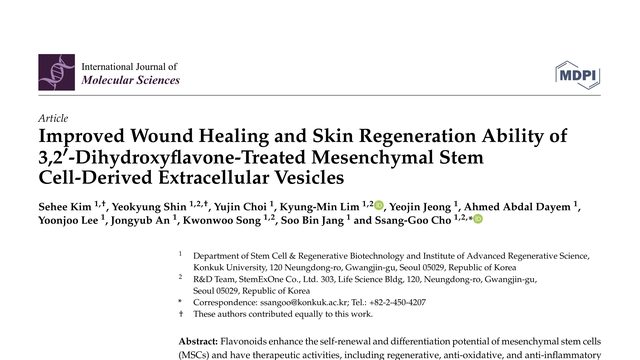
A healing cell may not need to be placed into a wound to help it. This study suggests that tiny packages released by specially treated cells can calm inflammation and help damaged skin close faster.What if the key to better wound healing is not transplanting stem cells, but collecting more powerful messages from them? This study uses a flavonoid to make stem-cell vesicles more abundant and more effective.
Cristian Álvarez-Gómez, Angela Fonseca-Benítez, James Guevara‐Pulido
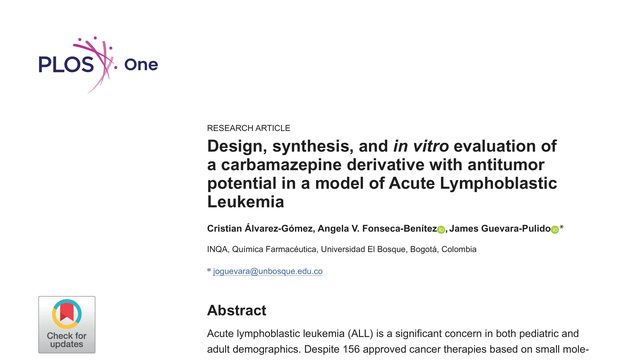
A medicine already used for other conditions was reshaped into a possible leukemia treatment. In laboratory tests, its redesigned form reduced leukemia-cell survival while showing a more favorable effect on healthy cells.What if a familiar anticonvulsant could be redesigned into a leukemia candidate? This study starts with carbamazepine, computationally engineers more than fifty analogs, and sends one—CR80—into laboratory testing.
 3:14
3:14