Design, synthesis, and in vitro evaluation of a carbamazepine derivative with antitumor potential in a model of Acute Lymphoblastic Leukemia
Curious3:50CCAI
paperi.ai
0:00 / 0:00
Cristian Álvarez-Gómez, Angela Fonseca-Benítez, James Guevara‐Pulido
A medicine already used for other conditions was reshaped into a possible leukemia treatment. In laboratory tests, its redesigned form reduced leukemia-cell survival while showing a more favorable effect on healthy cells.
A medicine already used for other conditions was reshaped into a possible leukemia treatment. In laboratory tests, its redesigned form reduced leukemia-cell survival while showing a more favorable effect on healthy cells. Acute lymphoblastic leukemia is a significant concern in both children and adults.
Although many cancer medicines exist, only a few apply across leukemia types, and side effects can make treatment difficult to follow. That creates an urgent need for more effective treatment options. The study pursued that need by redesigning a familiar medicine and testing one of its new forms against leukemia cells.
The search began with public databases of molecules that had shown biological activity against acute lymphoblastic leukemia and beta-tubulin. The goal was to begin with evidence rather than guesswork. The researchers then used two strategies for the selected molecules, applying a rational design process grounded in compounds already shown to have biological activity.
The target was beta-tubulin, a part of cells involved in division. Leukemia cells divide faster than normal cells, and that rapid division can make them more vulnerable to medicines that interfere with this process. That creates the central idea: a molecule that binds more strongly to beta-tubulin might affect rapidly dividing leukemia cells more than healthy cells, which divide more slowly.
The selection narrowed the candidates to six that exceeded the chosen affinity threshold. Three of those six also had LogP values in the promising range of two to four. Among the six candidates, candidate eighty had the best toxicity profile and was selected to proceed to the synthesis stage.
After seventy-two hours, the candidate reduced leukemia-cell survival by close to half across the tested concentrations, while retaining a safety profile at lower concentrations compared with untreated cells. It also reduced cell survival more effectively than the chemotherapy treatment used for comparison.
Its selectivity index was two, a result the study describes as favorable for acting against the tumor cells. After three days, the treatment reduced cancer-cell survival to around half at several tested amounts, while healthy-cell survival stayed near normal at the lower amounts.
That separation matters because it suggests a possible treatment window, rather than equal harm to healthy and cancerous cells. The laboratory results matched the QSAR model's predictions in the U-937 cell test. However, the candidate was toxic to healthy L929 cells at ten micromolar, so selectivity needs improvement.
After adjusting the tested concentrations, the study obtained better selectivity results and judged the combined design approach promising for future testing in living systems. The study’s final message is that a potential treatment candidate for acute lymphoblastic leukemia can be designed by combining clues from known medicines with clues about the target.
The starting structure was changed more than fifty times before this candidate emerged. The candidate was developed rationally as a potential treatment for acute lymphoblastic leukemia, using a synergistic ligand-based and structure-based design approach.
In laboratory testing, this candidate showed a promising I C fifty between zero point eight and one micromolar in vitro against the U-937 cell line. This candidate is not yet a treatment for people, but it gives researchers a promising starting point: a carefully redesigned molecule that may attack rapidly dividing leukemia cells more selectively.
A derivative work by Paperi · AI-generated script, voice and captions
· pages and figures unaltered
Made with Paperi.
Drop in a research PDF — get a narrated video walkthrough like this one,
with highlights that follow the narration. Free to start.
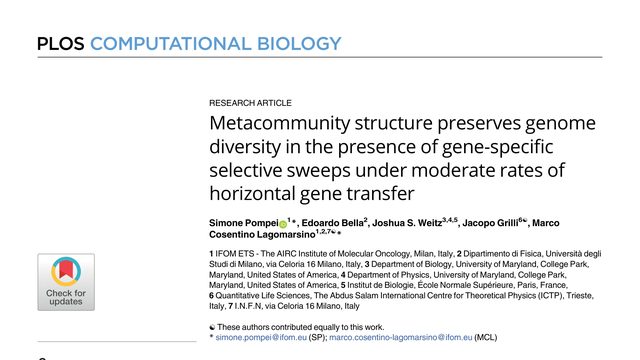
Simone Pompei, E. Della Bella, Joshua S. Weitz, Jacopo Grilli, Marco Cosentino Lagomarsino
A useful gene can spread through a microbial community without dragging the rest of the genome along with it. This study suggests that separated habitats help explain how diversity survives that takeover.A beneficial gene can sweep through a microbial community without sweeping away the genomes around it. This model suggests that patchy habitats, plus only moderate horizontal gene transfer, may be enough to preserve genome diversity.
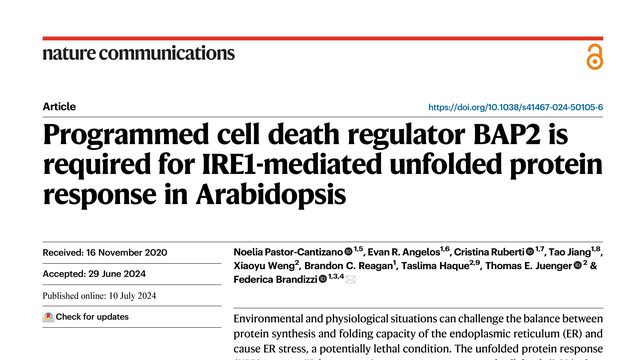
Noelia Pastor‐Cantizano, Evan Angelos, Cristina Ruberti, Tao Jiang, Xiaoyu Weng, Brandon C. Reagan, Taslima Haque, Thomas Juenger, Federica Brandizzí
When a plant cell is under severe stress, it faces a decision: repair itself or die. This study identifies a protein that helps make that decision—and can push the cell toward either outcome.What if a protein involved in programmed cell death also acts like a tuning dial for the unfolded protein response? In Arabidopsis, BAP2 helps cells survive stress—but when the main stress pathway fails, it can instead push them toward death.
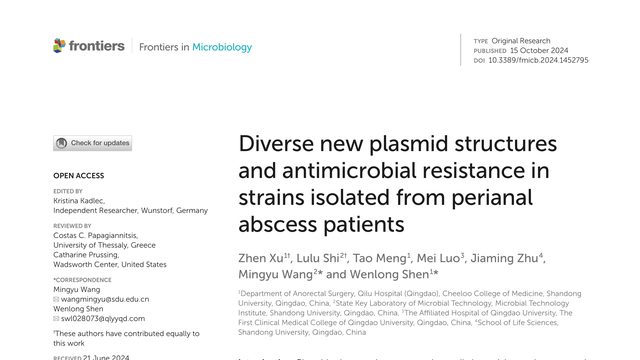
Zhen Xu, Lulu Shi, Tao Meng, Mei Luo, Jiaming Zhu, Mingyu Wang, Wenlong Shen
Some bacteria carry small, separate DNA circles that can pick up useful traits and pass them on quickly. In this study, those circles included previously unseen routes to resistance against a last-resort antibiotic.What if the biggest obstacle to tracking antibiotic resistance is not finding bacterial DNA, but assembling the mobile DNA circles that carry it? This study used long-read sequencing to uncover plasmids—and resistance structures—that short reads can miss.
 5:35
5:35