Exploitation of Quercetin’s Antioxidative Properties in Potential Alternative Therapeutic Options for Neurodegenerative Diseases
Student12:53CCAI
paperi.ai
0:00 / 0:00
Viorica Rarinca, Mircea Nicoară, Dorel Ureche, Alin Ciobîcă
A plant flavonoid found in ordinary foods may counter oxidative stress, amyloid formation, inflammation, and mitochondrial problems across several brain disorders—but the evidence also includes toxicity and failures.
Oxidative stress (OS) is a condition in which there is an excess of reactive oxygen species (ROS) in the body, which can lead to cell and tissue damage. This occurs when there is an overproduc-tion of ROS or when the body’s antioxidant defense systems are overwhelmed. Quercetin (Que) is part of a group of compounds called flavonoids. It is found in high concentrations in vegetables, fruits, and other foods. Over the past decade, a growing number of studies have highlighted the therapeutic potential of flavonoids to modulate neuronal function and prevent age-related neurodegeneration. Therefore, Que has been shown to have antioxidant, anticancer, and anti-inflammatory properties, both in vitro and in vivo. Due to its antioxidant character, Que alleviates oxidative stress, thus improving cognitive function, reducing the risk of neurodegenerative diseases. On the other hand, Que can also help support the body’s natural antioxidant defense systems, thus being a potentially practical supplement for managing OS. This review focuses on experimental studies supporting the neuroprotective effects of Que in Alzheimer’s disease (AD), Parkinson’s disease (PD), Huntington’s disease (HD), and epilepsy.
Transcript
A plant flavonoid found in ordinary foods may counter oxidative stress, amyloid formation, inflammation, and mitochondrial problems across several brain disorders—but the evidence also includes toxicity and failures. Oxidative stress is an excess of reactive oxygen species in the body, and that excess can lead to cell and tissue damage.
The imbalance can happen when reactive oxygen species are overproduced or when the body’s antioxidant defense systems are overwhelmed. Quercetin is a flavonoid found in high concentrations in vegetables, fruits, and other foods. This review focuses on experimental evidence for quercetin’s neuroprotective effects in Alzheimer’s disease, Parkinson’s disease, Huntington’s disease, and epilepsy.
Excessive oxidative stress results from disturbing the balance between oxidation and antioxidant systems, with a tendency toward oxidation. In neurodegenerative diseases, oxidative stress is thought to play a key role in the progressive degeneration or death of nerve cells. Reactive oxygen species scavengers are often used to counter oxidative stress in neurons.
Numerous studies have shown that quercetin attenuates oxidative-stress-mediated neuronal damage by eliminating oxygen radicals and through metal-chelating operations. Reactive oxygen species include oxygen-derived molecules such as peroxyl, hydroxyl, superoxide, and alkoxyl radicals.
They can also come from non-radicals such as ozone, hypochlorous acid, singlet oxygen, and hydrogen peroxide. These non-radicals are oxidizing agents or are easily converted to radicals. Numerous in vitro and in vivo studies have reported the neuroprotective properties of quercetin.
Quercetin has been observed to protect neurons from oxidative damage and reduce lipid peroxidation. Beyond antioxidant properties, quercetin can inhibit the formation of amyloid-beta proteins in fibrils, counteracting cell lysis and the inflammatory cascade.
Flavonoids and flavonoid-containing foods have been associated with beneficial effects in conditions involving oxidative stress, including Alzheimer’s disease, Parkinson’s disease, aging, atherosclerosis, and ischemia. Table One catalogs quercetin, or Que, concentrations in selected foods and beverages, drawing on the Phenol Explorer and USDA flavonoid databases.
Values are reported per one hundred grams for foods and per one hundred milliliters for beverages: capers contain two hundred thirty-three point eighty-four milligrams, while black tea and red wine contain two point fifty and three point sixteen milligrams, respectively.
The table matters because it shows the dietary sources underlying the paper’s discussion of Que exposure and supplementation. Quercetin is described as a more potent antioxidant than vitamin C, vitamin E, and beta-carotene. Its five hydroxyl groups can bind to reactive oxygen species, giving quercetin a higher antioxidant potential than many other flavonoids.
The review also lists anti-cancer, anti-inflammatory, antiviral, antibacterial, cardioprotective, and neuroprotective effects against brain ischemia. The evidence is not uniformly positive: quercetin has also been reported to induce mutations, chromosomal aberrations, and single-stranded deoxyribonucleic acid ruptures in various eukaryotic cell systems in vitro.
The systematic review followed Preferred Reporting Items for Systematic Reviews and Meta-Analysis guidelines and searched Science Direct, PubMed, and Google Scholar. The searches used combinations of quercetin with Alzheimer’s disease, amyloid, and Parkinson’s disease terms in titles and abstracts.
Figure 2 traces the PRISMA selection process, beginning with eight hundred sixty-eight records from PubMed, Google Scholar, and ScienceDirect. After duplicate removal, screening, and full-text eligibility assessment, forty-three studies were included in the review, comprising fifteen in vitro and twenty-eight in vivo studies.
This matters because the authors judged the evidence too heterogeneous for pooling, so the final findings were synthesized narratively by disease type and experimental test. Finally, forty-three articles were included in the study. The studies were considered too heterogeneous to combine, so the review used a narrative synthesis rather than combining them quantitatively.
The results were summarized by neurodegenerative disease—Alzheimer’s disease, Parkinson’s disease, Huntington’s disease, and epilepsy—and by test type, in vivo or in vitro. Figure three summarizes possible neuroprotective effects of quercetin across Alzheimer’s, Parkinson’s, and Huntington’s diseases, as well as epilepsy.
The diagram links quercetin to reduced amyloid-beta production and neurotoxicity, changes in autophagy and alpha-synuclein aggregation, lower oxidative stress and reactive oxygen species, increased antioxidant activity, and reduced neuroinflammation or cognitive impairment.
It matters because these pathways connect quercetin’s antioxidant and anti-inflammatory actions with disease mechanisms described in the paper, while presenting them as possible effects rather than established clinical outcomes. Quercetin protects the mouse hippocampal cell line HT-22 from glutamate-induced oxidative toxicity and lipid peroxidation by blocking the production of free radicals.
In primary hippocampal cultures, pretreatment with quercetin attenuated amyloid-beta-induced cytotoxicity, protein oxidation, lipid peroxidation, and apoptosis. The dose pattern is important: protective effects were observed at five and ten micromolar, while twenty and forty micromolar were not neuroprotective and were toxic.
Table two summarizes in vitro evidence that quercetin and related forms can counter oxidative stress, neuroinflammation, and amyloid beta accumulation across several cell and neuron models. Reported effects include reduced reactive oxygen species, lipid peroxidation, amyloid beta peptides, and fibril formation, alongside changes such as increased neuronal survival and antioxidant activity.
The table also shows that outcomes vary with the quercetin form, model, exposure, and dosage, highlighting broad but model-dependent protective mechanisms. In three-times-transgenic Alzheimer’s disease mice, quercetin tended to improve active behaviors and decreased neurodegeneration markers.
In APPswe slash PS1dE9 transgenic mice, long-term quercetin consumption was observed to prevent memory loss, amyloid-beta-induced neurotoxicity, and mitochondrial dysfunctions. Table three summarizes four in vivo studies of quercetin, or Que, across Alzheimer’s disease mouse models.
In three x T g A D mice, quercetin was associated with reduced tauopathy, beta-amyloidosis, microgliosis, and astrogliosis, alongside improved memory and learning; another study reported reduced neurodegeneration and beta-amyloidosis. In adult C fifty-seven B L mice, it increased M M P and A T P levels while reducing R O S, and in an A P P twenty-three model it reduced stress-related signaling and memory dysfunction.
In vitro studies showed that quercetin can improve mitochondrial quality control, reduce oxidative stress, and increase antioxidant-enzyme levels. In vivo studies in mice and six-hydroxydopamine-induced Parkinson’s disease rat models demonstrated improved locomotor and muscle activity, increased striatal dopamine levels, and protection from mitochondrial dysfunction.
Table four summarizes an in-vitro Parkinson’s disease model using quercetin, or Que, at a dosage of zero point one micromolar. In microglial N9 and neuronal PC12 cells exposed to MPP, the table reports decreases in iNOS gene expression, reactive oxygen species, cellular death, DNA fragmentation, apoptosis, nuclear translocation of apoptosis-inducing factor, and caspase-three activation.
These outcomes matter because the surrounding text links microglial activation and neuroinflammation to Parkinson’s disease. Quercetin showed neuroprotective effects against MPTP-induced neurotoxicity in Wistar rats and adult male C57BL slash six mice. In rats, quercetin reduced oxidative stress and neuroinflammatory cytokines and restored motor and non-motor Parkinson’s disease symptoms, including depression and cognitive impairment, after rotenone injection.
Quercetin supplementation also improved striatal cholinergic function and reduced rotenone-induced oxidative stress in rats. The evidence includes a negative result: Chakraborty’s study failed to confirm a beneficial effect of quercetin on the three-nitropropionic-acid-induced striatal neuronal lesion.
That study used male rats, administered three-nitropropionic acid and quercetin for four days, and used a higher concentration of twenty-five to fifty milligrams per kilogram than the subchronic twenty-five-milligrams-per-kilogram dose in the comparison study. Although quercetin had no effect on the induced striatal neuronal injury, it attenuated neurotoxin-induced anxiety, decreased microglial proliferation, and increased astrocytes in the lesion core.
Table four continues by summarizing three PC12-cell experiments involving quercetin-related compounds. At a dosage of ten millimolar, quercetin exposure to alpha-synuclein is associated with decreased amyloid beta fibrillation, while isoquercetin and quercetin glycoside, each tested at ten, fifty, and one hundred micromolar against 6-OHDA, are linked to changes in reactive oxygen species and antioxidant defenses.
The listed effects include increased SOD, GSH, catalase, GPx, and overall antioxidant activity, highlighting potential protection from oxidative damage in Parkinson’s disease models. Table six summarizes in vivo studies of quercetin, or Que, in a three-NPA rat model of Huntington’s disease, where mitochondrial metabolism and oxidative stress are disrupted.
Across different formulations and schedules, the table reports changes including ATP and antioxidant enzymes, reactive oxygen species, lipid peroxidation, microglial proliferation, anxiety, motor function, and serotonin metabolism. It also highlights combination treatments with lycopene or fish oil, while the surrounding text notes that outcomes varied with factors such as sex, dose, and administration duration.
Table seven summarizes quercetin’s reported protective effects in animal models of PTZ-induced seizures, a model using a GABA receptor antagonist to provoke chemically induced seizures. In albino rats, doses of five, ten, twenty, and forty milligrams per kilogram increased antiseizure and anticonvulsant effects.
In Wistar rats, twenty-five, fifty, and one hundred milligrams per kilogram given intraperitoneally were associated with reduced seizure severity and lipid peroxidation, alongside increased antioxidant effects and memory retrieval. Overall, research suggests that quercetin may be effective for preventing progressive age-related neurodegenerative diseases such as Alzheimer’s disease, Parkinson’s disease, Huntington’s disease, and epilepsy.
However, more research is needed to draw more concrete conclusions about quercetin’s efficacy in these disorders. Quercetin shows neuroprotective potential in experimental Alzheimer’s, Parkinson’s, Huntington’s disease, and epilepsy models, but heterogeneous evidence and dose-dependent toxicity mean stronger research is still needed.
A derivative work by Paperi · AI-generated script, voice and captions
· pages and figures unaltered
Made with Paperi.
Drop in a research PDF — get a narrated video walkthrough like this one,
with highlights that follow the narration. Free to start.
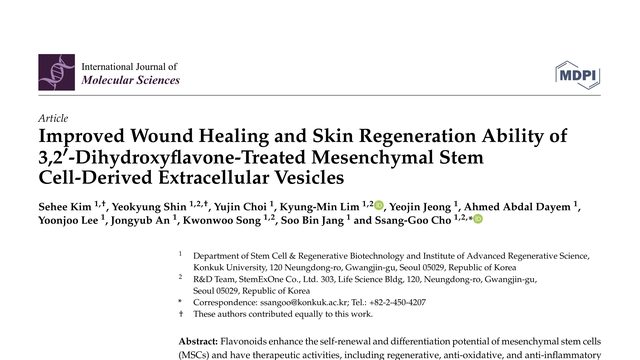
Se Hee Kim, Yeokyung Shin, Yujin Choi, Kyung Min Lim, Yeojin Jeong, Ahmed Abdal Dayem, Yoon-Joo Lee, Jongyub An, Kwonwoo Song, Soo Bin Jang, Ssang‐Goo Cho
A healing cell may not need to be placed into a wound to help it. This study suggests that tiny packages released by specially treated cells can calm inflammation and help damaged skin close faster.What if the key to better wound healing is not transplanting stem cells, but collecting more powerful messages from them? This study uses a flavonoid to make stem-cell vesicles more abundant and more effective.
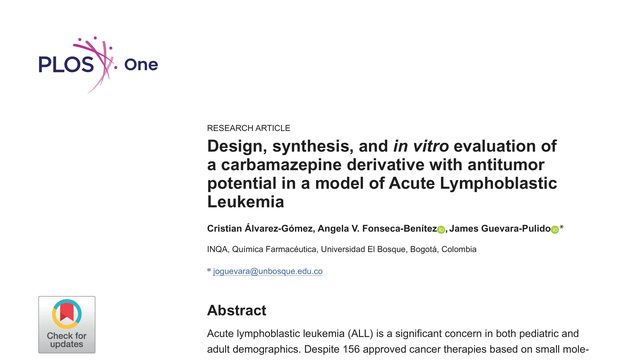
Cristian Álvarez-Gómez, Angela Fonseca-Benítez, James Guevara‐Pulido
A medicine already used for other conditions was reshaped into a possible leukemia treatment. In laboratory tests, its redesigned form reduced leukemia-cell survival while showing a more favorable effect on healthy cells.What if a familiar anticonvulsant could be redesigned into a leukemia candidate? This study starts with carbamazepine, computationally engineers more than fifty analogs, and sends one—CR80—into laboratory testing.
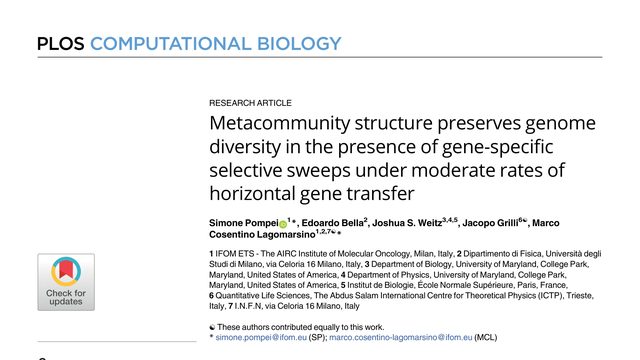
Simone Pompei, E. Della Bella, Joshua S. Weitz, Jacopo Grilli, Marco Cosentino Lagomarsino
A useful gene can spread through a microbial community without dragging the rest of the genome along with it. This study suggests that separated habitats help explain how diversity survives that takeover.A beneficial gene can sweep through a microbial community without sweeping away the genomes around it. This model suggests that patchy habitats, plus only moderate horizontal gene transfer, may be enough to preserve genome diversity.
 3:55
3:55