Across the Middle East and North Africa, the burden of colorectal cancer linked to dietary risk increased from 1990 to 2019. The pattern was especially pronounced among men, older adults, and several countries in the region.
The incidence of colorectal cancer (CRC) is increasing in low- and middle-income countries. This study aimed to estimate the burden of CRC attributable to nutritional risk in the Middle East and North Africa (MENA) region. The GBD 2019 methods were used to estimate age-standardized mortality rates (ASMRs) and disability-adjusted life-years (DALYs) in 2019 and over the past three decades. We evaluated the 30-year trend in DALYs and mortality rates from nutrition-related risks of CRC, from 1990 to 2019 by sex and age groups in 21 countries in the MENA region. The rate of DALYs/100,000 due to diet-related risks for CRC in 2019 was 79.71 (95% UI: 56.79, 98.44) and 65.16 (95% UI: 45.86, 80.95) in men and women, respectively. The percent changes of DALYs/100,000 in men and women were 8.15% and 2.50%, respectively, between 1990 and 2019. The percent changes in ASMRs in men and women were 8.32% and 3.44%, respectively. The highest DALYs and ASMRs were observed in both sexes in the age group 75–79 years and above. The highest percent changes in DALYs/100,000 and ASMRs were observed between 1990 and 2019 in Afghanistan, Egypt, Iran, Iraq, Lebanon, Libya, Morocco, Palestine, Qatar, Saudi Arabia, Sudan and Yemen. DALYs and ASMRs attributed to dietary risk for CRC increased in 21 countries in the MENA region from 1990 to 2019. A modified diet with more fiber, dairy products and less red meat intake is a highly recommended strategy for prevention CRC.
Transcript
Across the Middle East and North Africa, the burden of colorectal cancer linked to dietary risk increased from 1990 to 2019. The pattern was especially pronounced among men, older adults, and several countries in the region. Colorectal cancer ranks third in incidence and second in mortality rate worldwide.
In 2018, incidence was estimated at 1.8 million new cases and 881,000 deaths, with the global total projected to increase by about sixty percent by 2030. The increase is also visible in low- and middle-income countries. In the Middle East and North Africa, age-standardized incidence, mortality, and disability-adjusted life-years were 13.9, 9.8, and 218.7 per 100,000, respectively.
The study aimed to estimate the burden of colorectal cancer attributable to nutritional risk in the Middle East and North Africa region. Using GBD 2019 methods, the study estimated age-standardized mortality rates and disability-adjusted life-years in 2019 and over the past three decades.
The analysis used the Global Burden of Disease 2019 study, with data presented by country, age, and sex from 1990 to 2019. The study population covered the Middle East and North Africa region, including 21 countries, from Afghanistan through Yemen. The dietary risk factors included diets high in red meat, low in fiber, low in calcium, low in milk, and low in whole grains.
The study defined low whole-grain intake as less than 140 to 160 grams per day, and low milk intake as less than 360 to 500 grams per day. A disability-adjusted life-year was computed as years lost due to disability plus years of life lost. The analysis presented disability-adjusted life-years and age-standardized mortality rates by country and sex, because the age composition differs across the MENA region.
Rates were reported per 100,000 persons, with ninety-five percent confidence intervals and percent changes from 1990 to 2019, using R version 4.0.2. Table one reports age-standardized colorectal cancer DALY rates attributable to dietary risk across MENA countries, separately for women and men, in nineteen ninety, two thousand, two thousand ten, and two thousand nineteen.
Each estimate includes a ninety-five percent uncertainty interval, while the final columns show percentage changes between periods. The regional row reports seventy point seventy-seven for men in nineteen ninety and seventy-nine point seventy-one in two thousand nineteen, illustrating how the table tracks variation over time and across countries.
Among men in the MENA region, the dietary-risk-attributed disability-adjusted life-year rate was 70.77 per 100,000 in 1990 and 79.71 in 2019. Among women, the rate was 63.59 per 100,000 in 1990 and 65.16 in 2019. Table two reports age-standardized mortality rates for colorectal cancer attributable to dietary risk, by sex and country from nineteen ninety to twenty nineteen, with ninety-five percent uncertainty intervals and percentage changes across each decade.
The table shows increases from two thousand ten to twenty nineteen for the regional total—three point four four percent among women and eight point three two percent among men—and the authors note increases across the full period in Afghanistan, Egypt, Iran, Iraq, Morocco, Palestine, and Sudan.
It matters because it identifies how diet-related CRC mortality changed across MENA countries and between sexes. Figure one compares diet-related colorectal cancer burden across MENA countries in nineteen ninety, two thousand, two thousand ten, and two thousand nineteen.
The top panels show DALYs per one hundred thousand for men and women, while the bottom panels show age-standardized mortality rates, or ASMRs. The authors report increases in both measures over the study period, with percent changes in ASMRs of eight point three two percent for men and three point four four percent for women, highlighting a growing diet-related health burden.
Disability-adjusted life-years per 100,000 and mortality rates attributable to diet-related risks were higher in Palestine, the United Arab Emirates, Jordan, Lebanon, Turkey, and Bahrain than in other countries. Both disability-adjusted life-years per 100,000 and mortality rates were higher in the age group seventy-five to seventy-nine years and older.
Figure two shows age-specific DALYs and mortality rates from diet-attributable colorectal cancer across MENA countries, separated for men and women, comparing nineteen ninety with twenty nineteen. In both measures, the authors report the greatest burden among people aged seventy-five to seventy-nine years and older, with particularly high values in Palestine, the United Arab Emirates, Jordan, Lebanon, Turkey, and Bahrain.
This matters because it highlights how diet-related colorectal cancer burden is concentrated in older populations and varies across countries and sexes. Among women, the countries listed include the United Arab Emirates, Jordan, Lebanon, Qatar, Libya, Afghanistan, Turkey, and Bahrain, which had higher values than other countries.
A diet low in fiber, milk, and whole grains was associated with a higher risk of colorectal cancer than a diet high in red meat and low in calcium in men and women in MENA countries. Figure three compares colorectal-cancer DALYs and age-standardized mortality rates across MENA countries in nineteen ninety and twenty nineteen, separately for men and women.
Each bar partitions the burden attributed to diets high in red meat, low in calcium, low in milk, low in fiber, and low in whole grains. The authors use this comparison to show the geographic and sex-specific contribution of dietary risks, highlighting that low-fiber, low-milk, and low-whole-grain diets were associated with greater CRC risk than diets high in red meat or low in calcium.
Between 1990 and 2019, the percent changes in disability-adjusted life-years per 100,000 were 8.15 percent in men and 2.50 percent in women. The percent changes in age-standardized mortality rates were 8.32 percent in men and 3.44 percent in women.
The highest disability-adjusted life-years and age-standardized mortality rates occurred in both sexes in the age group seventy-five to seventy-nine years and above. The study found that dietary risk-related colorectal cancer burden increased across all 21 MENA countries, while low fiber, milk, and whole-grain diets showed a higher risk than diets high in red meat or low in calcium.
A derivative work by Paperi · AI-generated script, voice and captions
· pages and figures unaltered
Made with Paperi.
Drop in a research PDF — get a narrated video walkthrough like this one,
with highlights that follow the narration. Free to start.
He Li, Meiqi Wei, Tianyuan Ye, Yiduan Liu, Dongmei Qi, Xiaorui Cheng
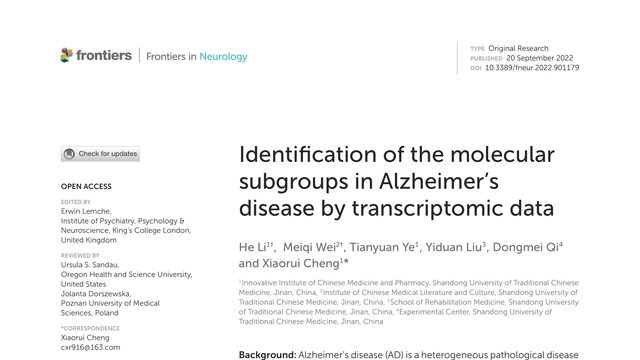
What if Alzheimer’s disease is not one illness following one path, but several different biological problems hiding under the same diagnosis? This study found three distinct patterns in affected brains.What if Alzheimer’s disease is not one molecular disease at all? By reading gene-expression patterns in hundreds of brain samples, this study separated Alzheimer’s into three subgroups with sharply different biological and clinical profiles.
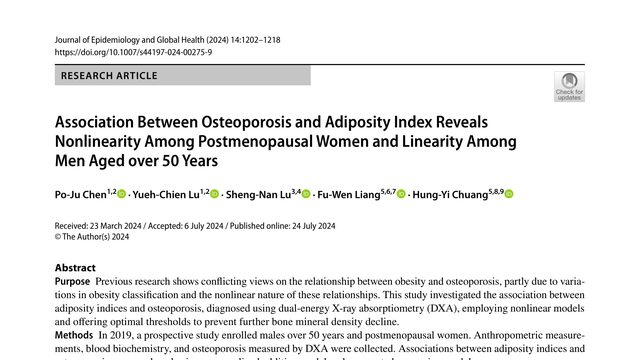
Could carrying more body fat sometimes protect bones—but only up to a point, and differently for women and men? This study finds that the answer is not a simple “more” or “less.”Can body fat be both protective and harmful to bone? This study finds a U-shaped relationship in postmenopausal women, but a linear pattern in men over fifty.
Daniel J. Taylor, Jeroen Feher, Krzysztof Czechowicz, Ian Halliday, D. Rodney Hose, Rebecca Gosling, Louise Aubinière-Robb, Marcel van’t Veer, Danielle Keulards, Pim A.L. Tonino, Michel Rochette, Julian Gunn, Paul Morris
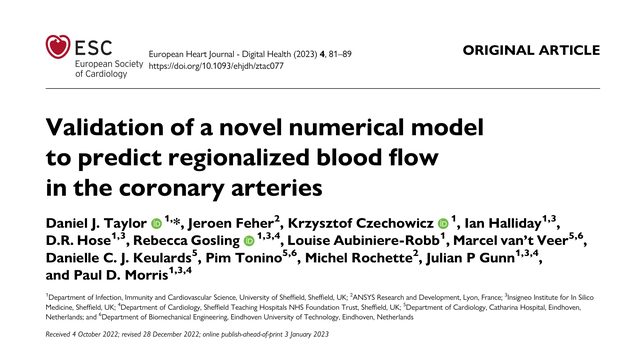
A heart artery is not just one pipe carrying one stream of blood. Its smaller branches constantly draw blood away, and a computer model may now estimate where that flow goes—without measuring every drop directly.What if an angiogram could do more than show where a coronary artery narrows? This study tests whether a numerical model can estimate how blood flow is distributed along the artery—and into its side branches.
 4:14
4:14