Could carrying more body fat sometimes protect bones—but only up to a point, and differently for women and men? This study finds that the answer is not a simple “more” or “less.”
Could carrying more body fat sometimes protect bones—but only up to a point, and differently for women and men? This study finds that the answer is not a simple “more” or “less.” Osteoporosis, marked by reduced bone strength and deterioration inside the bone, poses a significant health risk, particularly in older individuals.
Fragility fractures, especially of the hips or spine, are common complications. The stakes are large: millions of hip fractures are anticipated globally, and osteoporosis carries an estimated worldwide annual cost of billions of dollars.
The connection between obesity and osteoporosis remains controversial because body fat and bone affect each other in complicated ways. Traditionally, body weight has been considered beneficial for bone formation because bone cells adapt to mechanical loading. That is like a bridge responding to traffic: some load can encourage the structure to reinforce itself.
But body weight alone does not adequately reflect body composition, so several measures were developed to focus on abdominal fat. Previous research showed conflicting views partly because obesity was classified in different ways and because the relationship might not follow a straight line.
This study examined the relationship between body-fat measures and osteoporosis, using bone scans and models designed to detect curved relationships and identify levels linked with further bone-density decline. The study collected health information from adults during a year of health examinations.
The examinations included scans that assessed bone mineral density. Most participants had no symptoms and no osteoporosis-related fracture when they joined the study. To avoid forcing the data into a straight-line pattern, the analysis fitted smooth curves that could follow the shape of the relationship while minimizing noise.
This was used to identify nonlinear relationships with osteoporosis. When the curve suggested that its slope changed, the analysis used connected straight sections to locate the points where the relationship changed. Those points could be interpreted as thresholds.
Most body-fat measures were linked with lower osteoporosis risk in both the simpler and adjusted analyses. But the waist-to-hip measure in women and the visceral-fat measure in men were not significant in either model. After adjustment, the waist-to-height measure became significant in postmenopausal women.
The models worked better in the women’s group than in the men’s group. Most body-size measures were linked with lower odds of osteoporosis in both women and men, after accounting for other factors. The pattern was not uniform: waist-to-hip ratio was closest to no change, while the other measures generally pointed toward protection.
In postmenopausal women, the relationship was nonlinear: an optimal body shape appeared to avoid both unlimited weight gain and unlimited weight loss. Protection against bone-density loss was associated with threshold levels for several measures of body fat.
In men, no apparent turning point was found. The relationship between body fat and bone-density deterioration appeared linear instead, although one visceral-fat measure was not statistically significant after adjustment. These results suggest distinct patterns in women and men, with nonlinear effects particularly evident in women.
The paper links this difference partly to the rapid decline in estrogen after menopause compared with the gradual decrease in testosterone in aging men. For someone worried about bone health, the practical message is not to chase either extreme.
In postmenopausal women especially, maintaining a specific, balanced level of body fat may help avoid further bone-density decline, though exercise habits were not recorded in this study. For postmenopausal women, both very little and very much body fat were linked with greater osteoporosis risk, while men over 50 showed a steadier pattern.
The result points toward balance, not extremes.
A derivative work by Paperi · AI-generated script, voice and captions
· pages and figures unaltered
Made with Paperi.
Drop in a research PDF — get a narrated video walkthrough like this one,
with highlights that follow the narration. Free to start.
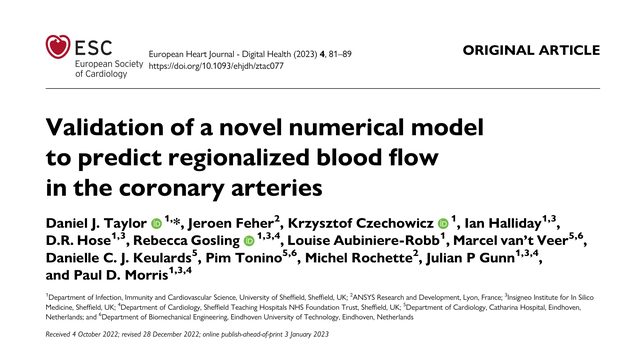
Daniel J. Taylor, Jeroen Feher, Krzysztof Czechowicz, Ian Halliday, D. Rodney Hose, Rebecca Gosling, Louise Aubinière-Robb, Marcel van’t Veer, Danielle Keulards, Pim A.L. Tonino, Michel Rochette, Julian Gunn, Paul Morris
A heart artery is not just one pipe carrying one stream of blood. Its smaller branches constantly draw blood away, and a computer model may now estimate where that flow goes—without measuring every drop directly.What if an angiogram could do more than show where a coronary artery narrows? This study tests whether a numerical model can estimate how blood flow is distributed along the artery—and into its side branches.
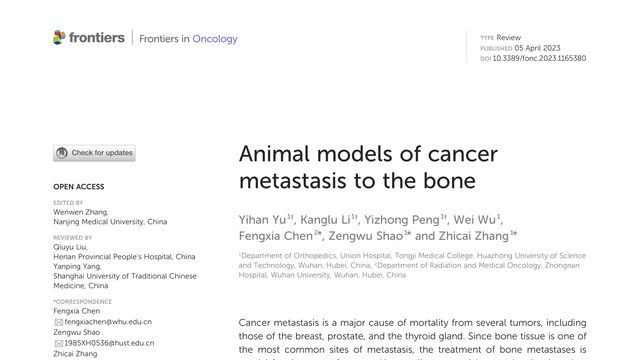
When cancer reaches bone, the consequences can be devastating: pain, fractures, loss of movement, and sometimes death. To understand how that journey happens—and how to stop it—researchers build living models of it.Cancer cells do not simply appear in bone: they invade, enter circulation, and adapt to a new tissue. This review shows how animal models try to recreate that journey—and where the imitation breaks down.
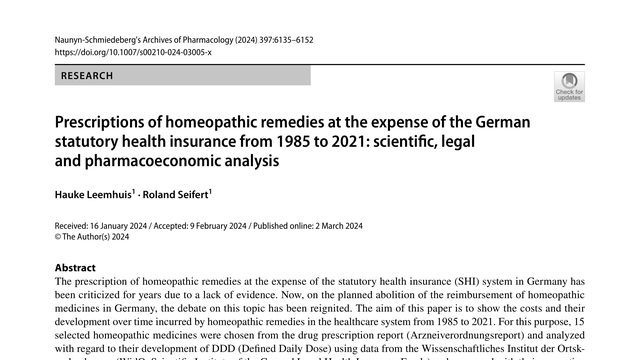
When public health insurance pays for a treatment, the question is not only whether people want it. It is whether the evidence, the price, and the safety information justify using everyone’s shared money.Germany’s statutory health insurance spent millions on homeopathic and anthroposophical remedies, even as the evidence base remained weak. This study asks what happened to the costs, the claims, and the legal standards over time.
 3:49
3:49