Bowel cancer is rising in lower- and middle-income countries, and this study finds that the share linked with diet increased across all 21 countries examined. What we eat may be part of a changing regional health story.
The incidence of colorectal cancer (CRC) is increasing in low- and middle-income countries. This study aimed to estimate the burden of CRC attributable to nutritional risk in the Middle East and North Africa (MENA) region. The GBD 2019 methods were used to estimate age-standardized mortality rates (ASMRs) and disability-adjusted life-years (DALYs) in 2019 and over the past three decades. We evaluated the 30-year trend in DALYs and mortality rates from nutrition-related risks of CRC, from 1990 to 2019 by sex and age groups in 21 countries in the MENA region. The rate of DALYs/100,000 due to diet-related risks for CRC in 2019 was 79.71 (95% UI: 56.79, 98.44) and 65.16 (95% UI: 45.86, 80.95) in men and women, respectively. The percent changes of DALYs/100,000 in men and women were 8.15% and 2.50%, respectively, between 1990 and 2019. The percent changes in ASMRs in men and women were 8.32% and 3.44%, respectively. The highest DALYs and ASMRs were observed in both sexes in the age group 75–79 years and above. The highest percent changes in DALYs/100,000 and ASMRs were observed between 1990 and 2019 in Afghanistan, Egypt, Iran, Iraq, Lebanon, Libya, Morocco, Palestine, Qatar, Saudi Arabia, Sudan and Yemen. DALYs and ASMRs attributed to dietary risk for CRC increased in 21 countries in the MENA region from 1990 to 2019. A modified diet with more fiber, dairy products and less red meat intake is a highly recommended strategy for prevention CRC.
Transcript
Bowel cancer is rising in lower- and middle-income countries, and this study finds that the share linked with diet increased across all 21 countries examined. What we eat may be part of a changing regional health story. Colorectal cancer ranks third in incidence and second in mortality worldwide.
Its incidence was estimated at 1.8 million new cases in 2018 and is projected to increase by about 60 percent by 2030. In low- and middle-income countries, colorectal cancer has shown an increasing trend. In the Middle East and North Africa, its incidence, mortality, and years of healthy life lost are all substantial.
To make sense of diet, picture a weekly shopping basket. The study treats the basket as a set of possible risks: more red meat, and too little fiber, calcium, milk, or whole grains. Fiber is counted from familiar sources including grains, fruits, legumes, and vegetables, among the dietary factors examined in this study.
It also includes processed meat, along with calcium supplied by familiar foods such as cheese, milk, and yogurt in the diet. The study uses information organized by country, age, and sex from 1990 to 2019. It covers the Middle East and North Africa as a region of 21 countries.
That broad view presents data by country across the MENA region, which includes twenty-one countries in the overall study. The diet-linked burden was higher in Palestine, the United Arab Emirates, Jordan, Lebanon, Turkey, and Bahrain than in other countries.
It was also higher among people aged 75 to 79 and older. The death rate linked with diet-related risk increased for both men and women in Afghanistan, Egypt, Iran, Iraq, Morocco, Palestine, and Sudan from 1990 to 2019. Across the region, that diet-linked death rate was higher among men than women.
Across Middle Eastern and North African countries, the health burden and deaths from colorectal cancer linked to diet rose between 1990 and 2019, affecting men more sharply than women. The burden is greatest among people aged seventy-five to seventy-nine and older.
The comparison has limits. Screening programs changed over the past 30 years, and some countries with weaker health systems may not have complete cancer registration. Still, studying 21 countries provides regional data and allows comparisons among countries.
The study says that diets high in milk, fiber, whole grains, and calcium, and low in red meat, are associated with a lower risk of colorectal cancer in Middle East and North African countries. In practical terms, the suggested direction is more fiber and dairy products, and less red meat, as a strategy for preventing colorectal cancer.
The study links higher bowel-cancer burden with diets lower in fiber, milk, whole grains, and calcium, and higher in red meat. That points toward prevention through more fiber and dairy foods and less red meat, while recognizing the data's limits.
A derivative work by Paperi · AI-generated script, voice and captions
· pages and figures unaltered
Made with Paperi.
Drop in a research PDF — get a narrated video walkthrough like this one,
with highlights that follow the narration. Free to start.
He Li, Meiqi Wei, Tianyuan Ye, Yiduan Liu, Dongmei Qi, Xiaorui Cheng
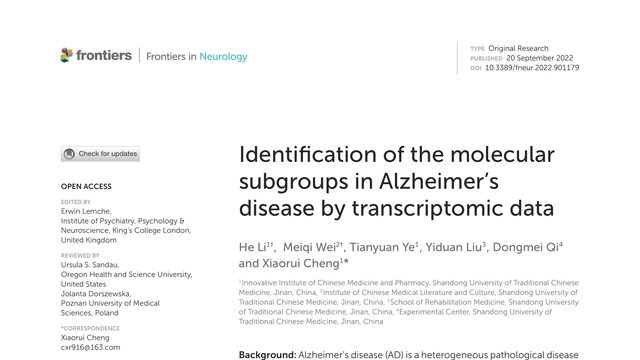
What if Alzheimer’s disease is not one illness following one path, but several different biological problems hiding under the same diagnosis? This study found three distinct patterns in affected brains.What if Alzheimer’s disease is not one molecular disease at all? By reading gene-expression patterns in hundreds of brain samples, this study separated Alzheimer’s into three subgroups with sharply different biological and clinical profiles.
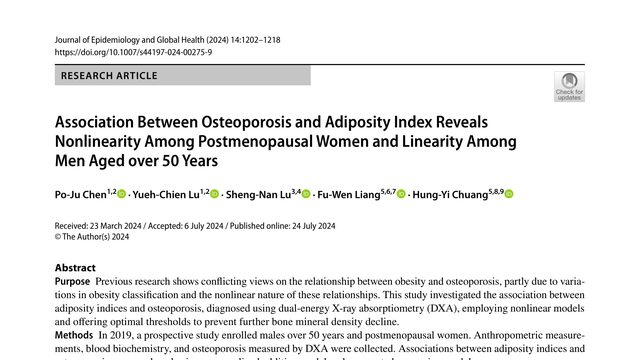
Could carrying more body fat sometimes protect bones—but only up to a point, and differently for women and men? This study finds that the answer is not a simple “more” or “less.”Can body fat be both protective and harmful to bone? This study finds a U-shaped relationship in postmenopausal women, but a linear pattern in men over fifty.
Daniel J. Taylor, Jeroen Feher, Krzysztof Czechowicz, Ian Halliday, D. Rodney Hose, Rebecca Gosling, Louise Aubinière-Robb, Marcel van’t Veer, Danielle Keulards, Pim A.L. Tonino, Michel Rochette, Julian Gunn, Paul Morris
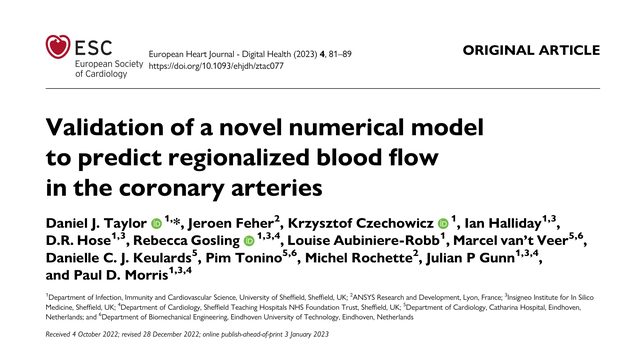
A heart artery is not just one pipe carrying one stream of blood. Its smaller branches constantly draw blood away, and a computer model may now estimate where that flow goes—without measuring every drop directly.What if an angiogram could do more than show where a coronary artery narrows? This study tests whether a numerical model can estimate how blood flow is distributed along the artery—and into its side branches.
 4:14
4:14