Plitidepsin in adult patients with COVID-19 requiring hospital admission: A long-term follow-up analysis
Overview3:48CCAI
paperi.ai
0:00 / 0:00
José Felipe Varona, Pedro Landete, Roger Paredes, Roberto Vates, Miguel Torralba, Pablo Guisado‐Vasco, Lourdes Porras, Patricia Muñóz, Paloma Gijón, Julio Ancochea, Elena María Saiz, Fernanda Salazar Meira, José María Jimeno, Jose Antonio Lopez-Martin, Vicente Estrada
COVID-19 can end in the hospital and still keep changing a person’s life months later. This follow-up asks whether people treated with plitidepsin remained well over the longer term.
COVID-19 can end in the hospital and still keep changing a person’s life months later. This follow-up asks whether people treated with plitidepsin remained well over the longer term. COVID-19 is not always finished when the infection ends.
It can also cause longer-term mental and physical health consequences, including fatigue, breathing trouble, chest pain, thinking problems, and joint pain. When these symptoms persist three months after infection, they are called long COVID.
Between ten and twenty-five percent of patients may experience it, with limits on daily activities and effects that can continue for more than a year. So the follow-up study asked a focused question: could plitidepsin treatment in people hospitalized with COVID-19 affect the later problems left behind by the infection?
The question is less like checking whether a storm has passed and more like returning months later to see whether the house is still damaged. The study looked at later illness and described complications in patients from APLICOV-PC who had received plitidepsin as a therapeutic intervention.
The treatment had been given through a vein for three consecutive days, at one of three daily amounts. The follow-up found no severe complications during the period after hospital discharge. Some patients were diagnosed with COVID-19 again, while a small number had individual problems such as cough, changes in blood sugar, hair loss, or lung disease.
Tiredness, described in the study as asthenia, was reported in two patients, or five point nine percent of those followed. The investigators reported no clinically relevant abnormalities in the patients’ hematological parameters, meaning the study found no clinically important blood-test abnormalities among those evaluated.
Finally, none of the patients experienced a thromboembolic event, so the study reported no blood-clot events among the patients it followed. None of the patients needed to return to the hospital for complications related to the disease.
Three patients did need extra oxygen after leaving the hospital, delivered through a nasal tube or a mask. Some patients reported low mood, headaches, or anxiety. These rates were lower than in a much larger electronic follow-up record, where mental and neurological complications appeared in thirty-four percent of people during the first six months after diagnosis.
Other reports have described mood and anxiety disorders, nerve problems, and dementia after COVID-19 in some patients during follow-up periods. They have also reported headaches and changes in thinking after the acute infection, including among patients followed beyond twelve weeks.
Taken together, the study found no severe complications, no clinically important heart-recording changes, few disease-related problems, and limited need for extra oxygen among the followed patients. The reported rate of later complications appeared to be at the low end of rates described in a recent review, although the study was small and had no untreated comparison group.
The overall conclusion was that plitidepsin had a favorable long-term safety profile in adults hospitalized with COVID-19, and that later complications were in the low range of published reports. For patients and families, that is reassuring evidence about what happened after treatment, but it is not proof that plitidepsin itself prevented long COVID.
The followed patients had few serious later complications and no disease-related readmissions, but the study had no untreated comparison group, so it cannot prove that the treatment prevented long COVID.
A derivative work by Paperi · AI-generated script, voice and captions
· pages and figures unaltered
Made with Paperi.
Drop in a research PDF — get a narrated video walkthrough like this one,
with highlights that follow the narration. Free to start.
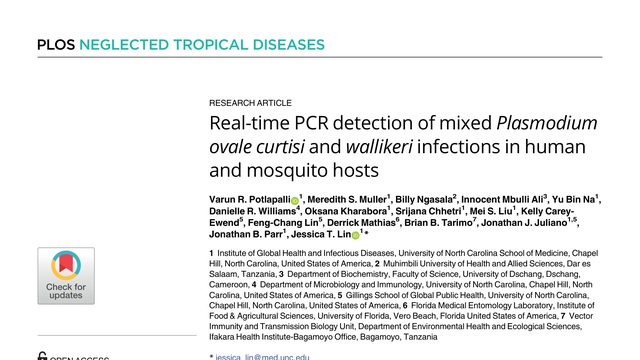
Varun R. Potlapalli, Meredith Muller, Billy Ngasala, Innocent Mbulli Ali, Yu Bin Na, Danielle R. Williams, Oksana Kharabora, Srijana Chhetri, Mei S. Liu, Kelly Carey-Ewend, Feng‐Chang Lin, Derrick K. Mathias, Brian B. Tarimo, Jonathan J. Juliano, Jonathan B. Parr, Jessica T. Lin
A malaria infection that looks like one may actually contain two closely related species. The surprise is that mosquitoes revealed mixed infections far more often than human blood tests did.What looks like one malaria parasite species may actually be two, and mosquitoes revealed that mixed infections could be far more common than blood tests suggest.
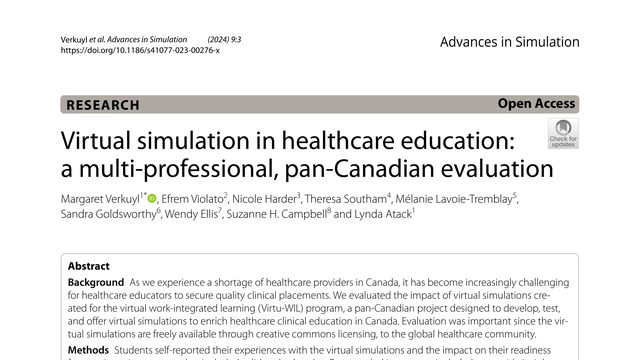
Margaret Anne Verkuyl, Efrem Mauro Violato, Nicole Harder, Theresa Southam, Mélanie Lavoie‐Tremblay, Sandra Goldsworthy, Wendy D. Ellis, Suzanne Campbell, Lynda Atack
Healthcare students need real clinical experience, but hospitals cannot always provide enough placements. This study asks whether a screen-based patient encounter can help prepare them, and finds that simply adding one is not enough.When clinical placements are hard to secure, can a screen-based simulation really help students become practice-ready? This Canadian evaluation asked that question across 1,715 healthcare students.
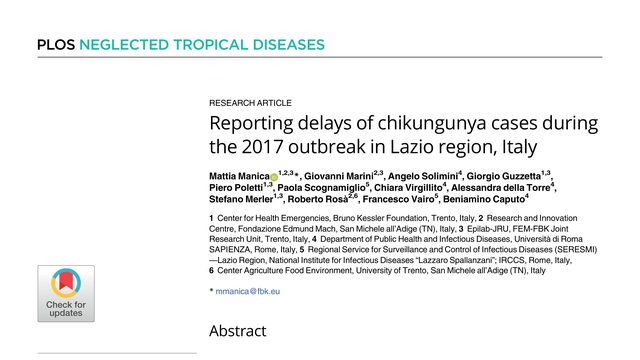
Mattia Manica, Giovanni Marini, Angelo Giuseppe Solimini, Giorgio Guzzetta, Piero Poletti, Paola Scognamiglio, Chiara Virgillito, Alessandra della Torre, Stefano Merler, Roberto Rosà, Francesco Vairo, Beniamino Caputo
During the 2017 chikungunya outbreak in Italy, people often became ill long before health officials knew an outbreak was happening. Even after detection, the typical delay was still long enough for transmission to continue.In this outbreak, finding the first case cut the median reporting delay from thirty-three days to eight. But even eight days can overlap the entire infectious period, leaving control measures chasing transmission instead of stopping it.
 3:13