Glutamate tone in preBötzinger complex rhythmogenesis: ambient extracellular glutamate as a candidate excitability bias
Overview4:51CCAI
paperi.ai
0:00 / 0:00
Enrique Vázquez-Mendoza, Carol Alejandra Olmos-Pastoresa, Donají Chi-Castañeda, María Leonor López‐Meraz, Luis Beltrán‐Parrazal, Consuelo Morgado‐Valle
Breathing depends on a tiny brain network that repeatedly gathers enough strength to trigger each inhale. This paper asks whether the chemical background around those cells helps decide when that gathering can begin.
The preBötzinger complex (preBötC) is essential for inspiratory rhythm generation, yet the biological processes that repeatedly establish the excitability state required for neuronal recruitment remain incompletely understood. This unresolved issue is reflected in computational models of respiratory rhythmogenesis, which rely on a phenomenological baseline excitability parameter, inline-eq-IEq1, without a defined biological substrate. Ambient extracellular glutamate signaling is well established in other brain regions, but its relevance to the respiratory network remains largely untested. Here, we evaluate the hypothesis that ambient extracellular glutamate outside synaptic clefts–termed glutamate tone–represents one biologically plausible candidate for a distributed extracellular network-state variable in the preBötC. We define glutamate tone as a continuously maintained but dynamically regulated extracellular glutamate signal arising from the balance of glutamate release, diffusion, transporter-mediated clearance, and astrocyte-dependent metabolism. We critically review evidence that extracellular glutamate handling can influence respiratory network activity, while emphasizing that direct evidence for a compartment-specific, rhythmogenesis-relevant glutamate tone remains lacking. We then evaluate candidate glutamate-sensing mechanisms, including peri-/extrasynaptic NMDA receptors and metabotropic glutamate receptors, and place them within the established framework of recurrent excitation, intrinsic membrane conductances, and inhibitory circuitry. We propose that glutamate tone, if present, would not generate the inspiratory burst directly, but could bias the excitability landscape from which neuronal recruitment and synchronization emerge. Finally, we outline experimental criteria for distinguishing a causal excitability bias from glutamate signals that merely reflect ongoing network activity.
Transcript
Breathing depends on a tiny brain network that repeatedly gathers enough strength to trigger each inhale. This paper asks whether the chemical background around those cells helps decide when that gathering can begin. The preBötzinger complex is essential for generating the rhythm of inhalation, yet the biological processes that repeatedly establish the excitability needed to recruit neurons remain incompletely understood.
Ambient extracellular glutamate signaling is well established in other brain regions, but its relevance to the respiratory network remains largely untested. The paper evaluates it as a possible distributed signal that helps set the network’s state.
This glutamate tone is described as a continuously maintained but dynamically regulated signal, shaped by release, movement, clearance, and metabolism around the cells. Existing models can reproduce baseline excitability without specifying how much comes from the cells’ own properties, surrounding chemistry, incoming signals, or transmitter outside synapses.
So the question is not whether breathing rhythm emerges from a network. It is whether a measurable process outside the cells helps set their readiness between successive bursts of inhalation. But here is the catch: whether this signal operates in the breathing network, at the right places and times, remains unknown.
The proposed signal is not a replacement for the established processes that create breathing bursts. It is being examined as a plausible bias that might make some neurons more likely to join in. The crucial test is whether it can be detected, regulated, sensed by nearby receptors, and shown to change recruitment or synchronization without simply reflecting direct synaptic input.
For this idea to matter, the signal must be detectable in the rhythm-making parts of the network and must change on the timescale of breathing. It must also affect the cells’ readiness before they fire, while remaining experimentally distinguishable from the brief signals passed directly between nerve cells.
The evidence supports a cautious conclusion: breathing output is affected by chemical transport, ion balance, incoming glutamate signals, and support-cell metabolism; extracellular glutamate can also be detected in breathing regions. But none of this shows a sustained, location-specific signal that comes before recruitment, or proves that glutamate tone controls timing, burst likelihood, or synchronization.
The central unresolved problem is separating effects of ambient glutamate from activation caused directly by synaptic signals. The picture’s central idea is that leftover glutamate gradually raises the readiness of breathing neurons between bursts, nudging some close to firing; once a few cross that threshold, their shared excitation recruits and synchronizes the wider network into the next inspiratory burst.
And here is the paper’s most important caution: the evidence makes glutamate tone biologically plausible, but plausibility is not demonstration. No study has yet measured the proposed location-specific ambient signal in the breathing network, shown that a defined receptor population detects it under normal conditions, or linked it causally to recruitment, burst likelihood, synchronization, or rhythm strength.
The idea therefore remains a framework for testing, not an established mechanism. Much of the available evidence comes from newborn tissue studied outside the body, where slicing, constant fluid flow, altered salt conditions, and reduced structure can change glutamate balance.
Those preparations are essential for studying mechanisms, but they cannot by themselves show that glutamate tone operates under normal conditions. More intact preparations, and eventually studies in living animals combining glutamate sensors with nerve and movement recordings, will be needed.
The breathing network already has established mechanisms for recruiting neurons, synchronizing them, and generating each inhalation burst. What is less clear is whether processes outside the cells help set the state from which recruitment repeatedly begins.
The paper proposes ambient glutamate outside synapses as one biologically plausible signal that could help set that state. If it exists, this signal would not replace the machinery that generates breathing. It could instead help determine the conditions under which that machinery operates.
The paper argues that a continuously maintained glutamate signal could bias the breathing network toward readiness, but it has not yet been shown to cause the rhythm. That distinction matters for understanding what controls breathing.
A derivative work by Paperi · AI-generated script, voice and captions
· pages and figures unaltered
Made with Paperi.
Drop in a research PDF — get a narrated video walkthrough like this one,
with highlights that follow the narration. Free to start.
Ryan T. Lingg, Shane B. Johnson, Dalton C. Hinz, Abdullahi A. Mohamed, Timothy D Skog, Manuela Lizarazu, Sara A. Romig‐Martin, Ryan T. LaLumiere, Nandakumar S. Narayanan, Jason J. Radley
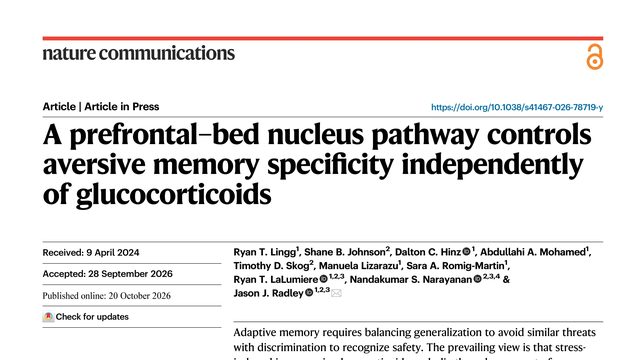
A frightening memory can protect you, or make a safe place feel dangerous. This study finds that the brain can change how widely fear spreads without changing how strong the fear itself is.What if a fear memory could become broader or more specific without stress hormones being the thing that controls it? This study identifies a prefrontal circuit that separates memory specificity from memory strength.
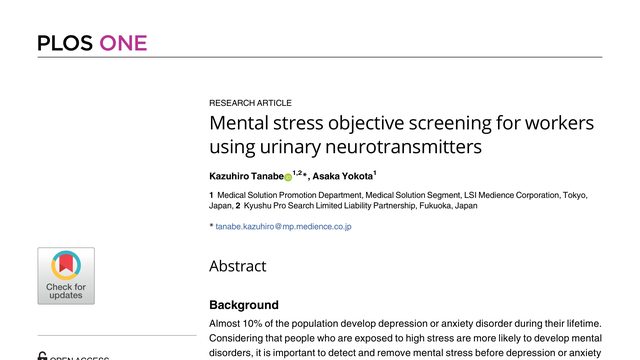
Stress can be affecting a worker before they call themselves unwell. This study asks whether a urine sample could reveal that hidden strain early enough to act on it.What if an ordinary urine sample could help reveal mental stress before it develops into depression or anxiety? This study tests that idea by combining six urinary neurotransmitters into a stress index.
Tamás Tóth, Á. Németh, Péter Bakó, Péter Révész, Imre Gerlinger, István Szanyi
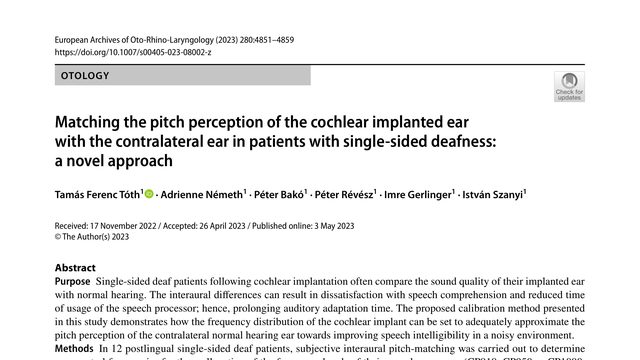
A cochlear implant can restore access to sound, yet speech may still feel strangely out of tune between the two ears. This study asks whether retuning that mismatch can make noisy conversations easier.What if a cochlear implant could be retuned using the patient’s own sense of pitch, so the implanted ear sounds more like the normal-hearing ear? This study tests that idea in twelve people with single-sided deafness.
 5:07