Fire and ant interactions mediated by honeydew and extrafloral nectar in an australian tropical savanna
Student9:09CCAI
paperi.ai
0:00 / 0:00
Fernanda M. P. Oliveira, Carlos H. F. Silva, Melinda L. Moir, Inara R. Leal, Alan N. Andersen
Fire usually sounds destructive, but in this Australian savanna it increased some ant partnerships—especially ants visiting plant nectar—and increased the share of dominant, high-quality mutualists.
Fire is a major disturbance affecting ecosystems globally, but its impact on mutualisms has received minimal attention. Here, we use a long-term field experiment to investigate the impact of different fire regimes on globally important ant–honeydew and ant–extrafloral nectar (EFN) mutualistic interactions in an Australian tropical savanna. These interactions provide ants with a key energy source, while their plant and hemipteran hosts receive protection services. We examined ant interactions on species of Eucalyptus (lacking EFNs) and Acacia (with EFNs) in three replicate plots each of burning every 2 and 3 years early in the dry season, burning late in the dry season every 2 years, and unburnt for > 25 years. The proportions of plants with ant–honeydew interactions in Acacia (44.6%) and Eucalyptus (36.3%) were double those of Acacia plants with ant–EFN interactions (18.9%). The most common ants, representing 85% of all interactions, were behaviourally dominant species of Oecophylla, Iridomyrmex and Papyrius. Fire promoted the incidence of ant interactions, especially those involving EFNs on Acacia, which occurred on only 3% of plants in unburnt plots compared with 24% in frequently burnt plots. Fire also promoted the relative incidence of behaviourally dominant ants, which are considered the highest quality mutualists. Contrary to expectations, frequent fire did not result in a switching of behaviourally dominant ant partners from forest-adapted Oecophylla to arid-adapted Iridomyrmex. Our findings that frequent fire increases ant interactions mediated by honeydew and extrafloral nectar, and promotes the quality of ant mutualists, have important implications for protective services provided by ants in highly fire-prone ecosystems.
Transcript
Fire usually sounds destructive, but in this Australian savanna it increased some ant partnerships—especially ants visiting plant nectar—and increased the share of dominant, high-quality mutualists. Fire is a major disturbance affecting ecosystems globally, but its impact on mutualisms has received minimal attention.
These interactions provide ants with a key energy source, while their plant and hemipteran hosts receive protection services. The study examined ant–honeydew and ant–extrafloral nectar interactions on Eucalyptus, which lacks extrafloral nectaries, and Acacia, which has them, across several fire regimes.
Mutualistic interactions produce essential ecosystem services such as pollination, seed dispersal and cycling of nutrients. However, understanding remains limited about how mutualist interactions respond to disturbances, whether those disturbances are natural or anthropogenic.
Fire is a frequent and widespread disturbance shaping the biota and functioning of many ecosystems around the globe. The impact of fire on ants has been extensively studied, but little attention has been given to fire’s effects on mutualistic relationships between ants and other organisms.
Fire could reduce ant attendance by changing ant communities, or it could promote attendance through stress-induced increases in the quality and quantity of nectar produced by extrafloral nectaries. Potential hemipteran partners can also be sensitive to different burning regimes, and experimental burning in an Australian savanna increased the overall abundance of plant-dwelling Homoptera.
The study first documents the ant–hemipteran and ant–extrafloral nectar partners at the site, along with the relative incidence of ant–honeydew versus ant–extrafloral nectar interactions. The questions ask whether dominant dolichoderines and formicines visit honeydew more than extrafloral nectar, and whether these incidences vary among fire regimes.
The study also asks whether resource preferences and the relative incidence of higher-quality mutualists vary with fire, and whether frequent fire switches partners from forest-adapted Oecophylla to arid-adapted Iridomyrmex. The study used 12 one-hectare experimental plots in a long-term burning experiment, with six burning treatments, three replicate plots per treatment, and a randomised block design applied since two thousand four.
This analysis used four treatments: early burning every two years, early burning every three years, late burning every two years, and plots unburnt for more than twenty-five years. Woody cover decreases with increasing fire frequency, and fire intensities are higher in late fires than in early fires.
Each plant was observed for two ten-minute periods: one in the morning and one in the late afternoon or evening, with observations made in July two thousand sixteen. The two time periods for a plot were on separate days, and observations were made on a total of twelve days.
The researchers recorded ants directly tending honeydew-producing Hemiptera on Eucalyptus and Acacia, or an extrafloral nectary on Acacia, and collected specimens for later identification. Ants were identified to species and classified as dominant, subdominant or submissive using dominance-based functional groups; hemipterans were identified to family only.
A generalized linear mixed model analysed how the relative incidence of ant–honeydew versus ant–extrafloral nectar interactions varied among fire regimes, using fire regime and its interaction with resource type as explanatory variables. A second generalized linear mixed model tested the effects of long-term fire regimes on dominant dolichoderine and formicine preferences for honeydew over extrafloral nectar.
A third generalized linear mixed model used the ratio of submissive to dominant relative interaction incidence to test whether fire affected the relative incidence of higher- and lower-quality mutualists. The observations recorded a total of 343 ant interactions: 128 with honeydew on Eucalyptus, 163 with honeydew on Acacia, and 52 with extrafloral nectaries on Acacia.
Ten of the 46 Acacia plants with an ant–extrafloral nectar interaction also had an ant–hemipteran interaction. Ant–honeydew interactions occurred on 36.3 percent of Eucalyptus plants and 44.6 percent of Acacia plants, while ant–extrafloral nectar interactions occurred on 18.9 percent of Acacia plants.
On Acacia, the incidence of ant–extrafloral nectar interactions was significantly lower than the incidence of ant–honeydew interactions. The study recorded 19 ant species from 10 genera collecting honeydew and or extrafloral nectar. Thirteen species from nine genera collected honeydew, predominantly the behaviourally dominant Oecophylla smaragdina, Iridomyrmex species twenty-one, and Papyrius species one.
Thirteen species from nine genera also collected extrafloral nectar, with Oecophylla smaragdina and Iridomyrmex species twenty-one the most common. Considering fire treatments individually, interactions involving both honeydew and extrafloral nectaries were always lowest in unburnt plots, although the only significant individual difference was between triennially burnt and unburnt plots for Acacia extrafloral nectar interactions.
For both resource types, incidence was significantly higher in burnt plots than in unburned plots. The clearest contrast was for Acacia extrafloral nectar: interactions occurred on only 2.8 percent of plants in unburnt plots, compared with 23.7 percent in burnt plots.
Fire regime and functional group had a significant interactive effect on the incidence of ant interactions, both across individual burning treatments and between burnt and unburnt plots. There was significant variation in interactions involving dominant ant species, but not involving either subdominant or subordinate ants.
Interactions with dominant ants were higher in infrequently burnt E3 plots than in unburnt plots, and more generally higher in frequently burned than in unburnt plots. Fire markedly increased ant–honeydew interactions on Eucalyptus and ant–extrafloral nectar interactions on Acacia.
The fire effect was especially evident for Acacia extrafloral nectar interactions, which occurred on less than three percent of plants in unburnt plots compared with nearly a quarter in burnt plots. In contrast, interactions with Acacia honeydew were not affected by fire.
The strongest effect on Acacia extrafloral nectar interactions suggests that the quantity or quality of extrafloral nectar was higher in burnt plots, while the unchanged Acacia honeydew incidence supports that conclusion. Frequent fire promoted interactions involving behaviourally dominant ant species, particularly ant–honeydew interactions on Eucalyptus.
This might reflect the promotion by frequent fire of the abundance of behaviourally dominant ant species. It might also involve a cascading positive effect on hemipteran populations due to enhanced protection services from ants. Consequently, ant–honeydew associations increase their frequency in burnt areas in relation to unburnt areas, as in the case of interactions in Eucalyptus.
Mutualistic interactions with ants are ubiquitous globally and have important ecological consequences for food web dynamics and the fitness of plant and insect hosts. The study examines the incidence and identity of mutualistic partners rather than mutualistic outcomes for those partners.
The increase in the number of interactions and in the relative incidence of the highest-quality ant mutualists suggests that protective services offered by ants in this tropical savanna are enhanced by frequent fire. Because this savanna is one of the most fire-prone systems on Earth and its biota is highly adapted to frequent fire, the positive effect of frequent burning on ant–liquid carbohydrate mutualisms cannot be readily generalised to less fire-prone biomes.
Further research is required across a range of ecosystems, especially as increased fire risk changes the conditions under which these mutualisms operate. Frequent fire increased ant interactions and promoted behaviourally dominant ants in this fire-adapted tropical savanna, but the result should not be generalized to ecosystems with very different fire histories.
A derivative work by Paperi · AI-generated script, voice and captions
· pages and figures unaltered
Made with Paperi.
Drop in a research PDF — get a narrated video walkthrough like this one,
with highlights that follow the narration. Free to start.
Berta Mozo Vives, Sophie Mainguy‐Seers, Jean‐Pierre Lavoie
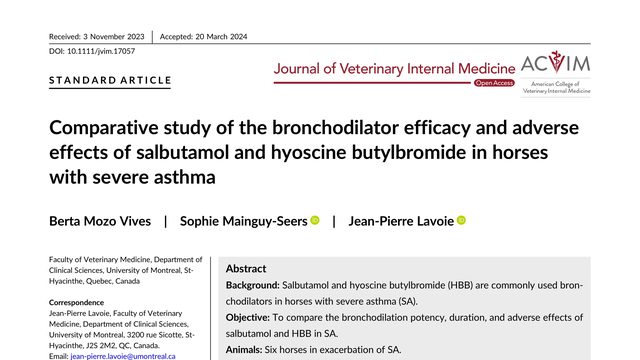
When a horse cannot breathe, two medicines can open its narrowed airways quickly. But the treatment that lasts longer may also be the one that avoids problems with the heart and gut.Two drugs can open a horse’s airways with similar strength, but one lasts up to three hours while the other lasts about one—and the shorter-acting option is the one linked to faster heart rates and quieter gut sounds.
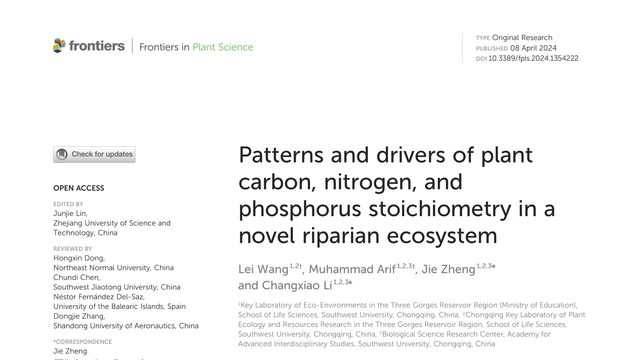
Every winter, floodwater covers this riverbank by about thirty metres. When the water retreats, the plants are not simply recovering: their leaves, stems, and roots are carrying different chemical priorities.A riverbank ecosystem flooded thirty meters every winter reveals a surprising split: flooding changes plant carbon, nitrogen, and phosphorus concentrations, yet the plants maintain similar nutrient ratios along the inundation gradient.
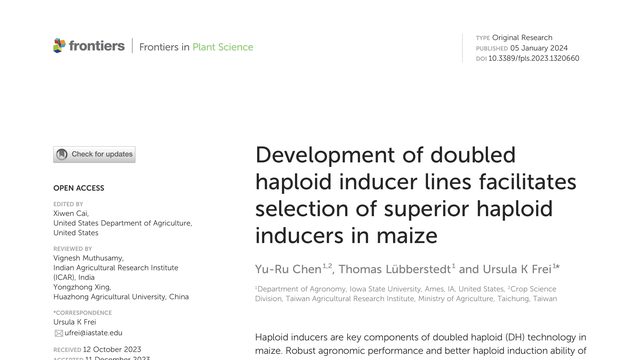
What if the plants used to create better maize could themselves be rebuilt from scratch? This study turns the breeding tool into a breeding target—and finds offspring that outperform their parents.What if the fastest way to improve maize haploid inducers is to make doubled haploid versions of the inducers themselves? This study turns that idea into a large-scale breeding pipeline—and finds offspring that outperform their parents.
 3:51
3:51