Comparative study of the bronchodilator efficacy and adverse effects of salbutamol and hyoscine butylbromide in horses with severe asthma
Student7:30CCAI
paperi.ai
0:00 / 0:00
Berta Mozo Vives, Sophie Mainguy‐Seers, Jean‐Pierre Lavoie
Two drugs can open a horse’s airways with similar strength, but one lasts up to three hours while the other lasts about one—and the shorter-acting option is the one linked to faster heart rates and quieter gut sounds.
Background: Salbutamol and hyoscine butylbromide (HBB) are commonly used bronchodilators in horses with severe asthma (SA). Objective: To compare the bronchodilation potency, duration, and adverse effects of salbutamol and HBB in SA. Methods: The effects of inhaled salbutamol (1000 μg) and HBB (150 mg, IV) were compared in a randomized, blinded, crossover experiment. Lung function, intestinal borborygmi and heart rate were assessed before and sequentially until 180 minutes after drug administration, and analyzed with 2-way repeated-measures ANOVA and Dunnett's multiple comparison tests. Results: Both treatments caused a similar improvement in lung function. Pulmonary resistance and reactance returned to baseline values within 30 minutes after HBB administration, whereas salbutamol improved reactance until 180 minutes (mean improvement at 180 minutes of 0.040 Kpa/L/s, 95% CI = 0.004 to 0.076; P = .02 for salbutamol and of 0.009 Kpa/L/s, 95% CI = 0.028 to 0.045; P = .98 for HBB for the resistance at 3 Hz and of 0.040 Kpa/L/s, 95% CI = 0.007 to 0.074; P = .01 for salbutamol and of 0.009 Kpa/L/s, 95% CI = 0.024 to 0.042; P = .97 for HBB for the reactance at 7 Hz). From 5 to 30 minutes after HBB administration, the heart rate accelerated (mean increase of 3.3 beats per minute, 95% CI = 6.6 to 13.1; P = .92 for salbutamol, and of 13.0 beats per minute, 95% CI = 3.6 to 22.4; P = .002 for HBB at 30 minutes) and the gut sounds decreased (mean reduction of 1.3, 95% CI = 0.1 to 2.8; P = .09 for salbutamol and of 2.8 for the gastrointestinal auscultation score, 95% CI = 1.4 to 4.3; P < .0001 for HBB at 30 minutes). Conclusions and Clinical Importance: Both drugs have a similar bronchodilator potency but with a longer duration for salbutamol. Gastrointestinal and cardiovascular effects were noted only with HBB, suggesting the preferential use of salbutamol to relieve bronchoconstriction in horses with asthma.
Transcript
Two drugs can open a horse’s airways with similar strength, but one lasts up to three hours while the other lasts about one—and the shorter-acting option is the one linked to faster heart rates and quieter gut sounds. Salbutamol and hyoscine butylbromide, abbreviated HBB, are commonly used bronchodilators in horses with severe asthma.
The central question is how their airway effects compare. The background identifies salbutamol and hyoscine butylbromide as commonly used bronchodilators for horses with severe asthma. The primary objective was to evaluate the bronchodilation duration and potency of these two drugs in severe asthma, and secondarily to compare the occurrence of adverse effects.
The hypothesis was that HBB would be more potent than salbutamol in relieving bronchospasm, but would produce more adverse effects, especially tachycardia. The study used a randomized, blinded, crossover design with eight horses with severe asthma from a research herd: three geldings and five mares, aged seventeen plus or minus two point seven years and weighing five hundred eighty-eight plus or minus eighty-five point seven kilograms.
These horses had a history of labored breathing, airway obstruction, and lower airway inflammation when stabled and fed hay. A power analysis based on previously acquired lung function data measured by oscillometry determined that eight horses per group would detect a twenty percent difference in airway resistance with eighty percent power and a five percent significance level.
At three hertz, pulmonary resistance changed significantly over time after the bronchodilators were administered, indicating that the response varied across the measurement period. It improved from five to one hundred eighty minutes after salbutamol inhalation, but only at ten and fifteen minutes after HBB administration.
At seven hertz, the bronchodilators behaved differently over time, with an interaction between treatment group and time of treatment. With salbutamol, pulmonary resistance at seven hertz increased significantly at five and ten minutes compared with baseline, whereas it remained unchanged with HBB.
Figure one tracks pulmonary resistance at three and seven hertz from baseline to one hundred eighty minutes after salbutamol or hyoscine butylbromide, with boxplots showing medians, interquartile ranges, and five-to-ninety-five-percentile whiskers. At three hertz, the authors report a significant time effect, with marked within-group changes at several time points; the seven-hertz panel shows fewer marked departures from baseline.
This matters because it displays both the timing and frequency dependence of the bronchodilator response, while preserving the variability across six animals per group. The R3 over R7 ratio is a variable that deteriorates with small airway diseases such as asthma, and it improved significantly over time in both treatment groups.
The R3 to R7 ratio improved over time in both treatment groups. It improved at five, ten, fifteen, thirty, sixty, and one hundred eighty minutes with salbutamol, and from five to fifteen minutes with HBB. Figure two tracks the ratio of pulmonary resistance at three versus seven hertz before treatment and for one hundred eighty minutes afterward, comparing salbutamol with hyoscine butylbromide.
The boxplots show medians, interquartile ranges, and five-to-ninety-five-percentile whiskers; asterisks mark significant changes from baseline within a group. The authors report that this ratio changed significantly over time, making the figure useful for visualizing both the timing and variability of bronchodilator-related responses.
Figure three tracks pulmonary reactance, a measure of lung elasticity, at three and seven hertz before treatment and for one hundred eighty minutes afterward, comparing salbutamol with hyoscine butylbromide, or HBB. The boxplots show medians, interquartile ranges, and five-to-ninety-five percentile whiskers; significance marks indicate changes from baseline within each group.
At three hertz, the authors report improvement over time in both groups, while the seven-hertz panel also shows time-related changes, making this figure important for assessing treatment effects on respiratory mechanics. Heart rate showed significant treatment-group, time, and treatment-by-time effects.
It increased only after HBB administration, and the increase lasted thirty minutes. At thirty minutes, the mean increase was thirteen beats per minute with HBB, compared with three point three beats per minute with salbutamol.
The gastrointestinal auscultation score also showed significant treatment-group, time, and treatment-by-time effects. It decreased after HBB administration for thirty minutes. Figure four tracks heart rate and gastrointestinal auscultation scores for one hundred eighty minutes after salbutamol or hyoscine butylbromide, with six horses in each group.
Heart rate changes are concentrated early after treatment, while gastrointestinal scores also shift over time and gradually move back toward their starting levels. The significance markers indicate changes from baseline within each group, helping assess both treatment effects and tolerability.
Bronchodilators are commonly used for rapid relief of airway obstruction in horses, but limited information concerns the comparative efficacy and tolerability of these drugs. The results indicate that salbutamol and HBB rapidly alleviate airway obstruction in horses with severe asthma, confirming their rapid bronchodilator effect.
Although their potency was similar, bronchodilation lasted longer with salbutamol, continuing up to three hours versus one hour for HBB. Salbutamol also lacked the adverse effects observed with HBB. One limitation was the use of the same drug dose for all horses despite their variable weights.
This approach aimed to simulate practical field conditions, where weighing horses is often not feasible. Another limitation was the relatively small sample size after excluding two horses, which could have caused a lack of statistical power to detect some group or time differences.
Based on the current data, nine to eleven horses would have been required to identify group differences in airway resistance at thirty and sixty minutes, respectively, if such a difference had existed. The conclusion is that prolonged bronchodilation and the absence of adverse gastrointestinal and cardiovascular effects suggest preferential use of salbutamol over HBB for short-term relief of bronchoconstriction in horses with asthma.
That conclusion follows the study’s main pattern: similar bronchodilator potency, longer-lasting airway effects with salbutamol, and gastrointestinal and cardiovascular effects associated with HBB. In this study, salbutamol and HBB rapidly relieved airway obstruction with similar potency, but salbutamol lasted longer and avoided the gastrointestinal and cardiovascular effects observed with HBB.
A derivative work by Paperi · AI-generated script, voice and captions
· pages and figures unaltered
Made with Paperi.
Drop in a research PDF — get a narrated video walkthrough like this one,
with highlights that follow the narration. Free to start.
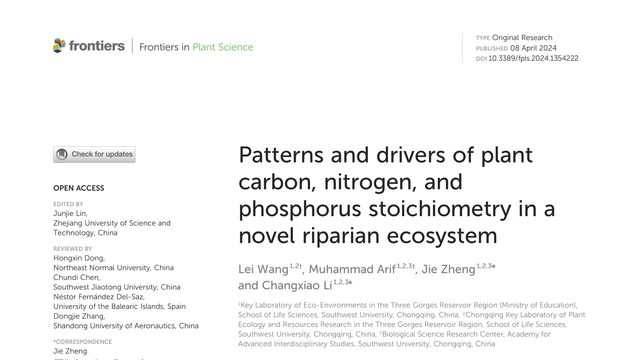
Every winter, floodwater covers this riverbank by about thirty metres. When the water retreats, the plants are not simply recovering: their leaves, stems, and roots are carrying different chemical priorities.A riverbank ecosystem flooded thirty meters every winter reveals a surprising split: flooding changes plant carbon, nitrogen, and phosphorus concentrations, yet the plants maintain similar nutrient ratios along the inundation gradient.
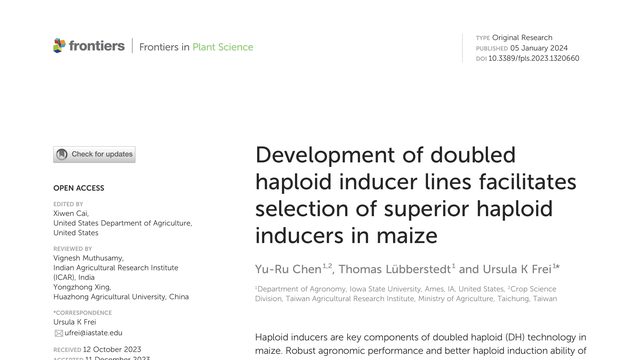
What if the plants used to create better maize could themselves be rebuilt from scratch? This study turns the breeding tool into a breeding target—and finds offspring that outperform their parents.What if the fastest way to improve maize haploid inducers is to make doubled haploid versions of the inducers themselves? This study turns that idea into a large-scale breeding pipeline—and finds offspring that outperform their parents.
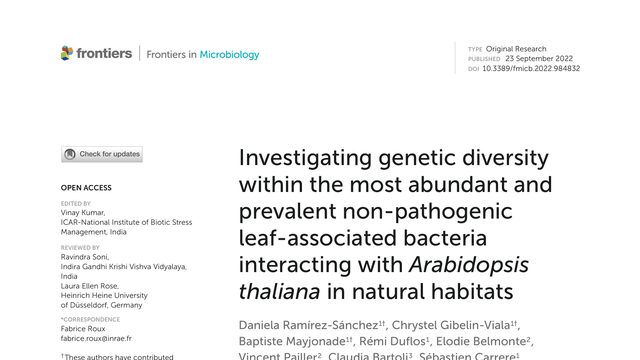
Two bacteria can be grouped as the same kind, yet carry different genes and make the same plant grow differently. That hidden variation may matter for healthier, more sustainable crops.What if two bacteria assigned to the same microbial group are not functionally interchangeable? This study shows that hidden genetic differences within leaf-associated species can track differences in growth and in how Arabidopsis responds.
 4:17
4:17