Bacteriophage-derived endolysins as innovative antimicrobials against bovine mastitis-causing streptococci and staphylococci: a state-of-the-art review
Student12:04CCAI
paperi.ai
0:00 / 0:00
Niels Vander Elst
What if a virus-derived enzyme could punch through the cell wall of mastitis bacteria, and engineered versions could be selected to work in real milk rather than only in a laboratory dish?
Bacteriophage-encoded endolysins, peptidoglycan hydrolases breaking down the Gram-positive bacterial cell wall, represent a groundbreaking class of novel antimicrobials to revolutionize the veterinary medicine field. Wildtype endolysins exhibit a modular structure, consisting of enzymatically active and cell wall-binding domains, that enable genetic engineering strategies for the creation of chimeric fusion proteins or so-called ‘engineered endolysins’. This biotechnological approach has yielded variants with modified lytic spectrums, introducing new possibilities in antimicrobial development. However, the discovery of highly similar endolysins by different groups has occasionally resulted in the assignment of different names that complicate a straightforward comparison. The aim of this review was to perform a homology-based comparison of the wild-type and engineered endolysins that have been characterized in the context of bovine mastitis-causing streptococci and staphylococci, grouping homologous endolysins with ≥ 95.0% protein sequence similarity. Literature is explored by homologous groups for the wild-type endolysins, followed by a chronological examination of engineered endolysins according to their year of publication. This review concludes that the wild-type endolysins encountered persistent challenges in raw milk and in vivo settings, causing a notable shift in the field towards the engineering of endolysins. Lead candidates that display robust lytic activity are nowadays selected from screening assays that are performed under these challenging conditions, often utilizing advanced high-throughput protein engineering methods. Overall, these recent advancements suggest that endolysins will integrate into the antibiotic arsenal over the next decade, thereby innovating antimicrobial treatment against bovine mastitis-causing streptococci and staphylococci.
Transcript
What if a virus-derived enzyme could punch through the cell wall of mastitis bacteria, and engineered versions could be selected to work in real milk rather than only in a laboratory dish? Gram-positive bovine mastitis is a prevalent disease with significant economic implications for the dairy industry.
Preventive measures such as hygiene practices, teat sealants, vaccination and probiotics have proven effective in controlling the disease, but they do not result in a complete elimination. Consequently, there is a need for effective therapy. Antibiotics currently provide therapeutic relief, but their use is increasingly questioned, particularly antibiotics that are regarded critical for human health care.
In this context, bacteriophage-derived endolysins have emerged as promising antimicrobials to either replace or complement existing treatments against Gram-positive bovine mastitis pathogens. Bacteriophage-encoded endolysins are peptidoglycan hydrolases breaking down the Gram-positive bacterial cell wall, and they represent a class of novel antimicrobials for veterinary medicine.
Wild-type endolysins exhibit a modular structure consisting of enzymatically active and cell wall-binding domains, enabling genetic engineering strategies for chimeric fusion proteins called engineered endolysins. The review performs a homology-based comparison of wild-type and engineered endolysins characterized against bovine mastitis-causing streptococci and staphylococci, grouping homologous endolysins with at least ninety-five percent protein sequence similarity.
Figure one contrasts two ways endolysins act. In “lysis from within,” a bacteriophage infects a bacterium, replicates and assembles new particles, then uses endolysin to break the cell wall and release them. In “lysis from without,” the endolysin gene is cloned, expressed, and purified before the enzyme is added externally to a streptococcal culture, where it lyses the target pathogen.
When endolysins hydrolyse the bacterial cell wall of Gram-positive bacteria, the high internal osmotic pressure inside the bacterial cell causes the bacterium to burst, or lyse. From that perspective, endolysins have been proposed and investigated as promising, novel antimicrobials.
Endolysins derived from Gram-positive bacteriophages typically feature a modular structure. They consist of enzymatically active domains, or EADs, and cell wall-binding domains, or CBDs. EADs confer peptidoglycan hydrolysis, while CBDs confer binding activity.
EADs are sometimes also referred to as catalytic domains. These domains are usually, but not exclusively, coupled by proline- or lysine-rich regions referred to as linkers. The modular structure allows easy generation of chimeric fusion proteins, or engineered endolysins.
EADs or CBDs can be altered by making changes on DNA level, including PCR followed by restriction, ligation in a vector and overexpression in a host. This biotechnological strategy has produced endolysins that combine EADs and CBDs of different origin.
Many types of EADs and CBDs are categorized according to where they hydrolyze peptidoglycan or bind the cell wall. Figure two maps the streptococcal peptidoglycan network: repeating GlcNAc and MurNAc sugar units are connected by peptide bridges containing l-Ala, d-Glu, l-Lys, and d-Ala.
The numbered arrows identify four endolysin cleavage classes—amidases, endopeptidases, muramidases, and glucosaminidases—each targeting a different bond in this mesh. This matters because the cleavage site defines an endolysin’s enzymatically active domain and helps explain how these enzymes break the bacterial cell wall.
To quantify bacterial killing caused by an endolysin, a time killing assay is more appropriate. A time killing assay challenges a certain number of target bacteria during a predetermined time interval. As a standard for endolysins, ten to the sixth colony forming units per milliliter of target bacteria are usually challenged during a fixed time interval.
The bacteria are then serially diluted and plated on agar to determine the surviving colony forming units per milliliter. The number of killed bacteria is calculated in comparison with a negative control, typically expressed logarithmically. In mastitis research, kinetic time killing assays can be performed in ultra-high temperature treated whole milk and mastitic raw cow's milk.
The review searched PubMed and Google Scholar using a targeted strategy with keywords such as endolysin and bovine mastitis, plus additional relevant terms. The search aimed to identify articles focusing on endolysins characterized or engineered in the context of Gram-positive bovine mastitis.
Titles and abstracts were examined, followed by detailed assessment of articles meeting the criteria. Amino acid sequences came from NCBI GenBank or from supplementary materials provided in the selected articles. For rigorous comparative analysis, a multiple sequence alignment was executed using Clustal Omega and the MAFFT algorithm, generating a Pearson FASTA output.
Figure four maps the primary structures of homologous endolysins, labeling enzymatically active domains such as glucosaminidase, amidase, and CHAP, alongside cell-wall-binding domains including LysM, CW seven, and SH three. Grey shading reports pairwise identity between corresponding subdomains in twenty-percent intervals, based on multiple-sequence alignments.
This organization makes shared architecture and domain-level relationships visible, including PlyC’s separate PlyCA and PlyCB components and the reported similarities among related endolysins. PlyC is a multimeric endolysin consisting of the two gene products PlyCA and PlyCB, which are linked by salt bridges and or Van der Waals forces.
PlyCA serves as the catalytic domain, while PlyCB forms an octamer that binds streptococcal peptidoglycan. PlyC showed promising in vitro activity against Streptococcus pyogenes by eliminating ten to the sixth colony forming units in five seconds using only ten nanograms of enzyme.
Activity against Streptococcus uberis and Streptococcus dysgalactiae has also been reported. In a toxicity study, PlyC was non-toxic for bovine blood polymorphonuclear leukocytes, as evaluated by unchanged lactate dehydrogenase levels, and the polymorphonuclear leukocyte oxidative burst was not affected.
PlySs2, also called CF-301 or Exebacase, is described as the best characterized Gram-positive endolysin, with in vivo confirmed broad lytic activity against a large variety of streptococci and staphylococci. It was evaluated in clinical trials for human infections, but the phase three trials were discontinued because of a lack of statistical power.
PlySs2 was administered only as an add-on to standard-of-care antibiotics. PlySs2 consists of an N-terminal CHAP and a C-terminal SH3 five. When the enzymatically active domain was tested alone, it lost catalytic activity completely, indicating that the SH3 five domain is necessary for the full functionality of PlySs2.
Fluorescence microscopy showed that the SH3 five domain could bind Streptococcus agalactiae, Streptococcus dysgalactiae and Streptococcus suis, but not Streptococcus uberis or Staphylococcus aureus. Minimum biofilm-eradicating concentration assays on ninety-five Staphylococcus aureus strains revealed a ninety percent minimum biofilm-eradicating concentration of at most zero point two five micrograms per milliliter.
PlySs2 exhibited substantially increased potency, from thirty-two-fold to at least one hundred-fold, in human blood compared with laboratory testing media. It acts synergistically with serum lysozyme and albumin. The engineered endolysin ClyNC5 was selected from a library comprising over eighty thousand theoretical endolysin variants, crafted through the high-throughput DNA assembly platform VersaTile.
The library used a halo-based assay to screen bacteriolytic activity in individual Escherichia coli colonies on agars embedded with Staphylococcus aureus N305 or Streptococcus uberis 0140 J. The screening found that cell penetrating peptides were ideally fused to the N-terminal site and that the preferred isoelectric point ranged from nine point zero five to nine point six five.
ClyNC5 combined the TAT peptide as a cell penetrating peptide, the PlySs2 CHAP, a repeated CW seven as a cell wall-binding domain, and the PlySs9 amidase. Against isolates from affected cows, ClyNC5 produced a killing efficacy of four point zero five plus or minus zero point zero seven logarithmic units against Streptococcus uberis at zero point three micromolar, with comparable activity against Streptococcus agalactiae and Streptococcus dysgalactiae.
A preclinical study tested ClyNC5 as supplemental therapy to cloxacillin in a mouse model for Streptococcus uberis mastitis. Treatment used twenty-three point five or two hundred thirty-five micrograms of ClyNC5, administered twelve hours after infection. The results identified fast responders, numbering seventeen, and slow responders, numbering ten.
In fast responders, the high-dose combination reduced bacterial load by thirteen thousand-fold, mitigated intramammary neutrophil influx and reduced the pro-inflammatory chemokine interleukin eight thirteen-fold. Supplementing cloxacillin with ClyNC5 produced an overall dose-dependent reduction of the evaluated immune markers.
Together, both studies provide evidence of ClyNC5's efficacy as an adjunct to intramammary cloxacillin treatment. Recent advances in modular protein engineering methods present opportunities to select endolysin lead candidates under end-user conditions in a high-throughput manner.
Identifying candidates capable of withstanding the demands of the lactating bovine mammary gland is now highly feasible. The review asserts that endolysin therapy, either as a stand-alone treatment or as supplementation to antibiotics, is on the verge of a transformative breakthrough in veterinary medicine.
Expectations are high that bacteriophage-derived endolysins will integrate into the antibiotic armamentarium over the next decade, revolutionizing treatment against bovine mastitis-causing streptococci and staphylococci. The review's central message is that engineered endolysins, especially as additions to antibiotics, are becoming practical candidates for bovine mastitis because screening can now select activity under milk and in vivo conditions.
A derivative work by Paperi · AI-generated script, voice and captions
· pages and figures unaltered
Made with Paperi.
Drop in a research PDF — get a narrated video walkthrough like this one,
with highlights that follow the narration. Free to start.
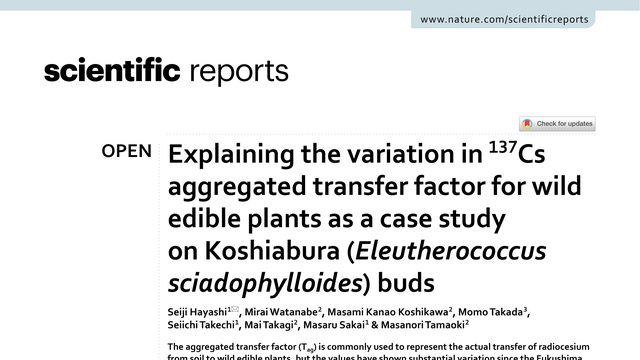
Seiji Hayashi, Mirai Watanabe, Masami K. Koshikawa, Momo Takada, Seiichi Takechi, M. Takagi, Masaru Sakai, Masanori Tamaoki
A forest can look less contaminated on paper, yet its edible shoots can still carry unexpectedly high radioactivity. The reason may be not how much is in the soil, but where in the soil it sits.A soil contamination map seems like it should predict how much radiocesium ends up in an edible plant. But for Koshiabura buds, measuring the soil more precisely did not eliminate the variation—and the key may be which soil layer contains the cesium.
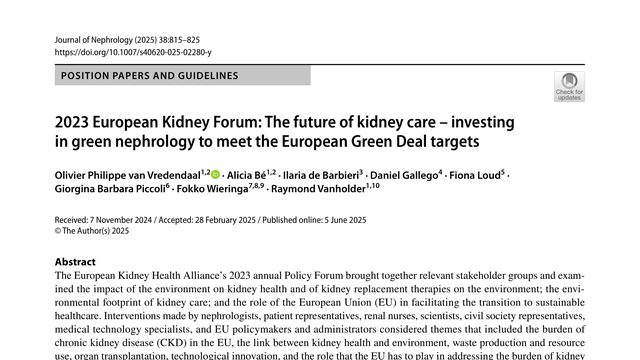
Olivier Philippe van Vredendaal, Alicia Bé, Ilaria de Barbieri, Daniel Gallego, Fiona Loud, Giorgina Barbara Piccoli, Fokko P. Wieringa, Raymond Vanholder
Kidney care can save lives while adding to pollution, waste, and heavy resource use. This paper argues that the treatment keeping people alive also needs a climate plan.Kidney care is not just affected by climate change—it also contributes to it. This Forum argues that dialysis, transplantation, prevention, and European policy all have to change together.
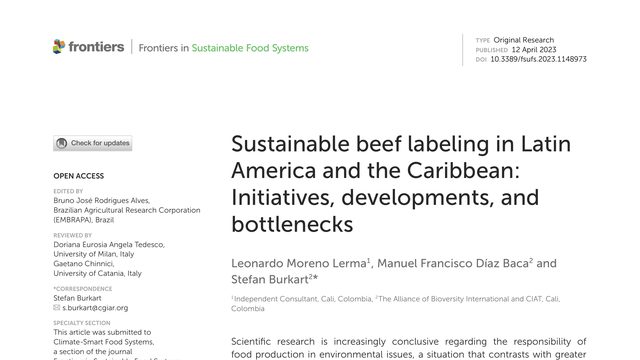
Leonardo Moreno Lerma, Manuel Francisco Díaz, Stefan Burkart
A small label on a package of beef can promise animal welfare, environmental care, and fairer production. But in Latin America and the Caribbean, the label may be easier to print than to trust.Beef labels promise more than quality: they can signal animal welfare, carbon neutrality, and environmental responsibility. But across Latin America and the Caribbean, the biggest obstacle may be getting producers—and credible institutions—into the system.
 3:35
3:35