2023 European Kidney Forum: The future of kidney care – investing in green nephrology to meet the European Green Deal targets
Student9:20CCAI
paperi.ai
0:00 / 0:00
Olivier Philippe van Vredendaal, Alicia Bé, Ilaria de Barbieri, Daniel Gallego, Fiona Loud, Giorgina Barbara Piccoli, Fokko P. Wieringa, Raymond Vanholder
Kidney care is not just affected by climate change—it also contributes to it. This Forum argues that dialysis, transplantation, prevention, and European policy all have to change together.
The European Kidney Health Alliance’s 2023 annual Policy Forum brought together relevant stakeholder groups and examined the impact of the environment on kidney health and of kidney replacement therapies on the environment; the environmental footprint of kidney care; and the role of the European Union (EU) in facilitating the transition to sustainable healthcare. Interventions made by nephrologists, patient representatives, renal nurses, scientists, civil society representatives, medical technology specialists, and EU policymakers and administrators considered themes that included the burden of chronic kidney disease (CKD) in the EU, the link between kidney health and environment, waste production and resource use, organ transplantation, technological innovation, and the role that the EU has to play in addressing the burden of kidney disease and fostering more sustainable healthcare practices. The 2023 European Kidney Forum illustrated the broad consensus among diverse stakeholders operating within the kidney health landscape on the critical need to adopt a more sustainable approach to kidney care in the EU. The Forum also highlighted the cruciality of EU policymakers’ commitment to improving the sustainability of the healthcare sector through EU policies, tools and initiatives. Panel discussions pointed to the strong consensus between different stakeholders in the kidney health domain on the need for action to better prevent chronic kidney disease; improve the EU’s organ donation and transplantation landscape; and recognise and address the substantial environmental impact linked to the management and treatment of CKD.
Transcript
Kidney care is not just affected by climate change—it also contributes to it. This Forum argues that dialysis, transplantation, prevention, and European policy all have to change together. The European Kidney Health Alliance’s 2023 annual Policy Forum brought together relevant stakeholder groups and examined the impact of the environment on kidney health and of kidney replacement therapies on the environment, the environmental footprint of kidney care, and the role of the European Union in facilitating the transition to sustainable healthcare.
The interventions considered the burden of chronic kidney disease in the European Union, the link between kidney health and environment, waste production and resource use, organ transplantation, technological innovation, and the role that the European Union has to play in addressing kidney disease and fostering more sustainable healthcare practices.
The Forum illustrated broad consensus among diverse stakeholders on the critical need to adopt a more sustainable approach to kidney care in the European Union. Healthcare is among the most polluting economic sectors, accounting for five point two percent of global greenhouse gas emissions, alongside substantial water, air, and soil pollution, fresh-water use, waste creation, and large consumption of fossil-fuelled energy resources.
Despite several European countries taking action to reduce healthcare emissions, the healthcare sector was estimated to have contributed three hundred and thirty megatons of carbon-dioxide-equivalent emissions in twenty twenty. Within the healthcare sector, kidney care is a major polluter as well as a resource consumer.
Haemodialysis accounts for a substantial environmental footprint, consuming vast quantities of natural resources and energy and resulting in substantial greenhouse gas emissions. For an average dialysis unit, water consumption rates can exceed one million litres per year, while globally one hundred and sixty-nine billion litres of water are used in dialysis annually and generally discarded in the sewer system.
Dialysis also generates large amounts of plastic waste, stemming largely from widespread use of single-use plastics that are usually not recycled but mostly incinerated. The alternative to haemodialysis, peritoneal dialysis, holds advantages such as reduced water consumption, less energy usage per patient, and, as a home strategy, reduced movement of patients and personnel.
Those benefits are partly counterbalanced by higher plastic consumption and resultant waste, as well as increased transportation needs. A single peritoneal-dialysis treatment may require transport of dialysate bags with a total volume of sixteen litres or more for forty-eight hours of treatment, compared to a single hemodialyzer and tubing set for haemodialysis over the same period.
A comprehensive Australian life-cycle analysis, including production, transport, and disposal, showed lower emissions for continuous ambulatory peritoneal dialysis and automated peritoneal dialysis than the figures usually accepted for conventional haemodialysis. Current chronic-kidney-disease management affects the environment, but environmental conditions also have serious effects on the onset and progression of kidney diseases.
Climate change, associated heat waves, and environmental pollution can disrupt kidney function through dehydration, kidney-stone development, kidney damage due to fine dust, and the spread of vector-carried diseases such as malaria or dengue. Those conditions can also affect kidney care during extreme weather events, for example when dialysis units are flooded.
These challenges underscore the critical necessity for an urgent paradigm shift in kidney care. The shift should encompass a heightened focus on screening, prevention, and transplantation. Research and innovation should develop dialysis systems that consume less water and energy while incorporating circular treatment of polymer material through reuse or recycling.
Implementation of the green-nephrology concept in daily kidney care requires combined efforts at all levels. The commitment of the healthcare team and providers is crucial, while political bodies have a great responsibility to facilitate the transition by priming innovative models of care, updating obsolete legal frameworks, and incentivising research.
While home dialysis can be preferable to in-centre dialysis, kidney transplantation can have an even lower environmental impact, with the potential to be ninety to ninety-five percent less than haemodialysis. Nonetheless, kidney transplantation is an insufficiently utilised option for reducing the environmental impact of kidney-disease care.
In most European countries, existing organ-transplantation plans are not sufficiently efficient or have proved unsuccessful in meeting their targets. Governments may take an example from transplantation plans in Spain or the United Kingdom and should also take the beneficial financial impact of transplantation versus dialysis into account.
Transplantation is the preferred option for patients and the environment, but not all patients will be eligible to receive a transplant, meaning dialysis will remain the most common kidney-replacement-therapy option in the near future. Therefore, it is crucial to foster sustainable innovation in dialysis, which has had limited technological advances since its invention in the nineteen forties.
The dialysis filter contributes considerably to both the costs and the environmental burden linked to current treatment of kidney failure, and discarding single-use dialyzers may create many tonnes of medical waste. Technological advancements could allow dialysis filters to be reused several dozen times for the same patient, if they are safe and cleaned filters are undamaged and usable for subsequent dialysis sessions.
That approach could reduce the environmental burden of kidney-failure treatment because fewer filters would become waste. Making this feasible requires alignment of European Union legislation with such practices. There are also opportunities for reusing dialysate, now typically discarded as wastewater, to reduce energy consumption and greenhouse-gas production.
Additional options include highly mobile haemodialysis systems that do not need needles. Chip technology could drastically reduce dialysis-filter size while increasing lifetime to several years, making filters suitable for surgical implantation in patients.
These innovations are technologically achievable, but significant funding and exchange of international expertise are crucial for translating them from scientific proof of principle to CE-marked clinical use. The European Union’s Innovative Health Initiative stands as the world’s largest public-private partnership in medical research and offers a perspective on how policy activities can support more sustainable healthcare practices, including environment-friendly kidney care.
The programme aims to deliver safe and effective health innovations across the entire care spectrum, from prevention to diagnosis and treatment, by bringing stakeholders from academia and different industries together. An increasing number of European Union projects focus on promoting sustainable practices, including for healthcare, but more can be done through European Union policies such as the European Green Deal.
European Union policies seldom mention healthcare as an area for sustainable improvement, in contrast to other sectors. Raising awareness of healthcare’s environmental burden among policy stakeholders can be achieved through case studies. Another option is sharing best practices on water conservation, retrofitting heat exchangers, waste disposal, telemedicine, and home care to limit kidney patients’ travel for medical consultations.
The 2023 European Kidney Forum illustrated broad consensus among diverse stakeholders on the critical need to adopt a more sustainable approach to kidney care in the European Union. Commitment from European Union policymakers to improve healthcare sustainability through policies, projects, and initiatives will be crucial.
The panel discussions pointed to consensus on better prevention of chronic kidney disease, improvement of the European Union’s organ-donation and transplantation landscape, environmentally responsible innovation in kidney-replacement therapies, and recognition and reduction of the environmental impact of chronic-kidney-disease management and treatment.
The central message is that kidney care needs a sustainability shift: prevent chronic kidney disease, expand transplantation, innovate dialysis, and use EU policy to make greener care possible.
A derivative work by Paperi · AI-generated script, voice and captions
· pages and figures unaltered
Made with Paperi.
Drop in a research PDF — get a narrated video walkthrough like this one,
with highlights that follow the narration. Free to start.
Leonardo Moreno Lerma, Manuel Francisco Díaz, Stefan Burkart
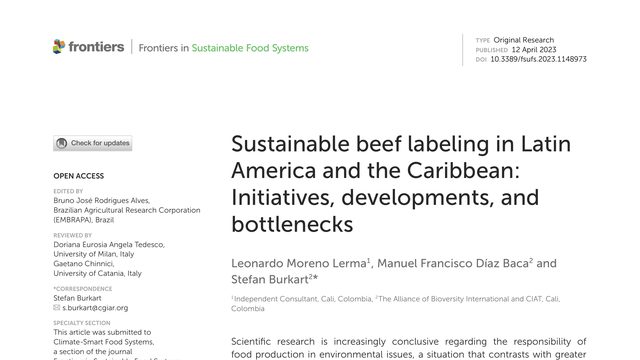
A small label on a package of beef can promise animal welfare, environmental care, and fairer production. But in Latin America and the Caribbean, the label may be easier to print than to trust.Beef labels promise more than quality: they can signal animal welfare, carbon neutrality, and environmental responsibility. But across Latin America and the Caribbean, the biggest obstacle may be getting producers—and credible institutions—into the system.
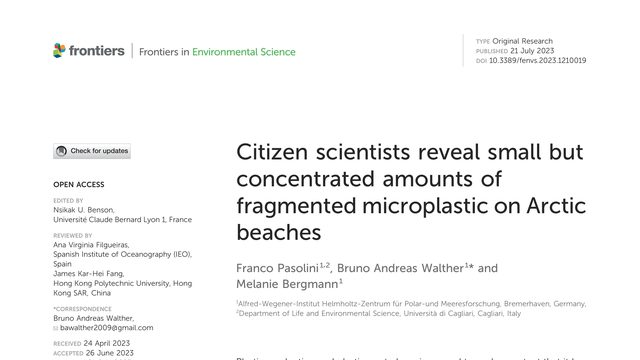
The Arctic can look untouched, yet a single beach sample held thousands of tiny plastic fibres. The surprising part is not just that plastic arrived there—it may be breaking apart there too.Across 23 Arctic beaches, plastic appeared in only two sediment samples. But those two samples contained nearly five thousand particles—mostly polypropylene fibres that likely came from a fishing net.
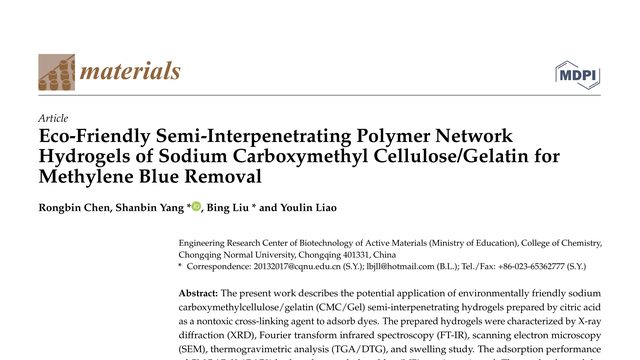
A soft, water-swollen material made from cellulose, gelatin, and citric acid can pull a stubborn blue dye out of polluted water—and still remove more than eighty-five percent of it after being used again and again.A hydrogel made from sodium carboxymethyl cellulose, gelatin, and citric acid removes methylene blue from water with a reported capacity near 943 milligrams per gram—and still removes more than 85 percent after reuse.
 5:21
5:21