Menstrual characteristics and associations with sociodemographic factors and self-rated health in Spain: a cross-sectional study
Overview4:35CCAI
paperi.ai
0:00 / 0:00
Laura Medina‐Perucha, Tomás López‐Jiménez, Georgina Pujolar-Díaz, Cristina Martínez-Bueno, Jordina Munrós-Feliu, Carme Valls-Llobet, Constanza Jacques‐Aviñó, Anna Sofie Holst, Diana Pinzón-Sanabria, María Mercedes Vicente-Hernández, Andrea García-Egea, Anna Berenguera
A period is not only a monthly event to manage. It may also act as a warning light for health, and the warning can be shaped by money, education, caregiving, and everyday living conditions.
Background Evidence on how menstrual characteristics may differ based on socioeconomic factors and self-rated health is significantly scarce. The main aim of this study was to investigate the associations between menstrual characteristics, sociodemographic factors and self-rated health among women and people who menstruate (PWM) aged 18–55 in Spain. Methods This cross-sectional study includes data from an online survey collected in March–July 2021 across Spain. Descriptive statistical analyses and multivariate logistic regression models were performed. Results The analyses included a total of 19,358 women and PWM. Mean age at menarche was 12.4 (SD = 1.5). While 20.3% of our participants experienced a menstrual abundance over 80 ml, 64.1% reported having menstrual blood clots; 6.4% menstruated for longer than 7 days. 17.0% had menstrual cycles that were shorter than 21 days or longer than 35 days. Reports of moderate (46.3%) and high (22.7%) intensity menstrual pain were common. 68.2% of our participants experienced premenstrual symptoms in all or most cycles. The odds for lighter menstrual flow, shorter bleeding days and menstrual cycles were higher as age increased, and amongst participants with less educational attainment. Caregivers presented higher odds for abundant menstrual flow and longer menstruations. Reporting financial constraints and a poorer self-rated health were risk factors for abundant menstrual flow, menstrual blood clots, shorter/longer menstruations and menstrual cycles, premenstrual symptoms, moderate and intense menstrual pain. Conclusions This study suggests that age, educational attainment, caregiving, experiencing financial hardship and a poorer self-rated health may shape or mediate menstrual characteristics. It thus highlights the need to investigate and address social inequities of health in menstrual research.
Transcript
A period is not only a monthly event to manage. It may also act as a warning light for health—and the warning can be shaped by money, education, caregiving, and everyday living conditions. Menstruation and the menstrual cycle are increasingly being considered vital signs for the health of women and people who menstruate.
Menstrual health includes access to accurate education, products, facilities and services, timely diagnosis, freedom from stigma and discrimination, and the ability to take part in daily life throughout the cycle. Menstrual inequity means systematic and avoidable differences in menstrual access and experiences between people and communities.
The study explores the connection between menstrual characteristics, social and demographic factors, and self-rated health. Understanding menstrual characteristics in context can highlight the needs of the most vulnerable populations. This matters because menstrual policymaking is increasing, but policies can fail when they do not respond to the needs of different groups of women and people who menstruate.
This was a cross-sectional study, part of the Equity and Menstrual Health in Spain project. It used a critical and feminist perspective to question androcentrism and systemic social and political inequalities that affect women and people who menstruate.
The study included a total of nineteen thousand three hundred fifty-eight women and people who menstruate in its analyses. It found that menstrual experiences varied widely, including differences in bleeding volume, blood clots, and how long menstruation lasted for participants.
Moderate or high-intensity menstrual pain was common, and premenstrual symptoms occurred in all or most cycles for many participants. The study considered menstrual patterns alongside social circumstances and health: financial constraints and poorer self-rated health were linked to several menstrual characteristics.
As age increased, lighter menstrual flow, fewer bleeding days, and shorter menstrual cycles were more likely. These patterns were also more likely among participants with less educational attainment. Caregivers had higher odds of abundant menstrual flow and longer menstruations.
Being a caregiver appeared to protect against experiencing premenstrual symptoms always or many times, and sometimes. By contrast, reporting financial difficulties and worsened self-rated health were linked with premenstrual symptoms. Self-rated health is widely used as a sign of general health status and health inequalities.
Poorer self-rated health was linked with higher odds of abundant bleeding, menstrual blood clots, short or long cycles, moderate or high-intensity pain, and premenstrual symptoms. These findings suggest a link between general health status and poorer menstrual health patterns, and they reinforce the connection between social inequalities and menstrual health.
The study included participants across the whole Spanish territory, but it was not representative of everyone living in Spain. The researchers note that people with limited digital access may be underrepresented, particularly among vulnerable and hard-to-reach populations in the study.
They also caution that retrospective self-reports rely on memory, meaning recall biases may affect the answers participants provide about their experiences. Estimating bleeding from the amount of menstrual products used may also be limited because people change products at different frequencies.
The study found that heavy bleeding, moderate or high-intensity pain, and premenstrual symptoms were more likely among participants with less educational attainment, more financial hardship, and poorer self-rated health. The findings suggest that menstrual health and menstrual management must take social inequalities into account.
For people seeking care, menstrual symptoms deserve attention as possible signs of health and living conditions, because symptoms were associated with financial hardship and poorer self-rated health. Healthcare professionals also need adequate training and support to address menstrual health while attending to social inequities affecting people's health.
In this Spanish study, poorer health and greater financial hardship were linked with several more difficult menstrual experiences. Menstrual care therefore needs to listen to people’s lives, not just their symptoms.
A derivative work by Paperi · AI-generated script, voice and captions
· pages and figures unaltered
Made with Paperi.
Drop in a research PDF — get a narrated video walkthrough like this one,
with highlights that follow the narration. Free to start.
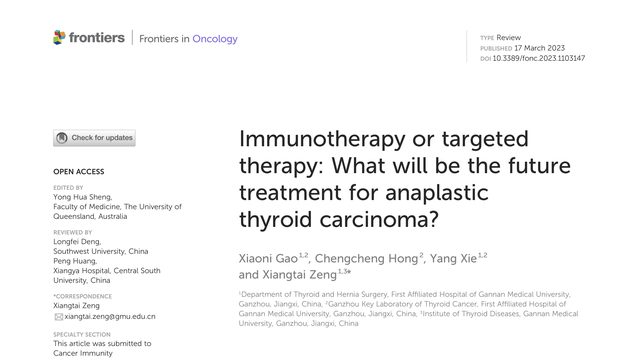
Xiaoni Gao, Chengcheng Hong, Yang Xie, Xiangtai Zeng
A rare thyroid cancer causes more than half of all deaths from thyroid cancer, yet makes up only a small fraction of cases. This review asks whether the answer is to target the cancer’s weak spots, awaken the immune system, or combine both.Anaplastic thyroid carcinoma makes up only about two percent of thyroid cancers, yet causes more than half of thyroid-cancer deaths. This review asks whether targeted drugs, immunotherapy, or their combination can change that outlook.
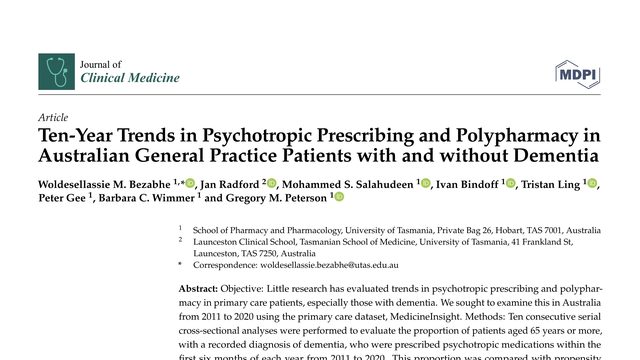
Woldesellassie M. Bezabhe, Jan Radford, Mohammed S. Salahudeen, Ivan Bindoff, Tristan Ling, Peter Gee, Barbara C. Wimmer, Gregory M. Peterson
For people with dementia, medicines aimed at distressing behaviour became less common over a decade, but taking several of these medicines at once still affected almost one person in five by the end.In Australian general practice, psychotropic prescribing for patients with dementia fell over a decade, especially antipsychotics. But by 2020, almost one in five still received multiple psychotropic medicines.
Yang Shi, Zihan Wang, Shengxiang Ge, Ningshao Xia, Quan Yuan
A routine blood antibody may reveal more than whether hepatitis B was ever present. Its level may act like a dashboard for how strongly the body is fighting the virus, and how likely treatment is to help.One routine hepatitis B antibody may be more than a record of past infection: its quantity can reflect the host’s antiviral immune activity, and its meaning changes depending on the disease phase.
 3:55
3:55