As tea leaves grow older, they make less caffeine—and this study points to a biological switch that may connect caffeine loss with the leaf’s aging process.
Caffeine is considered as one of the most important bioactive components in the popular plant beverages tea, cacao, and coffee, but as a wide-spread plant secondary metabolite its biosynthetic regulation at transcription level remains largely unclear. Here, we report a novel transcription factor Camellia sinensis Senescnece 40 (CsS40) as a caffeine biosynthesis regulator, which was discovered during screening a yeast expression library constructed from tea leaf cDNAs for activation of tea caffeine synthase (TCS1) promoter. Besides multiple hits of the non-self-activation CsS40 clones that bound to and activated TCS1 promoter in yeast-one-hybrid assays, a split-luciferase complementation assay demonstrated that CsS40 acts as a transcription factor to activate the CsTCS1 gene and EMSA assay also demonstrated that CsS40 bound to the TCS1 gene promoter. Consistently, immunofluorescence data indicated that CsS40-GFP fusion was localized in the nuclei of tobacco epidermal cells. The expression pattern of CsS40 in ‘Fuding Dabai’ developing leaves was opposite to that of TCS1; and knockdown and overexpression of CsS40 in tea leaf calli significantly increased and decreased TCS1 expression levels, respectively. The expression levels of CsS40 were also negatively correlated to caffeine accumulation in developing leaves and transgenic calli of ‘Fuding Dabai’. Furthermore, overexpression of CsS40 reduced the accumulation of xanthine and hypoxanthine in tobacco plants, meanwhile, increased their susceptibility to aging. CsS40 expression in tea leaves was also induced by senescencepromoting hormones and environmental factors. Taken together, we showed that a novel senescence-related factor CsS40 negatively regulates TCS1 and represses caffeine accumulation in tea cultivar ‘Fuding Dabai’. The study provides new insights into caffeine biosynthesis regulation by a plant-specific senescence regulator in tea plants in connection to leaf senescence and hormone signaling.
Transcript
As tea leaves grow older, they make less caffeine—and this study points to a biological switch that may connect caffeine loss with the leaf’s aging process. Caffeine is one of the most widely consumed plant substances, found in tea, coffee, and cacao.
In plants, it can help defend against insects and disease. Caffeine is more than a drink ingredient: it also helps protect plants from pathogens and herbivores, making its biosynthesis and control important to understand. The amount of caffeine in a tea leaf is controlled by signals from the environment and from the plant itself.
Earlier work had identified only a small number of regulators that increase caffeine-making genes. So the search turned to a control region beside the main caffeine-making gene. The screen found a senescence-related protein, CsS40, that could bind to that region.
The researchers treated the control region like a lock and searched a collection of tea-leaf proteins for a key that could attach to it. The test was designed to find proteins that switch the caffeine-making gene on. Before trusting a match, they tested whether the TCS1 promoter could activate the yeast system on its own under the assay conditions.
CsS40 passed several independent checks: it bound to the control region, activated the caffeine-making gene, and was found in the cell’s nucleus, where gene control takes place. But the pattern in real tea leaves was unexpected. When CsS40 was higher, the caffeine-making gene was lower; when CsS40 was reduced, that gene became more active.
The strongest test was to reduce CsS40 in tea leaf tissue. Compared with controls, the remaining CsS40 fell to about a third, while caffeine became higher. That result supports the idea that CsS forty is a negative regulator: reducing the brake allows caffeine production to rise.
Changing CsS40 in tea tissue has the opposite effects expected for a caffeine regulator: increasing it suppresses the caffeine-making gene and lowers caffeine, while silencing it raises caffeine to roughly twice the control level. The connection becomes clearer as leaves age.
Caffeine gradually decreases during tea-leaf maturation, while CsS40 expression increases significantly. Signals associated with aging also increase CsS40, and plants with extra CsS40 become more susceptible to leaf aging. The findings link the rise of this brake with both lower caffeine and senescence.
Taken together, CsS40 is involved in leaf senescence and is connected with caffeine production as tea leaves mature. It negatively regulates the main caffeine-making gene and caffeine accumulation. For people who drink tea, this helps explain why the chemistry of a leaf is not fixed: as the leaf ages, an internal aging program may reshape its caffeine content.
CsS40 rises as tea leaves mature and acts as a brake on caffeine production. Understanding that link could help explain, and eventually influence, how tea chemistry changes as leaves age.
A derivative work by Paperi · AI-generated script, voice and captions
· pages and figures unaltered
Made with Paperi.
Drop in a research PDF — get a narrated video walkthrough like this one,
with highlights that follow the narration. Free to start.
Michelle C. Dickinson, Samantha E. Wirth, Deborah J. Baker, Anna Kidney, Kara Mitchell, Elizabeth Nazarian, Matthew Shudt, Lisa M. Thompson, Sai Laxmi Gubbala Venkata, Kimberlee A. Musser, Lisa Mingle
When disease outbreaks move quickly, public health laboratories need answers quickly too—but often without more staff or money. This study found a way to process thousands of bacterial genomes while keeping the results dependable and affordable.What if a public health laboratory could sequence thousands of bacterial genomes faster, while cutting the workflow cost to under eighty dollars per sample? This study shows how batching, automation, and quarter-volume library preparation made that possible.
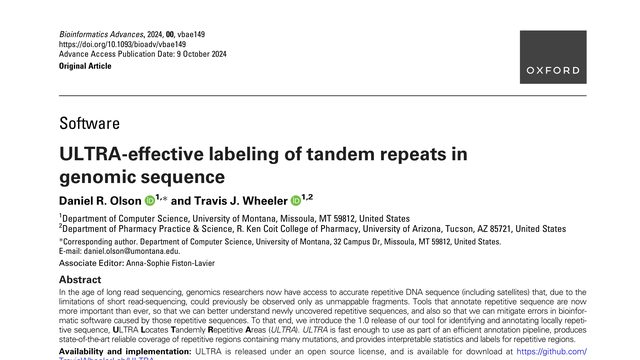
Some of the most important parts of a genome are made from repeated DNA—but once those repeats become damaged and irregular, computer programs can mistake them for something else entirely. This paper introduces a way to keep finding them.Long-read sequencing reveals repetitive DNA that used to look unmappable—but mutations, insertions, and deletions can hide its repeating structure. ULTRA tackles that problem by modeling the sequence and its errors together.
Sara Spaziani, Alessandro Esposito, Giovannina Barisciano, Giuseppe Quero, Elumalai Satheeshkumar, M. Di Leo, Vittorio Colantuoni, Maria Mangini, Marco Pisco, Lina Sabatino, Anna Chiara De Luca, Andrea Cusano
Breast cancers that look alike can behave very differently. This study uses light to find a key cancer marker on individual cells—and then reveals a surprising change that remains even after that marker is silenced.What if one optical workflow could both map HER2 on an individual cancer cell and read the cell’s broader metabolic state—and then test what changes when HER2 is silenced?
 5:02
5:02