The Association of Plasma Homocysteine Concentrations with a 10-Year Risk of All-Cause and Cardiovascular Mortality in a Community-Based Chinese Population
A substance in the blood was linked with a higher chance of dying over the next decade—but the strength of that link depended partly on a person’s inherited biology.
This study is aimed to examine the association of plasma homocysteine (Hcy) concentrations with a 10-year risk of all-cause and cardiovascular (CV) mortality and to explore the modification effect of methylenetetrahydrofolate reductase (MTHFR) C677T genetic polymorphism. This study included 5200 participants from a community-based Chinese population. Cox proportional hazard regression models were used to analyze the associations of Hcy and MTHFR C677T genotype with all-cause and CV mortality. The possible modification effect of the MTHFR C677T genotype on the Hcy–mortality relationship was assessed. The individuals with Hcy concentrations ≥10 µmol/L had a significantly higher risk of all-cause mortality compared to those with Hcy < 10 µmol/L (hazard ratio [HR]: 1.72, 95% confidence interval [CI]: 1.11–2.68, p = 0.015). The risk of CV mortality increased by 2% per 1 µmol/L Hcy increment (HR: 1.02, 95% CI: 1.00–1.03, p = 0.036). Despite the MTHFR genotype alone not being correlated with the mortality, the relationship between Hcy and all-cause mortality was significant in the CC genotype compared with CT/TT genotype (p for interaction = 0.036). Elevated plasma Hcy concentrations were associated with an increased 10-year risk of all-cause and CV mortality among the Chinese population. MTHFR C677T genetic polymorphism could modify the association between Hcy and all-cause mortality.
Transcript
A substance in the blood was linked with a higher chance of dying over the next decade—but the strength of that link depended partly on a person’s inherited biology. Homocysteine is an intermediate amino acid produced as the body breaks down methionine.
It can contribute to dysfunction in the blood vessel lining and is linked with hardened arteries and blood clots. The American Heart Association has recognized that elevated homocysteine levels are associated with an increased risk of stroke and other vascular events.
But the relationship between homocysteine concentrations and the risk of death remains limited and conflicting, especially for particular causes of death or populations. Earlier studies linked higher homocysteine with higher risks of death, yet pooled trials found that lowering homocysteine with folic acid or vitamin B did not improve those relationships.
Few prospective studies had examined homocysteine and the risk of death in the general Chinese population. Important gaps remained around inherited biology, surroundings, lifestyle, and nutrition. So this study examined the ten-year risk of death from any cause and cardiovascular death, and tested whether a particular inherited pattern changed the relationship.
Deaths were collected from national and municipal health records. The main outcome was death from any cause, while the second outcome was cardiovascular death. Follow-up ran from the starting assessment until a participant died or until the end of follow-up on thirty-first December twenty twenty-one.
During an average follow-up of nearly ten years, three hundred twenty deaths were documented, including one hundred seven cardiovascular deaths. The survival curves revealed a significant dose-response relationship between homocysteine and both all-cause and cardiovascular mortality.
After adjustment for other factors, people with homocysteine concentrations from ten to below fifteen had a seventy-four percent higher risk of death from any cause than people below ten. People with concentrations of fifteen or higher also had an increased risk of all-cause mortality, sixty-four percent higher than the reference group.
The inherited pattern changed the association between homocysteine and all-cause mortality. Elevated homocysteine was significantly associated with increased risk in people with the six-seven-seven C-C pattern. The association appeared stronger in several groups, but the interaction test for a trend was not significant.
The study supports a positive relationship between plasma homocysteine and ten-year all-cause and cardiovascular mortality in a community-based Chinese population. Elevated homocysteine was associated with increased all-cause mortality in people with the six-seven-seven C-C pattern, while the relationship faded in people with the C-T or T-T patterns.
What this means for an individual is still an open question: the biological mechanism and whether lowering homocysteine changes long-term mortality require further investigation. In this Chinese community population, higher homocysteine was associated with greater risk of death from any cause and from cardiovascular disease.
The association with all-cause death was strongest in people with one genetic pattern, not another.
A derivative work by Paperi · AI-generated script, voice and captions
· pages and figures unaltered
Made with Paperi.
Drop in a research PDF — get a narrated video walkthrough like this one,
with highlights that follow the narration. Free to start.
Lara Riem, Silvia S. Blemker, Olivia DuCharme, Elizabeth B. Leitch, Matthew Cousins, Ivan J. Antosh, Mikalyn Defoor, Andrew J. Sheean, Brian C. Werner
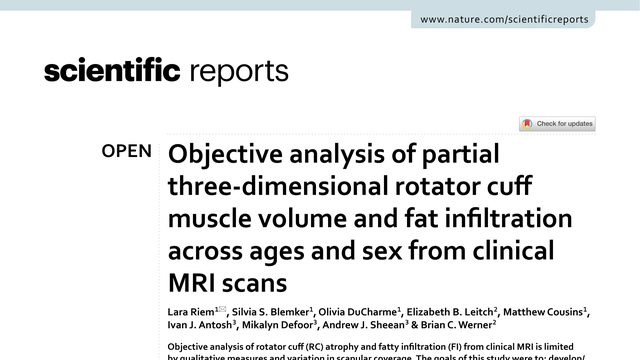
A shoulder MRI often captures only part of the shoulder blade. This study finds that partial images can still reveal meaningful three-dimensional changes in the muscles that help lift and stabilize the arm.A routine shoulder MRI may capture only part of the rotator cuff—but this study asks whether that partial view can still reveal whole-muscle size and fat infiltration in three dimensions.
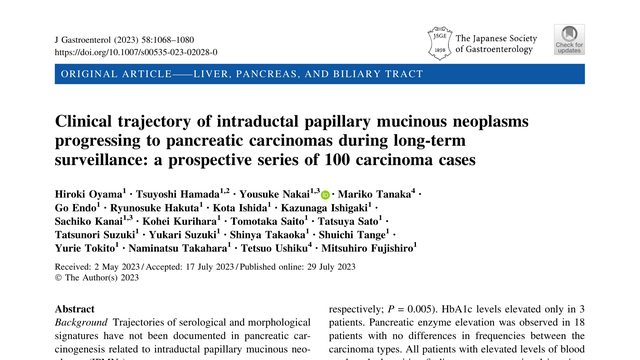
Regular scans can watch a pancreatic cyst for years, yet a dangerous cancer may still appear without the warning signs doctors expect. This study reveals why surveillance is harder than it looks.Patients with pancreatic cysts can be monitored for years, yet cancer may still appear at an advanced stage. This study asks whether blood markers and imaging show a recognizable warning trajectory before diagnosis.
Laura Medina‐Perucha, Tomás López‐Jiménez, Georgina Pujolar-Díaz, Cristina Martínez-Bueno, Jordina Munrós-Feliu, Carme Valls-Llobet, Constanza Jacques‐Aviñó, Anna Sofie Holst, Diana Pinzón-Sanabria, María Mercedes Vicente-Hernández, Andrea García-Egea, Anna Berenguera
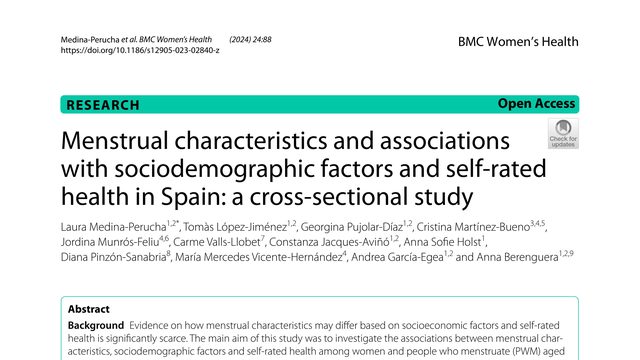
A period is not only a monthly event to manage. It may also act as a warning light for health—and the warning can be shaped by money, education, caregiving, and everyday living conditions.What if menstrual patterns are not just individual biology, but also reflect financial hardship, education, and overall health? This large Spanish survey finds striking links between social circumstances and menstrual experiences.
 3:09
3:09