Ten-Year Trends in Psychotropic Prescribing and Polypharmacy in Australian General Practice Patients with and without Dementia
Overview3:43CCAI
paperi.ai
0:00 / 0:00
Woldesellassie M. Bezabhe, Jan Radford, Mohammed S. Salahudeen, Ivan Bindoff, Tristan Ling, Peter Gee, Barbara C. Wimmer, Gregory M. Peterson
For people with dementia, medicines aimed at distressing behaviour became less common over a decade, but taking several of these medicines at once still affected almost one person in five by the end.
Objective: Little research has evaluated trends in psychotropic prescribing and polypharmacy in primary care patients, especially those with dementia. We sought to examine this in Australia from 2011 to 2020 using the primary care dataset, MedicineInsight. Methods: Ten consecutive serial cross-sectional analyses were performed to evaluate the proportion of patients aged 65 years or more, with a recorded diagnosis of dementia, who were prescribed psychotropic medications within the first six months of each year from 2011 to 2020. This proportion was compared with propensity score-matched control patients without dementia. Results: Before matching, 24,701 patients (59.2% females) with, and 72,105 patients (59.2% females) without, a recorded diagnosis of dementia were included. In 2011, 42% (95% confidence interval [CI] 40.5–43.5%) of patients in the dementia group had at least one recorded prescription of a psychotropic medication, which declined to 34.2% (95% CI 33.3–35.1%; p for trend < 0.001) by 2020. However, it remained unchanged for matched controls (36% [95% CI 34.6–37.5%] in 2011 and 36.7% [95% CI 35.7–37.6%] in 2020). The greatest decline in the dementia groups by medication class was for antipsychotics (from 15.9% [95% CI 14.8–17.0%] to 8.8% [95% CI 8.2–9.4%]; p for trend < 0.001). During this period, the prevalence of psychotropic polypharmacy (use of two or more individual psychotropics) also decreased from 21.7% (95% CI 20.5–22.9%) to 18.1% (95% CI 17.4–18.9%) in the dementia groups, and slightly increased from 15.2% (95% CI 14.1–16.3%) to 16.6% (95% CI 15.9–17.3%) in the matched controls. Conclusions: The decline in psychotropic prescribing, particularly antipsychotics, in Australian primary care patients with dementia is encouraging. However, psychotropic polypharmacy still occurred in almost one in five patients with dementia at the end of the study period. Programs focused on encouraging further reductions in the use of multiple psychotropic drugs in patients with dementia are recommended, particularly in rural and remote regions.
Transcript
For people with dementia, medicines aimed at distressing behaviour became less common over a decade—but taking several of these medicines at once still affected almost one person in five by the end. Dementia affects more than 55 million people worldwide, and more than 436,000 people in Australia.
Two-thirds of Australians with dementia live in the community, rather than in residential care. Alongside memory problems, dementia can bring agitation, aggression, depression, anxiety, false beliefs, and hallucinations. These symptoms can lower quality of life, lead to hospital stays, and raise health costs, although they often settle on their own within six months.
Inappropriate use of psychotropic medicines in older people, particularly those with dementia, has become a significant concern in recent years. Australia responded with joint efforts, recommendations for aged care, and updated guidance.
But evidence was still needed about what was happening in ordinary general practices, both for people with dementia and for similar people without it. To follow that change, the study used information routinely recorded by general practitioners across Australia.
The records included diagnoses, prescriptions, visits, basic personal information, observations, and laboratory tests. The records did not include the free-text progress notes, which may contain patient-specific information. The practices included in the study represented the Australian population in terms of age and sex.
The core comparison was simple: track people aged sixty-five and older with a recorded dementia diagnosis across the years from 2011 to 2020, and compare them with similar people without dementia. The study then looked for changes over time, rather than treating prescribing in one year as the whole story.
Antipsychotic prescribing was consistently at least twice as common among people with dementia as among their matched counterparts, but it fell steadily in both groups over the decade. The gap remained across ages, sexes, and places of residence, making the overall decline important but incomplete.
Taking two or more psychotropic medicines at once was more common among people with dementia than among the matched controls. But it fell from 21.7 percent to 18.1 percent in the dementia groups, while it rose slightly in the controls. The use of three or more such medicines also dropped slightly among people with dementia, while it increased among the controls.
A separate check using unmatched groups found a similar pattern. The burden was not evenly shared: people with dementia outside major cities were more likely to receive several mental-health medicines at once, although this fell over the decade. By twenty twenty, it was still about one in five in inner regional areas.
The comparison between people with and without dementia was designed to account for other conditions that might lead to psychotropic treatment. That means the difference should largely reflect treatment for the behaviour and psychological symptoms linked with dementia.
The records did not show how severe each person’s dementia was, so the study could not examine whether psychotropic prescribing differed by severity. Australian general practice saw encouraging reductions, especially in medicines used for severe behaviour symptoms.
But multiple psychotropic medicines remain common, particularly outside major cities, so safer prescribing still matters.
A derivative work by Paperi · AI-generated script, voice and captions
· pages and figures unaltered
Made with Paperi.
Drop in a research PDF — get a narrated video walkthrough like this one,
with highlights that follow the narration. Free to start.
Yang Shi, Zihan Wang, Shengxiang Ge, Ningshao Xia, Quan Yuan
A routine blood antibody may reveal more than whether hepatitis B was ever present. Its level may act like a dashboard for how strongly the body is fighting the virus, and how likely treatment is to help.One routine hepatitis B antibody may be more than a record of past infection: its quantity can reflect the host’s antiviral immune activity, and its meaning changes depending on the disease phase.
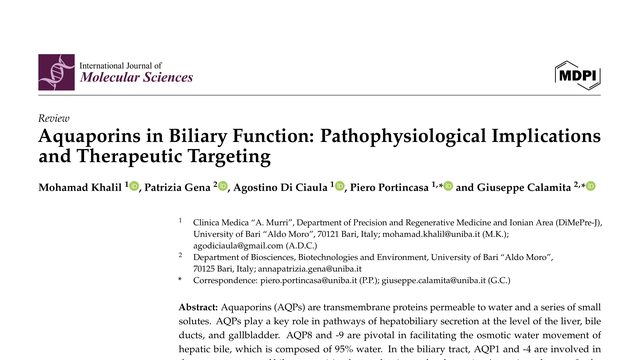
Mohamad Khalil, Patrizia Gena, Agostino Di Ciaula, Piero Portincasa, Giuseppe Calamita
Bile is almost entirely water, yet tiny water channels may help decide whether it flows normally, concentrates safely, or contributes to disease. This review asks whether those channels could become treatment targets.Bile is about ninety-five percent water, yet tiny membrane channels help decide how that water moves through the liver, bile ducts, and gallbladder. This review asks whether those channels could become therapeutic targets.
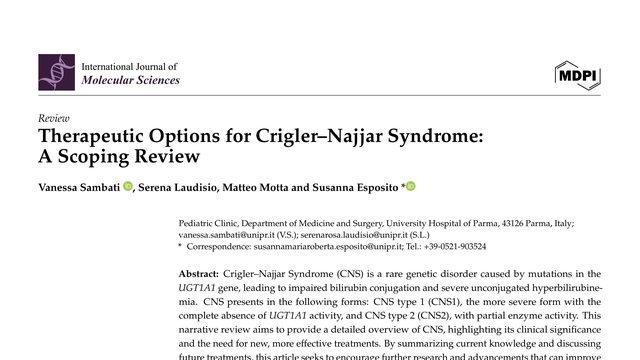
For some children, staying alive can mean lying under special blue lights for ten to twelve hours every day. This review asks whether future treatments could repair the problem instead of managing it for life.A rare genetic disorder can force children to spend ten to twelve hours a day under phototherapy, and for the most severe form, the only definitive cure is a liver transplant. This review asks what could come next.
 4:33
4:33