Residual monomers and volatile leachable substances of conventional and CAD/CAM-fabricated denture base materials — GC-MS analysis and surface characterization
Overview3:03CCAI
paperi.ai
0:00 / 0:00
Viktor Martian, Christoph Sasse, Ralf Bürgers, Andrea Schubert, Oskar Bunz
A denture can contain leftover building blocks from its manufacture. But in this study, the material with the most detectable residue did not release more of one key substance than plain control liquid.
Objectives Methacrylic acid ester-based resins for denture fabrication release residual monomers and leachable substances that may interact with oral tissues. With increasing adoption of CAD/CAM technologies, a systematic comparison of leachable substance profiles and surface characteristics across polymerization methods is needed. Materials and methods This study compared the chemical composition and profiles of leachable substances of four denture materials – autopolymerized, thermal polymerized, milled, and 3D-printed – using gas chromatography–mass spectrometry (GC–MS). Surface roughness was evaluated by confocal microscopy. Results GC–MS screening detected 24 distinct compounds in the solid specimens. Among the MMA/PMMA-based materials, methyl methacrylate content was highest in the thermally polymerized resin, followed by the autopolymerized and milled materials, and absent from the 3D-printed resin, consistent with its MMA-free formulation. MMA levels in the extracts did not exceed those of the negative control in any group. Surface roughness was comparable on the polished face (Ra ≈ 0.21–0.25 μm), consistent with SEM findings but material-dependent on the unpolished, tissue-contacting face (Ra 0.37–1.03 μm). Conclusions Both fabrication method and material formulation influence the volatile and semi-volatile extractables of denture resins. As the present GC–MS screening may not reliably capture high-molecular-weight dimethacrylates such as BisEMA and UDMA, novel CAD/CAM materials require additional, complementary toxicological evaluation. Clinical relevance The leachable substance profiles of CAD/CAM denture resins, particularly the distinct compounds detected in the 3D-printed material, underscore the need for material-specific biocompatibility data to support informed clinical material selection and patient safety.
Transcript
A denture can contain leftover building blocks from its manufacture. But in this study, the material with the most detectable residue did not release more of one key substance than plain control liquid. Denture materials can leave behind unreacted building blocks because the hardening process does not convert everything.
Those leftovers and other substances can move into saliva and interact with mouth tissues. It is like paint that dries on the surface while liquid remains trapped underneath: the surrounding network can catch unfinished ingredients.
Heat-hardened materials generally release less than self-curing ones. Printed materials may release more, depending on the printing system and how they are finished. The study compared two computer-made denture materials with two conventionally processed materials, looking at their chemical makeup and the substances that could leave them.
The expected pattern was that computer-made materials would release fewer methacrylate building blocks than conventionally processed resins. The solid materials contained twenty-four distinct compounds. One key building block was found in the prepolymerized, self-curing, and heat-hardened materials, but not in the light-hardened printed material, whose recipe does not use it.
Among the materials that contained it, the heat-hardened resin had the highest amount, followed by the self-curing and prepolymerized materials. But when the materials were placed in an extracting liquid, the amount released was no higher than in the control.
The solid-material traces are sharply separated, while the extracted-material traces overlap closely, making the contrast between retained and released substances immediately visible. The analysis found a broader range of substances than the manufacturers had declared, showing why independent testing can add information beyond a product description.
The results show that both the manufacturing route and the material recipe shape what remains in a denture and what can be extracted from it. Among the materials based on the same main plastic, the milled material had the least leftover building block and the heat-hardened material had the most.
The printed material had a distinct group of detected substances. However, substances absent from this test should not be assumed unable to leach, because this screening may not reliably capture some larger ingredients. The polished surfaces were similarly rough, while the tissue-contacting surfaces differed.
Overall, the tested materials released little of the key building block over the short test period. Longer tests using saliva and other kinds of analysis are still needed before broad, unrestricted clinical use is assumed safe. The safety story is not simply traditional versus computer-made.
Both the manufacturing route and the recipe matter, and the results support checking each material over longer periods before making broad clinical claims.
A derivative work by Paperi · AI-generated script, voice and captions
· pages and figures unaltered
Made with Paperi.
Drop in a research PDF — get a narrated video walkthrough like this one,
with highlights that follow the narration. Free to start.
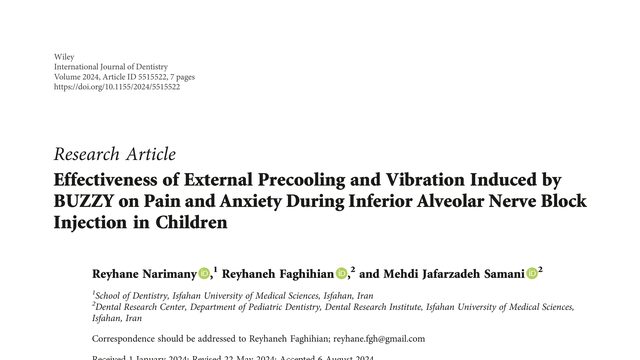
Reyhane Narimany, Reyhaneh Faghihian, Mehdi Jafarzadeh Samani
A small device combines cooling and vibration to make a dental injection less frightening for children. But when it was tested, the reassuring sensation did not clearly reduce either pain or anxiety.A device combining cold and vibration sounds like a simple way to make dental injections easier for children. But in this randomized trial, BUZZY did not significantly reduce pain or anxiety during the injection.
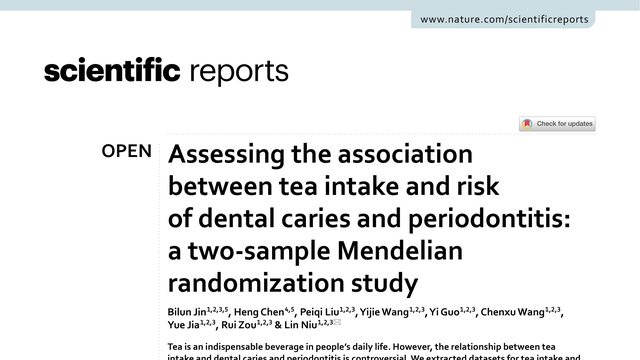
Bilun Jin, Heng Chen, Peiqi Liu, Yijie Wang, Yi Guo, Chenxu Wang, Yue Jia, Rui Zou, Lin Niu
Tea is often treated as a healthy choice for your mouth. But this study found a genetic clue pointing in the opposite direction for gum disease, while finding no link with cavities.Tea is often discussed as either helpful or harmful for oral health. This study uses genetic evidence to test whether drinking more tea is actually linked to cavities, periodontitis, or tooth loss.
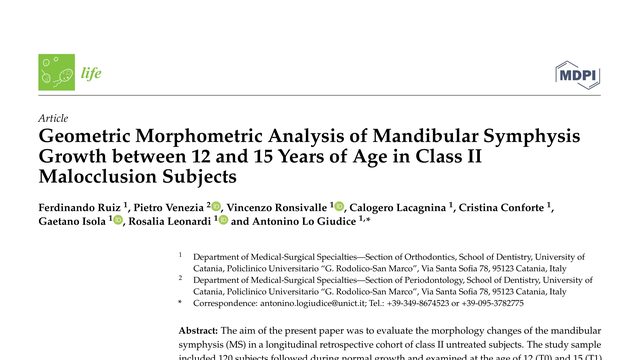
Ferdinando Ruiz, Pietro Venezia, Vincenzo Ronsivalle, Calogero Lacagnina, Cristina Conforte, Gaetano Isola, Rosalia Leonardi, Antonino Lo Giudice
Orthodontic treatment can move teeth, but the bone at the front of the lower jaw sets a boundary. This study asks whether that boundary naturally reshapes during the teenage years, and finds a reason not to count on it.A teenager’s mandibular symphysis may look different depending on facial growth pattern, but this study found that age and sex themselves did not significantly change its form between twelve and fifteen.
 4:11