In Milan, nearly six out of ten autopsied deaths among people experiencing homelessness had no definitive cause. The striking part is that limited post-mortem testing may be helping hide what happened.
Forensic medicine represents a critical socio-health observatory for socially marginalized populations. This study provides the first systematic retrospective forensic analysis of mortality among people experiencing homelessness in Italy. We examined 104 decedents undergoing autopsy in Milan between 2014 and 2024. The annual number of autopsied homeless decedents increased over the study period, peaking in 2023–2024. The majority of deaths occurred in indoor public spaces (45/104, 43.3%), with the remainder in hospitals or green areas, reflecting extreme social marginalization and environmental exposure. Anamnestic data were available for 56/104 cases (53.8%), of whom 42 (75%) had chronic medical conditions, while psychiatric or psychosocial histories were known for 43/104 cases (41.3%). These figures likely underestimate the true burden due to fragmented healthcare access and incomplete documentation. Causes of death were classified as natural (25/104, 24.0%), non-natural (17/104, 16.4%), or undetermined (62/104, 59.6%). Natural deaths, predominantly in middle-aged adults, illustrate accelerated health deterioration associated with homelessness, while non-natural deaths reflect heightened exposure to hazardous urban environments. Undetermined deaths – mainly acute circulatory insufficiency without macroscopic findings – highlight substantial gaps in post-mortem evaluation. Toxicological and histological analyses were rarely performed, revealing procedural and structural constraints that impede accurate cause-of-death determination in socially vulnerable and clinically complex populations. These findings uncover preventable and identifiable patterns of mortality, emphasize the forensic and public health value of comprehensive post-mortem investigation, and call for integrated strategies combining proactive healthcare delivery, harm reduction, and standardized forensic protocols to improve diagnostic accuracy and strengthen mortality surveillance in homeless populations.
Transcript
In Milan, nearly six out of ten autopsied deaths among people experiencing homelessness had no definitive cause. The striking part is that limited post-mortem testing may be helping hide what happened. Forensic medicine represents a critical socio-health observatory for socially marginalized populations, and this study provides the first systematic retrospective forensic analysis of mortality among people experiencing homelessness in Italy.
The study examined 104 decedents undergoing autopsy in Milan between 2014 and 2024, while the annual number of autopsied homeless decedents increased and peaked in 2023–2024. The majority of deaths occurred in indoor public spaces: 45 of 104 cases, or 43.3 percent, with the remainder in hospitals or green areas.
Available records showed chronic medical conditions in 42 of 56 cases with anamnestic data, while causes of death were natural in 25 cases, non-natural in 17, and undetermined in 62. Undetermined deaths mainly involved acute circulatory insufficiency without macroscopic findings, and toxicological and histological analyses were rarely performed.
Homelessness is increasingly recognized as a major public health concern in high-income countries and is associated with substantially elevated rates of premature and preventable mortality. People experiencing homelessness face intersecting barriers to healthcare, including financial constraints, discrimination, fragmented service provision, and complex multimorbidity competing with basic needs such as food and shelter.
Consequently, individuals living without stable housing face a markedly higher risk of premature death than the general population. Epidemiological evidence shows that mortality in homeless populations arises from a broad spectrum of causes. Italy remains largely underrepresented in international forensic evidence about mortality among homeless populations, while existing studies have primarily focused on healthcare access and morbidity during life.
As a result, deaths among homeless individuals remain poorly characterized, limiting evidence-based policymaking across healthcare, social protection, and judicial systems. Forensic autopsies provide essential information for determining cause and manner of death, identifying preventable risk factors, and ensuring accountability in cases of violence or other crime-related deaths.
But limited anamnestic information, delayed discovery, advanced decomposition, and restricted access to toxicology, histology, and microbiology can affect accurate determination of cause and manner of death. In Italy, procedural and organizational constraints compound these limitations, because ancillary post-mortem investigations require explicit authorization from judicial authorities and resource limitations may restrict routine implementation.
The study provides the first systematic forensic analysis of mortality among people experiencing homelessness in Italy. It examines all medico-legal autopsies performed on homeless individuals in Milan over a ten-year period, from 2014 to 2024, to characterize demographic features, circumstances, causes, and manners of death.
This was a retrospective cross-sectional study conducted at the Institute of Forensic Medicine of Milan, where medico-legal autopsies are routinely performed at the request of judicial and health authorities. All included cases underwent a complete medico-legal autopsy, and the institute’s autopsy database from 2014 to 2024 was reviewed in its entirety.
Homelessness classification relied on circumstantial information in forensic records, including statements from relatives during body identification or information in police records. No independent verification of housing status was possible, and homelessness was defined as absence of a stable residence, including living on streets, in public spaces, abandoned buildings, or temporary shelters.
All eligible cases identified through the institutional electronic database during the study period were included. The extracted variables included sex, age, nationality, year and place of death, available medical history, psychiatric and substance use history, post-mortem interval, body preservation status, cause and manner of death, and ancillary investigation results.
All data were analysed in anonymised form to minimise the use of personal information. A total of 104 autopsies involved individuals experiencing homelessness who died in Milan between 2014 and 2024. During the same period, the Institute performed 7,338 autopsies overall, so homelessness-related cases accounted for 1.4 percent of total autopsy activity.
The lowest number of cases was recorded in 2015, with two, while the highest numbers occurred in 2023 and 2024, with 16 each. The annual distribution fluctuated, with a gradual increase from 2017 onward and a plateau in 2023 and 2024. Looking within each stacked bar, the green judicial segment is larger in most years, while the purple health-authority segment expands notably in twenty-eighteen and twenty-twenty-one.
The clearest contrast appears in twenty-twenty-three, where the segments are labeled fourteen and two, compared with thirteen and three in twenty-twenty-four. Men represented 91 of the 104 decedents, or 87.5 percent, while women represented 13, or 12.5 percent.
The age of six individuals could not be determined because they were unidentified, so those cases were excluded from subsequent age-related statistical analyses. Among the remaining cases, age at death ranged from 18 to 88 years, and no minors were identified.
Most deaths occurred among middle-aged individuals, particularly in the 45 to 54 and 55 to 64 year age groups. At the youngest end, the figure shows four men below twenty-five and no women, whereas the oldest group contains eleven men and one woman. The most common locations were indoor public spaces, with 45 of 104 cases, or 43.3 percent, followed by hospitals, streets, and green areas.
Within indoor public spaces, bodies were found in abandoned buildings, railway and metro stations, parking lots and squares, communal warehouses or prefabricated structures, abandoned sports centres, and supermarkets or cemeteries. An additional 14 cases were found in indoor public spaces that could not be specifically identified.
Twenty-four cases, or 23.1 percent, involved witnessed deaths, while in the remaining 80 cases, or 76.9 percent, the body was discovered after death. Among those discovered after death, information allowing estimation of the post-mortem interval was available in 18 cases, or 22.5 percent.
Estimated intervals varied from a few hours to several days, and three cases involved longer intervals, including one in which the last known contact occurred up to four years earlier. Forty-four cases, or 42.3 percent, were found in good condition, while the chromatic phase of putrefaction was observed most often among the remaining cases.
Non-natural causes accounted for 17 of the 104 cases, or 16.4 percent, and included both intentional and unintentional events. Suicide was identified in five cases, homicide in four, and accidental death in one case. The remaining seven cases were classified as open verdict because the medico-legal evidence could not definitively distinguish intent between suicide and accidental death.
Undetermined deaths, all classified as suspected natural deaths, were the largest category: 62 of 104 cases, or 59.6 percent. These deaths were recorded as asystole or acute circulatory insufficiency when no macroscopic autopsy findings could be attributed to a specific etiological diagnosis.
In 45 cases, no relevant macroscopic pathological findings were observed; in 17, abnormalities were present but were neither acutely lethal nor sufficient alone to explain death. Undetermined deaths accounted for 16.3 percent of autopsies in the non-homeless population, compared with 59.6 percent among people experiencing homelessness.
Toxicological analyses were performed in only five of the 104 cases, or 4.8 percent. In three cases, toxicological testing revised the initial diagnosis of acute circulatory insufficiency by identifying substances that directly contributed to death.
Those cases involved acute carbon monoxide poisoning, a combined cocaine and methadone overdose, and acute citalopram intoxication. Without toxicological analysis, all three deaths would likely have remained classified as deaths of unclear or presumed natural origin. In the other two cases, toxicology provided information about perimortem exposure but did not alter the determination of cause of death.
The proportion of undetermined deaths was significantly higher in the homeless cohort than in the overall autopsy population: 59.6 percent versus 16.3 percent, with a p-value below zero point zero zero zero one. Without ancillary toxicological and histological analyses, deaths from subtle pathological processes or toxic exposures would likely remain classified as nonspecific or sudden.
Toxicological testing identified substances that directly contributed to death in three cases initially classified as presumed natural deaths, highlighting the role of ancillary post-mortem analyses in diagnostic accuracy and medico-legal classification. In this cohort, most decedents underwent judicial autopsy, 79 of 104 cases, or 76 percent, yet procedural limitations meant that many ancillary tests were not performed.
This creates a dual problem: epidemiological underestimation of preventable deaths and potential under-detection of criminal or violent acts. The study highlights both the scale of premature death and structural gaps in care and post-mortem investigation among people experiencing homelessness in Milan.
Barriers to healthcare and delayed diagnosis allow potentially treatable conditions to progress unchecked, while limitations in autopsy practices frequently result in undetermined causes of death. Homelessness-related mortality appears to follow identifiable and, in many cases, potentially preventable patterns rather than reflecting random misfortune.
Closing the healthcare gap requires policy reforms and proactive outreach strategies, including street medicine initiatives that deliver low-threshold care, integrate harm reduction, and foster continuity and trust. Reducing investigative gaps requires dedicated forensic resources and standardized protocols so comprehensive autopsies, including toxicological and histological analyses, are routinely performed.
The study shows that homelessness-related deaths are shaped by preventable health and social risks, while incomplete forensic investigation leaves many causes unresolved. Better outreach and standardized autopsy testing could make these deaths more visible and actionable.
A derivative work by Paperi · AI-generated script, voice and captions
· pages and figures unaltered
Made with Paperi.
Drop in a research PDF — get a narrated video walkthrough like this one,
with highlights that follow the narration. Free to start.
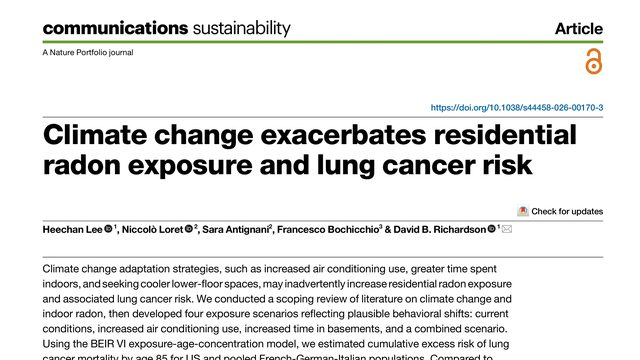
Heechan Lee, Niccoló Loret, Sara Antignani, F. Bochicchio, David B. Richardson
Staying indoors and turning up the air conditioning can protect people from heat. But this study suggests those same choices may quietly increase exposure to radon, a gas linked to lung cancer.Staying cool during a warming climate sounds protective, but this paper identifies a hidden tradeoff: more air conditioning, more indoor time, and more time in lower floors could increase radon exposure and lung cancer risk.
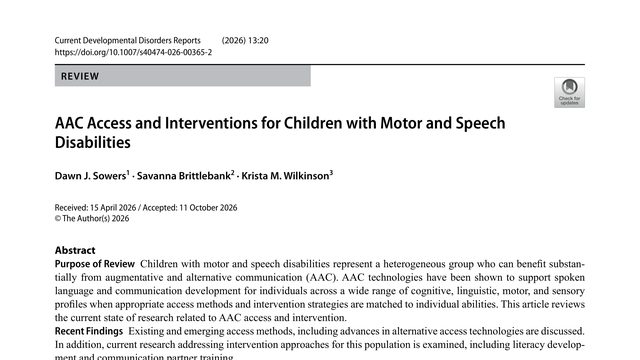
Dawn J. Sowers, Savanna Brittlebank, Krista M. Wilkinson
For a child who cannot reliably speak or point, the hardest part may not be finding words. It may be finding a way to select them, and research shows that the right access method can change communication itself.AAC can support communication across very different abilities, but the way a child accesses a system may determine whether the technology actually opens meaningful participation. This review shows both how far the field has moved and how much evidence is still missing.
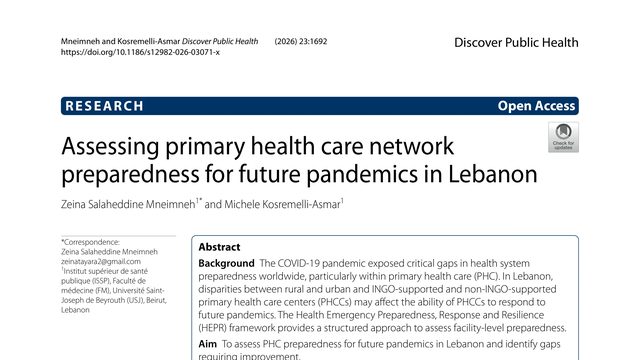
A health clinic can report a dangerous disease quickly and still be unprepared for the next pandemic. In Lebanon, that contradiction is exactly what this study uncovered.Lebanon’s primary care centers were very good at reporting disease, yet no center reported a formal way to systematically address community concerns. That contrast is the central surprise of this preparedness study.
 3:39