Endotrophin, a fibroblast matrikine, may be a driver of fibroblast activation in fibro-inflammatory diseases
Curious2:54CCAI
paperi.ai
0:00 / 0:00
Alexander Lynge Reese‐Petersen, Federica Genovese, Lei Zhao, G. Banks, David A. Gordon, M.A. Karsdal
A small fragment released from the heart’s supporting tissue may do more than mark trouble. It may help push heart cells to build the very scar-like material that makes the heart work poorly.
Extracellular matrix proteins harbor signaling domains that once released from the parent molecule can trigger cellular responses. One of these molecules is endotrophin, a type VI collagen derived fragment, whose circulatory levels have been associated to an increased risk of adverse outcome in heart failure with preserved ejection fraction (HFpEF). Here we show that the stimulation of human cardiac fibroblasts by endotrophin upregulates the synthesis of type I collagen, the main interstitial collagen that accumulates in the myocardium during fibrogenesis. These data provide a possible mechanistic explanation for the relation between circulating endotrophin levels and risk of outcome in HFpEF.
Transcript
A small fragment released from the heart’s supporting tissue may do more than mark trouble. It may help push heart cells to build the very scar-like material that makes the heart work poorly. Heart failure with preserved ejection fraction is a varied condition affected by tissue scarring and disturbed metabolism, both of which increase the risk of a bad outcome.
There is a strong medical need for blood markers that reflect tissue scarring and add to current ways of judging risk and biological problems. Understanding disease-activated fibroblasts and how they contribute to illness is becoming increasingly important.
Over the past decade, growing attention has focused on endotrophin, a molecule derived from type six collagen. The supporting material around cells can contain signaling parts that, once released from a larger molecule, trigger responses in cells. Endotrophin is one of these molecules.
Its levels in the blood have been linked with a higher risk of a bad outcome in heart failure with preserved ejection fraction. To investigate this possible relationship, human heart fibroblasts were grown in a simplified laboratory system. After exposure to endotrophin, the cells showed a five-fold increase in the production of type one collagen.
This matters because a signal linked to heart scarring directly prompted heart-supporting cells to produce more type one collagen, the main structural protein that can stiffen heart tissue. At the strongest level tested, production was five times that seen without the signal.
Type one collagen is the most abundant kind of collagen in the heart muscle, and its increase could explain how endotrophin might drive scarring by directly activating fibroblasts. Higher fibroblast activity and more endotrophin in the heart muscle could impair heart function and contribute to heart failure with preserved ejection fraction and other scarring diseases.
The experiment is limited because the cell system was simple. Further studies need to test endotrophin in more complex systems and connect blood levels with increases in affected tissues, while clarifying whether it truly drives scarring. In summary, endotrophin could increase the amount of scar-like material in the heart by activating fibroblasts and increasing their production of type one collagen.
That possible chain offers a biological explanation for why higher endotrophin levels may be linked with worse outcomes in heart failure with preserved ejection fraction and other diseases involving inflammation and scarring. The study suggests that endotrophin can activate heart-supporting cells and increase collagen production, offering a possible link between a blood signal and worsening heart stiffness.
But this still needs testing in more realistic tissues and patients.
A derivative work by Paperi · AI-generated script, voice and captions
· pages and figures unaltered
Made with Paperi.
Drop in a research PDF — get a narrated video walkthrough like this one,
with highlights that follow the narration. Free to start.
Abdihamid Warsame, Gwendolen Eamer, Alaria Kai, Lucia Robles Dios, Hana Rohan, Patrick Keating, Jacques Katshishi, Francesco Checchi
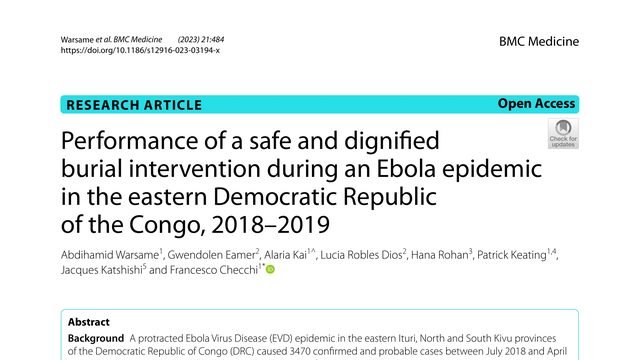
During an Ebola outbreak, a funeral can protect a community—or spread infection. This study found that getting a burial team there quickly was possible, but safety also depended on whether families and neighbours trusted the response.In an Ebola outbreak, the burial itself can become a transmission event. This study asks whether burials can be made both safer and more dignified—and which kinds of teams are most likely to succeed.
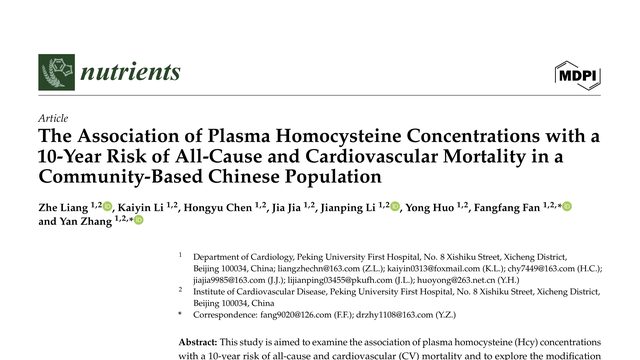
A substance in the blood was linked with a higher chance of dying over the next decade—but the strength of that link depended partly on a person’s inherited biology.A routine blood measurement may be linked to who dies over the next decade—but the genetic context appears to change how strong that link is. This study follows 5,200 Chinese residents to test that connection.
Lara Riem, Silvia S. Blemker, Olivia DuCharme, Elizabeth B. Leitch, Matthew Cousins, Ivan J. Antosh, Mikalyn Defoor, Andrew J. Sheean, Brian C. Werner
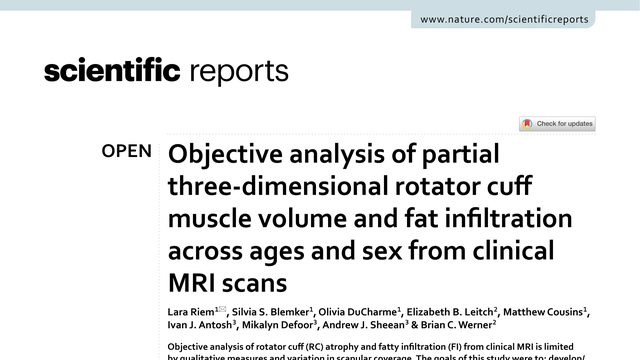
A shoulder MRI often captures only part of the shoulder blade. This study finds that partial images can still reveal meaningful three-dimensional changes in the muscles that help lift and stabilize the arm.A routine shoulder MRI may capture only part of the rotator cuff—but this study asks whether that partial view can still reveal whole-muscle size and fat infiltration in three dimensions.
 4:39
4:39