Competition for Nitrogen Resources: An Explanation of the Effects of a Bioprotective Strain Metschnikowia pulcherrima on the Growth of Hanseniaspora Genus in Oenology
A natural yeast added to grape juice can protect the future wine from unwanted microbes, but only against some of them. The surprising reason may be a struggle over the same basic food: nitrogen.
As a biological alternative to the antimicrobial action of SO2, bioprotection has been proposed to winemakers as a means to limit or prevent grape musts microbial alteration. Competition for nitrogenous nutrients and for oxygen are often cited as potential explanations for the effectiveness of bioprotection. This study analyses the effect of a bioprotective M. pulcherrima strain on the growth of one H. valbyensis strain and one H. uvarum strain. Bioprotection efficiency was observed only against H. valbyensis inoculated at the two lowest concentrations. These results indicate a potential species-dependent efficiency of the bioprotective strain and a strong impact of the initial ratio between bioprotective and apiculate yeasts. The analysis of the consumption of nitrogen compounds revealed that leucine, isoleucine, lysine and tryptophan were consumed preferentially by all three strains. The weaker assimilation percentages of these amino acids observed in H. valbyensis at 24 h growth suggest competition with M. pulcherrima that could negatively affects the growth of the apiculate yeast in co-cultures. The slowest rate of O2 consumption of H. valbyensis strain, in comparison with M. pulcherrima, was probably not involved in the bioprotective effect. Non-targeted metabolomic analyses of M. pulcherrima and H. valbyensis co-culture indicate that the interaction between both strains particularly impact lysin and tryptophan metabolisms.
Transcript
A natural yeast added to grape juice can protect the future wine from unwanted microbes—but only against some of them. The surprising reason may be a struggle over the same basic food: nitrogen. For winemakers, replacing sulfites with helpful yeasts sounds attractive, but feedback from winemakers shows that the effects of adding these yeasts to grape juice can be unpredictable.
Better management of this approach is essential for limiting economic losses and reducing sulfite use. Understanding the mechanisms is therefore the practical goal. One main explanation is nutrient competition, especially competition for nitrogen resources.
Nitrogen is one of the most important nutrients in grape juice, and too little can slow or stop fermentation because yeast growth is limited. Think of a shared kitchen with limited ingredients: different yeasts may reach for different foods first.
Nitrogen resources can be preferential, meaning consumed in priority, or non-preferential, meaning consumed when the preferred resources are limited. Not all yeasts share the same preferred resources, and the order and level of amino-acid consumption can also change with growth conditions.
Interactions between bioprotective yeasts and indigenous flora have not yet been elucidated, leaving a major gap in understanding the mechanisms of bioprotection. Nitrogen use has been studied in only about a dozen non-Saccharomyces species and has rarely been examined when one protective yeast meets another native yeast.
Those interactions have not been fully explained, leaving a major gap in understanding how bioprotection works. The first result was a failure of protection against one competing yeast: whatever its starting concentration, the protective strain could not limit its growth.
Instead, the competing yeast had a negative impact on the protective strain’s development—a reverse effect. But here is the key surprise: the protective effect depended on which Hanseniaspora species was present. It appeared with H.
valbyensis, but not with H. uvarum. The comparative growth results suggest that M. pulcherrima's bioprotective effect depends on the Hanseniaspora species: it worked with H.
valbyensis but not H. uvarum. That species dependence may help explain why these results seem surprising alongside field trials where the protective strain established itself and predominated over indigenous flora, even when much H.
uvarum was present. Real conditions contain more coexisting species and strains, creating considerable interaction diversity; the protective effect may result from many interactions with the indigenous microbiota. The study tested whether competition for nitrogen could explain the bioprotective effect observed previously, especially against H.
valbyensis. After seventy-two hours of culture, across all three strains and starting concentrations, the nitrogen resources were not fully consumed, so some nitrogen remained available. Some resources were left untouched: ammonium, cysteine and glycine were not consumed, while arginine and histidine were only partly consumed by all the strains.
The result does not support a single, universal rule for bioprotection. Protection worked against one species but not another, and the study says the results still need confirmation with other strains from those species.
The difference could reflect the considerable genetic diversity among Hanseniaspora groups, as well as the different sensitivities created by winemaking conditions or by the strains themselves. Bioprotection remains a real alternative to adding a chemical input to protect grape juice during the stages before alcoholic fermentation.
Numerous field trials have demonstrated the effectiveness of bioprotection, although clear physiological data explaining how the strategy works are still lacking. Bioprotection is a promising way to reduce chemical preservatives, but it is not a universal shield.
Its success depends on which competing yeast is present, and on how strongly the two sides compete for nutrients.
A derivative work by Paperi · AI-generated script, voice and captions
· pages and figures unaltered
Made with Paperi.
Drop in a research PDF — get a narrated video walkthrough like this one,
with highlights that follow the narration. Free to start.
Fernanda M. P. Oliveira, Carlos H. F. Silva, Melinda L. Moir, Inara R. Leal, Alan N. Andersen
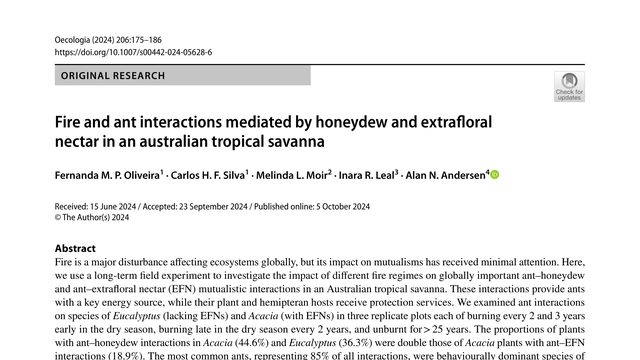
Fire usually sounds like a force that breaks relationships in nature. But in this Australian savanna, frequent burning helped plants and ants connect more often, and brought more of the most protective ants into the picture.Fire usually sounds destructive, but in this Australian savanna it increased some ant partnerships, especially ants visiting plant nectar, and increased the share of dominant, high-quality mutualists.
Berta Mozo Vives, Sophie Mainguy‐Seers, Jean‐Pierre Lavoie
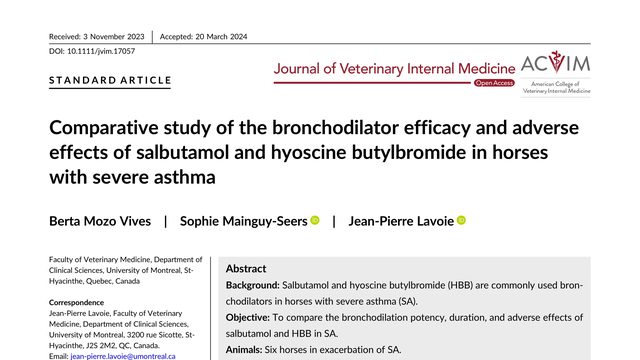
When a horse cannot breathe, two medicines can open its narrowed airways quickly. But the treatment that lasts longer may also be the one that avoids problems with the heart and gut.Two drugs can open a horse’s airways with similar strength, but one lasts up to three hours while the other lasts about one, and the shorter-acting option is the one linked to faster heart rates and quieter gut sounds.
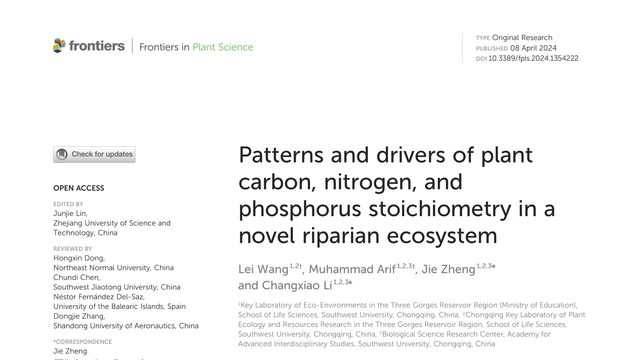
Every winter, floodwater covers this riverbank by about thirty metres. When the water retreats, the plants are not simply recovering: their leaves, stems, and roots are carrying different chemical priorities.A riverbank ecosystem flooded thirty meters every winter reveals a surprising split: flooding changes plant carbon, nitrogen, and phosphorus concentrations, yet the plants maintain similar nutrient ratios along the inundation gradient.
 4:03
4:03