Colostrum Proteins in Protection against Therapy-Induced Injuries in Cancer Chemo- and Radiotherapy: A Comprehensive Review
Curious4:15CCAI
paperi.ai
0:00 / 0:00
Jolanta Artym, Michał Zimecki
Cancer treatment can attack healthy tissue while attacking a tumor. This review asks whether proteins from colostrum, the first milk after birth, could help protect the body without weakening treatment.
In this article, we review the benefits of application of colostrum and colostrum-derived proteins in animal models and clinical trials that include chemotherapy with antimetabolic drugs, radiotherapy and surgical interventions. A majority of the reported investigations was performed with bovine colostrum (BC) and native bovine or recombinant human lactoferrin (LF), applied alone, in nutraceutics or in combination with probiotics. Apart from reducing side effects of the applied therapeutics, radiation and surgical procedures, BC and LF augmented their efficacy and improved the wellness of patients. In conclusion, colostrum and colostrum proteins, preferably administered with probiotic bacteria, are highly recommended for inclusion to therapeutic protocols in cancer chemo- and radiotherapy as well as during the surgical treatment of cancer patients.
Transcript
Cancer treatment can attack healthy tissue while attacking a tumor. This review asks whether proteins from colostrum, the first milk after birth, could help protect the body without weakening treatment. Cancer treatments can be highly effective, but they are also toxic to the patient’s tissues because of how they work.
The immune system, nervous system, gastrointestinal tract, and the body’s normal gut and reproductive-tract microbes are commonly damaged. This toxicity produces adverse side effects in patients undergoing treatment.
The review examines colostrum and colostrum-derived proteins, mainly lactoferrin, as additions to chemotherapy, radiation, hormone treatment, and surgery for cancer, using animal studies and clinical studies. It also discusses a possible protective action seen in laboratory tests and the practical use of these products in clinical care.
Here is the central idea: colostrum components may help repair weakened patients, acting as regenerative agents after drug treatment, radiotherapy, or surgery. The review says these components can protect against treatment complications and help weakened patients recover after drugs, radiation, or surgery.
Used alongside standard drugs, colostrum or its proteins may strengthen treatment effects and allow lower treatment doses, which could further reduce toxicity. In mouse studies, lactoferrin helped restore or normalize an impaired immune response after a drug used to suppress immunity.
In those mice, lactoferrin restored one immune reaction, partly recovered immune-cell growth, and normalized changes in blood-cell composition after treatment. Colostrum and lactoferrin have also been used in clinical care to lessen chemotherapy’s side effects.
In one trial involving people with advanced cancer and anemia, oral lactoferrin was compared with injected iron. Both groups had a significant rise in hemoglobin, with no differences in blood formation, blood iron, or measures of inflammation. Ferritin fell in the lactoferrin group and rose in the ferric-gluconate group, a change that may help avoid harmful iron overload.
In a clinical trial, lactoferrin delivered in a medical food protected people with cancer from diarrhea and low white-cell counts during chemotherapy. Chemotherapy-related diarrhea occurred on fewer days, and both diarrhea reported during medical visits and low white-cell counts were found in a smaller share of patients.
That matters because treatment-related injury to the gut lining is common and can greatly affect quality of life. A separate trial tested daily oral colostrum in children receiving initial chemotherapy for acute lymphoblastic leukemia and experiencing digestive-tract toxicity.
Colostrum did not change fever, antibiotic use, or bloodstream infection, but it lowered the worst level of mouth soreness and the children’s weekly reports of it. The reported result suggests that colostrum may ease mouth inflammation during this chemotherapy, even without changing infection-related problems.
Across animal studies and clinical trials, orally taken colostrum, lactoferrin, and lactoferrin-derived pieces were linked not only with fewer side effects from cancer treatments but also with stronger treatment effects. These effects were reported when colostrum or lactoferrin was used alone and when it was combined with other nutritional products or helpful bacteria.
The review connects these benefits with actions such as supporting immune-cell development, controlling iron use, helping beneficial gut microbes grow, and stabilizing the gut’s protective lining. Its authors recommend including colostrum proteins in cancer treatment plans to improve effectiveness and lessen adverse side effects.
Across animal studies and clinical trials, colostrum and its proteins were linked with fewer treatment side effects and, in some cases, stronger treatment effects. They may become supportive care, not a replacement for cancer therapy.
A derivative work by Paperi · AI-generated script, voice and captions
· pages and figures unaltered
Made with Paperi.
Drop in a research PDF — get a narrated video walkthrough like this one,
with highlights that follow the narration. Free to start.
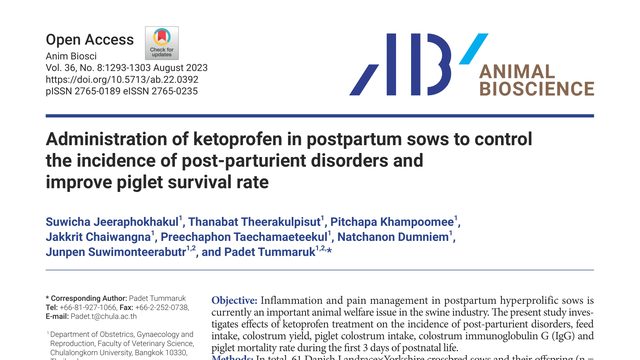
The first days after birth can decide whether a piglet survives. This study asks whether easing a mother’s pain changes that delicate handoff of early nourishment—and finds a more complicated answer.What if a postpartum anti-inflammatory drug could support sow welfare without improving piglet survival at all? This study tests ketoprofen against a conventional treatment—and finds a much more complicated story.
Michael Mollenhauer, Abdullah Irfan, Xi Cao, Supriya Mandal, Wolfgang Pfaff
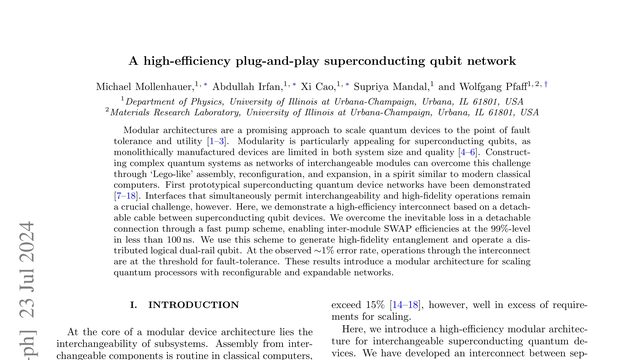
What if a quantum computer did not have to be built as one giant, delicate object? This experiment shows that separate quantum devices can be connected by a cable, unplugged, and still exchange information with about one percent loss.What if scaling a quantum computer looked less like fabricating one enormous chip—and more like plugging together replaceable modules? This paper shows a detachable cable moving quantum information with roughly one-percent loss in under one hundred nanoseconds.
Yan Huang, Yao Deng, Xiaoming Jiang, Yiyuan Chen, Tianxin Mao, Yong Xu, Caihong Jiang, Hengyi Rao
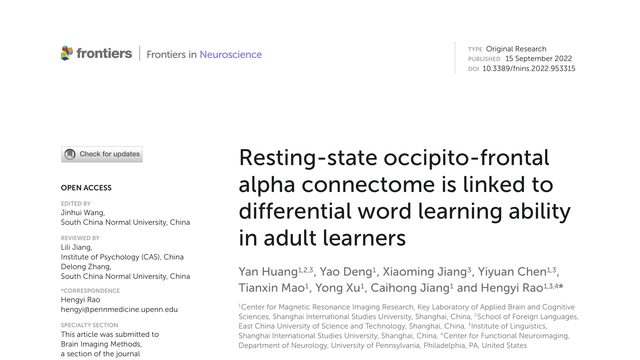
Why can one adult learn a new word almost effortlessly while another struggles? This study suggests the answer may partly lie in how two distant parts of the resting brain keep time together.Some adults learn new words much more easily than others. This study asks whether that difference can already be seen in the resting brain, before the learning task even begins.
 4:10
4:10