Assessment of Bacillus species capacity to protect Nile tilapia from A. hydrophila infection and improve growth performance
Overview3:06CCAI
paperi.ai
0:00 / 0:00
Leslye Macias, Víctor Mercado, Jorge Olmos
Fish farms can raise production, but crowded conditions also make fish more vulnerable to infection. This study tested whether helpful bacteria mixed into feed could protect fish and help them grow.
The present study evaluated the capacity of three Bacillus species to improve health status and growth performance of Nile Tilapia fed with high levels of soybean meal and challenged with Aeromonas hydrophila. In vitro experiments showed that b-hemolysin and metalloprotease enzymes were produced by A. hydrophila throughout the exponential growth phase. In vivo experiments showed that 107 colony-forming units (CFUs)/ml of this pathogen killed 50% of control group fishes in 13 days. To evaluate the influence of Bacillus strains on health status and growth performance in Nile Tilapia, 180 fishes (33.44 + 0.05 g) were distributed in 12 tanks of 200 L each, and animals were fed twice per day until satiety. 1) Control group without Bacillus, 2) Bacillus sp1, 3) Bacillus sp2, and 4) Bacillus sp3 groups were formulated containing 106 CFU/g. After 40 days of feeding, the fishes were intraperitoneally injected with 1 ml of A. hydrophila at 2 × 10⁷ CFU/ml, and mortality was recorded. The results showed that cumulative mortality rate was significantly (p< 0.05) lower in the Bacillus sp1 (25%), sp2 (5%), and sp3 (15%) groups, than the control group (50%). Weight gain was also significantly better (p< 0.05) in the Bacillus sp1 (36%), sp2 (67%), and sp3 (55%) groups with respect to the control group (30%). In conclusion, functional diet formulated with high levels of soybean meal and supplemented with Bacillus sp2 could be an alternative to protect Nile tilapia cultures from A. hydrophila infections and improve fish growth performance. Aeromonas hydrophila, Bacillus, Nile tilapia, probiotics, functional foods
Transcript
Fish farms can raise production, but crowded conditions also make fish more vulnerable to infection. This study tested whether helpful bacteria mixed into feed could protect fish and help them grow. Fish demand has been growing, and aquaculture has developed alternatives to improve production.
Intensive systems can increase fish production, but they also increase fish susceptibility to bacterial infections because of stress on the animals. That creates a difficult tradeoff: producing more fish can also make the animals more vulnerable to disease.
The study tested three Bacillus species in Nile tilapia fed with high levels of soybean meal and challenged with Aeromonas hydrophila, a bacterium that can infect fish. The infection itself was dangerous: the pathogen killed half of the control fish in thirteen days.
The three strains were selected because they could grow in soy-based media and inhibit Aeromonas hydrophila development on agar plates. In everyday terms, the researchers were looking for helpful bacteria that could live on the planned feed ingredient while slowing the harmful bacterium—like choosing a guard that can survive in the same neighborhood as the threat.
The three strains produced antimicrobial activity against Aeromonas hydrophila, but the sp2 strain produced the highest inhibition activity against the pathogen. Its inhibition activity was threefold higher than sp1 and twofold higher than sp3.
After forty days of feeding, the fish were measured. Most growth parameters were significantly improved in the Bacillus sp2 group compared with the control, sp1, and sp3 groups. After infection, the fish were followed for an additional fifteen days.
The control group reached the point where half had died after thirteen days of initial infection. On that same day, cumulative mortality was twenty-five percent with sp1, five percent with sp2, and fifteen percent with sp3. The growth results suggest that Bacillus strains, especially Bacillus sp2, could lessen harmful effects produced by soybean products.
A similar growth rate has been reported with more soybean meal, but that comparison used almost three times more fishmeal than this experiment. The formulated feed contained soybean meal and Bacillus sp2, which was capable of increasing fish health by inhibiting Aeromonas hydrophila development and production of factors linked to tissue damage.
The feed also enhanced growth performance, while Bacillus sp2 could grow on many plant-based substrates, including soybean meal and other leguminous plants. For fish farmers, that points toward a feed that may help fish survive infection and grow well while relying more on plant-based ingredients.
A feed containing one of the tested Bacillus strains was linked to both lower death rates after infection and better growth, suggesting a possible way to make tilapia farming more resilient.
A derivative work by Paperi · AI-generated script, voice and captions
· pages and figures unaltered
Made with Paperi.
Drop in a research PDF — get a narrated video walkthrough like this one,
with highlights that follow the narration. Free to start.
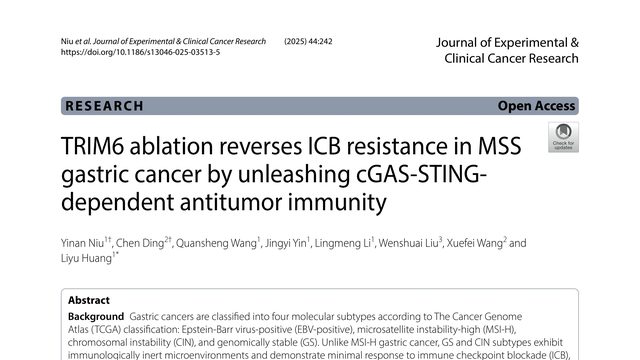
Some stomach cancers are “cold”: immune-based drugs barely work because the body’s defenders never arrive. This study points to a brake that may be keeping those defenders out, and shows what happened when the brake was removed.Some gastric tumors are effectively invisible to checkpoint immunotherapy. This study identifies TRIM6 as a molecular brake: remove it, and the cGAS-STING immune alarm becomes active again.
Xun Liu, Yueyao Yang, Xiufeng Zheng, Ming Liu, Gang Wang
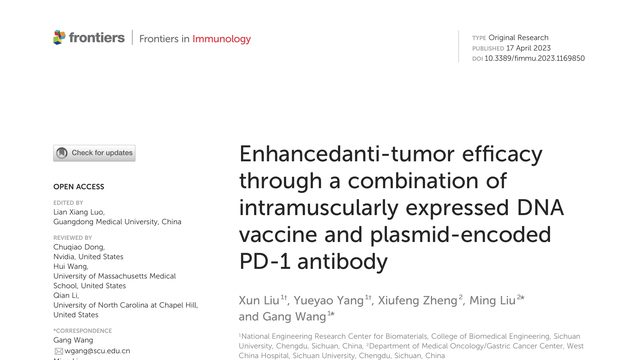
Cancer treatment may work better when the immune system gets both a clear target and help removing the brakes that hold its attack back. In mice, that combination slowed tumors, limited spread, and improved survival.Immune checkpoint inhibitors can help some cancer patients, but many tumors barely respond. This study asks whether a muscle-injected DNA vaccine and a plasmid that produces a PD-1 antibody can work better together.
Alan‐Dine Courey‐Ghaouzi, Linn Kleberg, Zaynab Mousavian, Maximilian Julius Lautenbach, Marta Pirronello, Ganesh E. Phad, Mattias N.E. Forsell, Anna Färnert, Christopher Sundling
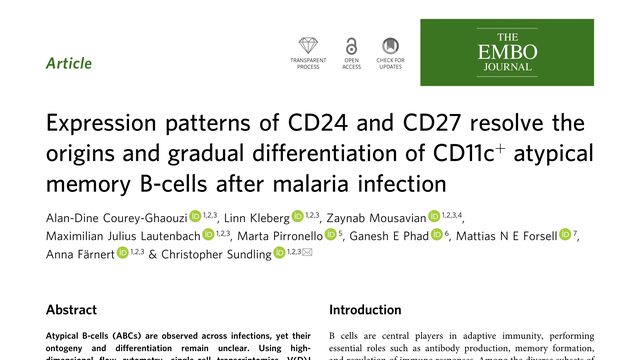
After malaria, some immune cells long treated as exhausted may actually be moving through a carefully ordered life cycle. The surprising part is that cells from different beginnings can end up in the same late state.Atypical B cells have often been treated as one confusing, exhausted-looking population. This study instead finds a staged differentiation path, with distinct origins converging on a shared late state.
 4:25