Specific Detection of Physiological S129 Phosphorylated α-Synuclein in Tissue Using Proximity Ligation Assay
Curious4:06CCAI
paperi.ai
0:00 / 0:00
Ryan Arlinghaus, Michiyo Iba, Eliezer Masliah, Mark Cookson, Natalie Landeck
A brain signal linked to disease can be easy to see in large clumps, yet nearly impossible to identify when it is quietly doing its normal work. This study found a way to separate that healthy signal from misleading noise.
Background: Synucleinopathies are a group of neurodegenerative disorders that are pathologically characterized by intracellular aggregates called Lewy bodies. Lewy bodies are primarily composed of -synuclein (asyn) protein, which is mostly phosphorylated at serine 129 (pS129) when aggregated and therefore used as a marker for pathology. Currently commercial antibodies against pS129 asyn stain aggregates well but in healthy brains cross react with other proteins, thus making it difficult to specifically detect physiological pS129 asyn. Objective: To develop a staining procedure that detects endogenous and physiological relevant pS129 asyn with high specificity and low background. Methods: We used the fluorescent and brightfield in situ proximity ligation assay (PLA) to specifically detect pS129 asyn in cell culture, mouse, and human brain sections. Results: The pS129 asyn PLA specifically stained physiological and soluble pS129 asyn in cell culture, mouse brain sections, and human brain tissue without significant cross-reactivity or background signal. However, this technique was not successful in detecting Lewy bodies in human brain tissue. Conclusion: We successfully developed a novel PLA method that can, in the future, be used on in vitro and in vivo samples as a tool to explore and better understand the cellular localization and function of pS129 asyn in health and disease. Keywords: -synuclein, phosphorylation, proximity ligation assay, synucleinopathies, immunohistochemistry
Transcript
A brain signal linked to disease can be easy to see in large clumps, yet nearly impossible to identify when it is quietly doing its normal work. This study found a way to separate that healthy signal from misleading noise.
These disorders are marked by clumps inside brain cells called Lewy bodies. The clumps are mainly made of alpha-synuclein, a protein, and much of it carries a phosphate tag at one particular position when it has clumped together.
That tagged form is used as a sign of disease, but the usual detection tools also attach to other proteins in healthy brains. The result is a blurred signal that makes normal tagged alpha-synuclein hard to identify. The goal was to create a way to detect the body’s own, normal tagged alpha-synuclein while producing very little unrelated signal.
That matters because a useful brain measurement needs high specificity and low background when detecting the body’s own physiologically relevant tagged alpha-synuclein. The central idea is like checking whether two specific pieces of mail are in the same mailbox: a visible signal appears only when two matching markers come close together.
One marker recognizes alpha-synuclein itself, while the other recognizes its phosphate tag, so the assay tests the protein and its modification together. Requiring both markers to agree helps limit misleading signals, including cross-reactivity and background from markers that attach to unrelated proteins.
The ordinary detection tools were tested in nerve cells that either contained alpha-synuclein or did not. Several tools aimed at the phosphate tag produced extensive staining in both kinds of cells. That meant they were also recognizing other targets.
By contrast, the tool aimed at total alpha-synuclein stained only cells that actually contained the protein. With the two-marker approach, the signal specifically appeared in cultured nerve cells and another cultured human cell type. It detected the body’s own normal levels of tagged alpha-synuclein.
So the method could find the quiet, naturally occurring tagged signal, detecting endogenous physiological levels in both types of cultured cells. The combined staining marks the modified form of alpha-synuclein across several brain regions, while it largely disappears in animals unable to make alpha-synuclein.
Using either antibody alone does not produce the same specific pattern, supporting that the signal requires both to recognize the same target. The method also found tagged alpha-synuclein in human brain tissue from people without neurological disease and from people with dementia with Lewy bodies.
But the method did not readily reveal the densely packed Lewy bodies themselves in human tissue from dementia with Lewy bodies. The same failure remained when researchers changed one marker, using four B twelve for total alpha-synuclein together with R thirteen on human dementia with Lewy bodies tissue.
One possible reason is that long-standing, tightly packed clumps have a different structure or different chemical changes from the shorter-term clumps produced in animal models. Overall, the method reduces misleading signals and specifically detects normal, non-aggregated tagged alpha-synuclein in cultured cells, mouse brain tissue, and human brain tissue.
It can also detect increased levels in cell cultures and mouse models, but it does not stain Lewy bodies in human disease tissue. For patients and families, that means a clearer tool for asking what this protein is doing in healthy and diseased brain cells, while a separate test is still needed to find the dense disease clumps themselves.
The method specifically detects normal, soluble phosphorylated alpha-synuclein in cells and brain tissue, but misses the dense human disease clumps called Lewy bodies. That makes it useful for studying biology, not yet a complete disease detector.
A derivative work by Paperi · AI-generated script, voice and captions
· pages and figures unaltered
Made with Paperi.
Drop in a research PDF — get a narrated video walkthrough like this one,
with highlights that follow the narration. Free to start.
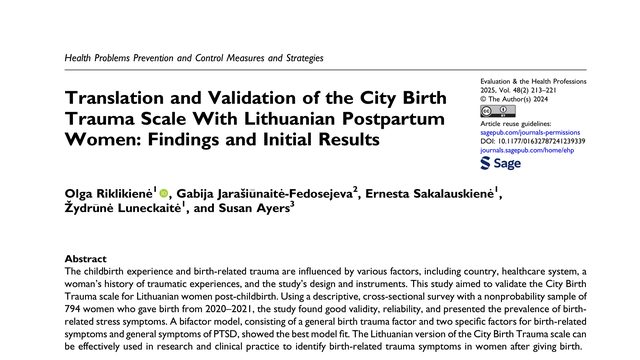
Olga Riklikienė, Gabija Jarašiūnaitė–Fedosejeva, Ernesta Sakalauskienė, Žydrūnė Luneckaitė, Susan Ayers
Childbirth is expected to be one of life’s most meaningful events, yet for some women it becomes psychologically traumatic. This study asks a practical question: can a short questionnaire reliably recognize that hidden distress in Lithuania?Childbirth can be psychologically traumatic for a substantial share of women, yet Lithuania had no validated measure for birth-related PTSD and stress symptoms. This study tests whether one established scale can work in Lithuanian language and culture.
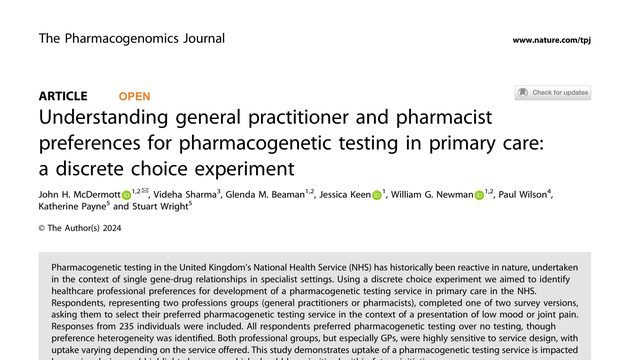
John McDermott, Videha Sharma, Glenda M. Beaman, Jessica Keen, William G. Newman, Paul Wilson, Katherine Payne, Stuart Wright
A genetic test can promise safer, more effective prescribing—but this study found that whether clinicians use it may depend just as much on how the service is built as on the test itself.What if clinicians like the idea of pharmacogenetic testing, but the way results are delivered determines whether they would actually use it? This study tests that question directly with GPs and pharmacists.
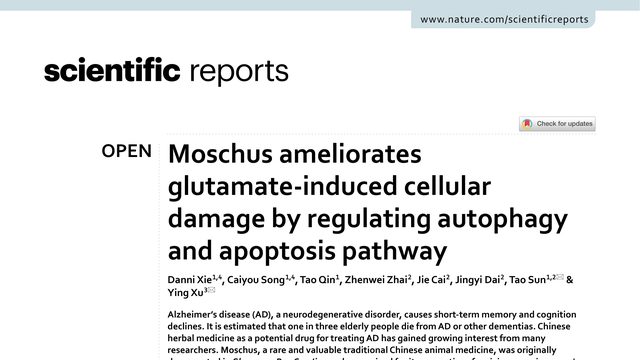
Danni Xie, Caiyou Song, Tao Qin, Zhenwei Zhai, Jie Cai, Jiyan Dai, Tao Sun, Ying Xu
A traditional animal medicine appeared to protect nerve-like cells from a chemical stress linked to brain damage. But the important clue was not simply that more cells survived—it was how the cells’ own cleanup and self-destruction systems changed.What happens when a traditional animal medicine meets a chemical model of Alzheimer’s-related cell injury? In this study, Moschus reduced several signs of glutamate damage in cultured PC12 cells.
 3:37
3:37