Cultural tightrope walkers: a qualitative study of being a young refugee in quest for identity and belonging in Norway
In depth9:49CCAI
paperi.ai
0:00 / 0:00
Per‐Einar Binder, Hanna Heggen, Elisabeth Buer Vase, Gro Mjeldheim Sandal
What happens when belonging to one culture does not cancel out belonging to another? This study finds that young refugees in Norway can feel like outsiders in both worlds, yet that tension can also create a uniquely open perspective.
Background Refugee experiences significantly challenge personal identity, especially for youth orienting themselves in new cultural contexts. The study explores the complex process of balancing expectations from two cultures: how do formative encounters in Norway mold the self-perception and sense of belonging of those who arrived as child and adolescent refugees? Methods A qualitative approach in which life story interviews were conducted with eight young refugees who arrived in Norway between the ages of 8 and 17 years was used. Through thematic analysis grounded in hermeneutical phenomenology, we analyzed their narratives to identify core experiences and perspectives. The interviews lasted 90–150 min, providing insights into personal identity development amid cultural adaptation. Results A recurring and overarching theme is that participants grapple with feelings of “outsiderness” both in Norwegian society and within their culture of origin, creating a dual sense of alienation. This experience is painful, but they also perceive that it has given them the opportunity to develop open-mindedness and a unique perspective on cultural existence. Three subthemes were identified that describe various aspects of these narratives in greater detail: (1) Experiences of being a stranger; (2) value conflicts, but value reconciliation is possible; and (3) a unique perspective: navigating between two cultures. The narratives highlight the complex negotiation between maintaining heritage and adapting to Norwegian norms. Conclusions The study of participants’ narrative identities reveals ways of coping with these transitions, revealing how participants continuously reconstruct their self-narratives to adapt to their new cultural environment. The findings suggest that while acculturation is a challenging process characterized by psychological tension and existential vulnerability, it can also foster personal resilience and new opportunities for meaning-making. The research contributes to understanding the refugee experience in Norway, emphasizing the need for social support systems that acknowledge both the struggles and potential for growth inherent in cultural integration.
Transcript
What happens when belonging to one culture does not cancel out belonging to another? This study finds that young refugees in Norway can feel like outsiders in both worlds—yet that tension can also create a uniquely open perspective.
Refugee experiences significantly challenge personal identity, especially for youth orienting themselves in new cultural contexts. The study explores the complex process of balancing expectations from two cultures. More specifically, formative encounters in Norway are examined for how they mold the self-perception and sense of belonging of those who arrived as child and adolescent refugees.
Refugee experiences undoubtedly test a person’s identity. Fleeing one’s home country necessitates both recreating one’s self-narrative and establishing continuity with what has been. Being a refugee involves more than physically relocating from one place to another—it affects all aspects of a person’s life.
The experience of fleeing is a critical disruption in people’s lives that impacts the construction of personal autobiographies and identities. The four acculturation strategies described by Sam and Berry— integration, assimilation, separation, and marginalization—represent different approaches to balancing one’s heritage culture with the host culture.
Integration involves maintaining aspects of one’s original culture while also adopting elements of the new culture. Integration is generally associated with the most positive mental health outcomes. This strategy allows individuals to retain a sense of cultural continuity while also developing the skills and connections necessary to thrive in their new environment.
This study aims to uncover the pivotal experiences that shape the identities of young refugees as they navigate life in Norwegian society. The specific question is how formative encounters in Norway mold the self-perception and sense of belonging of those who arrived as child and adolescent refugees.
Eight individuals—four women and four men—were recruited for the study. The youngest participant was 21 years old, whereas the oldest was in the middle forties. The participants arrived in Norway between the ages of 8 and 17 years and lived in the country for 13 to 30 years.
All participants were assigned pseudonyms. Table One profiles the study’s eight participants by pseudonym, age at arrival in Norway, current age, and region of origin. Ages at arrival range from eight to seventeen, while current ages range from twenty-one to forty-five; the table also shows origins spanning Central Africa, the Middle East, South East Asia, Central Asia, and East Africa.
This context matters because the authors use qualitative, life-story interviews to explore how participants make meaning of lived experiences across migration and adulthood. Five interviews were conducted digitally via Zoom, and three interviews were conducted physically in locations where privacy was safeguarded.
The interviews lasted from 90 to 150 minutes, and participants varied in storytelling style, rhythm, and verbal fluency. The interviews were allowed to last as long as each participant felt needed to explore their life stories. A short conversation was invited approximately two weeks after the main interview; five such conversations were held, while three participants did not want one.
The interviewer began by asking interviewees to provide an overview of their lives, conceptualizing life as if it were a book or novel and dividing it into chapters with a brief plot summary for each. Interviewees then focused on key events that were particularly memorable or important in their life stories, including a high point, a low point, and a turning point.
For each scene, interviewees described what happened, who was present, what they were thinking and feeling, and how the scene was resolved. They also reflected on what each scene revealed about them and about their life story. Two added questions explored how coming to Norway as a refugee, and belonging to two cultures, might affect a person’s beliefs and values.
A qualitative method was employed to preserve the thematic content of the interviews and allow exploration of nuanced meaning-making in participants’ life stories. The explorative-reflexive thematic analysis was grounded in hermeneutical phenomenology as an epistemological framework.
The approach emphasized exploring participants’ concrete lived experiences while acknowledging their symbolically mediated prenarrative quality. A recurring and overarching theme is that establishing personal identity and a sense of belonging involves actively finding ways to relate to contrasts and differences in norms and values between groups.
Participants often had to manage experiences of outsiderhood both in relation to the majority culture and their own. This experience is painful, but participants also perceive that it has given them the opportunity to develop open-mindedness and a unique perspective on cultural existence.
Three subthemes were identified: experiences of being a stranger; value conflicts, but value reconciliation is possible; and a unique perspective: navigating between two cultures. Several participants described conflicts between values and norms in their countries of origin and Norway.
These conflicts often revolve around the freedom to choose one’s own path and break with traditional norms and expectations. Participants expressed challenges and conflicts related to wearing the hijab, family expectations, and individual rights, often tied to gender roles, particularly for women.
Many participants experience tension between the desire for personal freedom to choose relationships and affiliations and the need to respect and preserve relationships with their families and cultural backgrounds. This freedom, although often at great personal cost, provides opportunities to explore and develop their own identities and values in a society that values individual autonomy.
While encountering new ideals of freedom has been costly for many, it is also praised. Participants described gaining new opportunities, freedom to break from religion, and choices in education, work, partners, and residence.
Vince admires ideals in Norwegian society, and today both he and his family have more educational and career opportunities. He proudly stated, “We are doing well. They, the children, will also grow up in a society where they have rights.
That means everything; no one should dump us.” Reconciling values from different cultural communities is a challenging and painful process. When participants manage to reconcile different values, they find that their lives are enriched with a broader perspective.
This can lead to greater personal satisfaction, improved relationships, and more opportunities both socially and professionally. The participants’ life stories show how formative encounters in Norway mold their self-perception and sense of belonging through experiences that intersect feelings of strangeness and opportunity.
These experiences are organized through three central themes: outsiderness in both the new culture and the culture of origin, conflicts and reconciliations of values, and the unique position of navigating between two cultures. This triangulation of themes highlights the complexity of acculturation processes and the accompanying psychological and social struggles.
The second theme, “There will be value conflicts, but value reconciliation is possible,” concerns the tension between the collectivist values of refugees’ countries of origin and the individualistic values of Norwegian society. This tension creates emotional and social challenges for the participants.
Despite the difficulties, the reconciliation process can lead to personal growth and a deeper understanding of themselves. However, the psychological toll is significant, and for some, the process involves deep pain, especially in relation to family and cultural ties.
In the final theme, “A unique perspective: Navigating between two cultures,” participants expressed that bicultural existence presented opportunities despite considerable internal conflict. This dual perspective allows them to gain unique insights into both cultures and can be a source of narrative identity that fosters resilience.
This position often comes with the psychological burden of marginalization, and younger immigrants may face greater identity dissonance. Participants often feel as though they are “cultural tightrope walkers,” a metaphor that captures the existential tension they endure.
The researchers all have backgrounds from the Norwegian majority population, which may have resulted in the Norwegian cultural voice of participants being more prominently expressed in interviews and data interpretation. Throughout the interviews and analysis, this commonality was used as a shared platform to explore and invite aspects of participants’ experiences that were not as clearly rooted in Norwegian culture.
The central takeaway is that cultural adaptation is painful and psychologically demanding, but navigating two cultural worlds can also support resilience, broader perspectives, and new possibilities for meaning-making.
A derivative work by Paperi · AI-generated script, voice and captions
· pages and figures unaltered
Made with Paperi.
Drop in a research PDF — get a narrated video walkthrough like this one,
with highlights that follow the narration. Free to start.
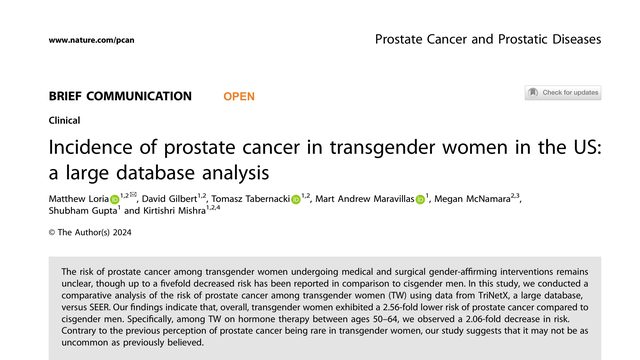
Matthew Loria, DAVID R. GILBERT, Tomasz Tabernacki, Mart Andrew Maravillas, Megan Ann McNamara, Shubham Gupta, Kirtishri Mishra
For transgender women, gender-affirming surgery does not remove the prostate. This study finds prostate cancer is less common than in cisgender men, but still common enough that it cannot simply be ignored.The prostate remains after gender-affirming surgery, so prostate cancer risk does not disappear. Yet the incidence in transgender women has been poorly understood, and this large analysis finds lower risk, but not zero risk.
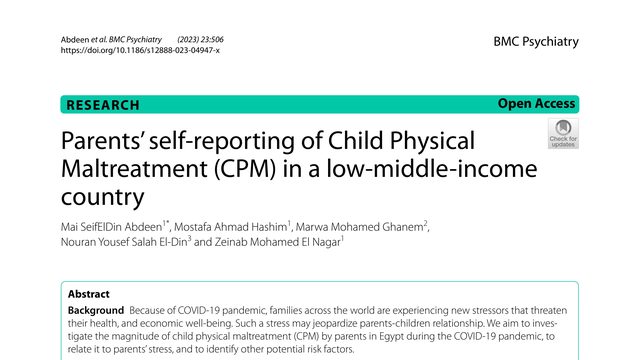
Mai SeifElDin Abdeen, Mostafa Ahmad Hashim, Marwa Mohamed Ghanem, Nouran Yousef Salah, Zeinab Mohamed El Nagar
During the pandemic, official reports of child harm went down, but that did not necessarily mean children were safer. A survey of Egyptian parents found a much darker picture inside the home.During the COVID-19 pandemic, official reports of child maltreatment went down even as concerns about risk went up. This study asks parents directly what happened inside Egyptian homes.
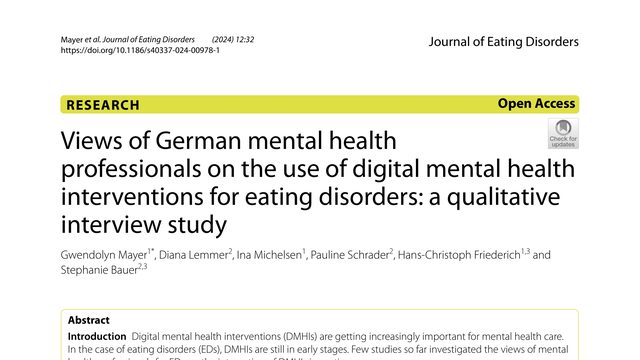
Digital tools could make eating-disorder support easier to reach, but the professionals in this study did not see an app replacing therapy. They saw something more careful: digital help working alongside a human relationship.Digital tools may make eating-disorder care easier to reach, but therapists do not see them as a replacement for treatment. Their strongest support is for carefully targeted tools added to an existing therapeutic relationship.
 4:07