Cultural tightrope walkers: a qualitative study of being a young refugee in quest for identity and belonging in Norway
Overview2:44CCAI
paperi.ai
0:00 / 0:00
Per‐Einar Binder, Hanna Heggen, Elisabeth Buer Vase, Gro Mjeldheim Sandal
Imagine growing up with one set of expectations at home and another outside, and feeling like a stranger in both places. This study finds that painful position can also become a source of unusual strength.
Imagine growing up with one set of expectations at home and another outside—and feeling like a stranger in both places. This study finds that painful position can also become a source of unusual strength. Refugee experiences can deeply challenge a young person’s identity, especially while learning how to live in a new cultural setting.
The central question is how important experiences in Norway shape the self-understanding and sense of belonging of people who arrived as children or teenagers. The life stories point to a difficult balancing act. Building an identity and a sense of belonging means finding ways to live with differences in the rules and values of the groups they belong to.
People must actively find ways to relate contrasting norms and values between the groups to which they belong, rather than treating those differences as irrelevant. Their narratives include value conflicts, while also showing that reconciliation is possible, as they navigate between two cultures.
That struggle often includes feeling like an outsider both in the wider society and within one’s own culture. Bringing values from different cultural communities together is difficult and painful. When people do manage to bring those values together, they describe their lives as gaining a broader perspective.
That broader perspective can support greater personal satisfaction, better relationships, and more opportunities in social and working life. Living between two cultures brings considerable inner conflict, but it also creates opportunities.
Seeing both cultures from the inside can give people unusual insight into each one, and this can help support resilience. The participants often feel like cultural tightrope walkers, a picture of the deep tension they endure. The painful work of bringing different values together can therefore become more than a compromise, because reconciliation may enrich people’s lives with a broader perspective.
When that work succeeds, the broader perspective can open more possibilities in relationships, social life, and professional life. The researchers also recognize that their own backgrounds in Norway’s majority population may have made the Norwegian cultural voice more prominent in the interviews and interpretation.
They say they tried to use that shared background as a starting point for inviting experiences that were less clearly rooted in Norwegian culture. For young refugees, belonging is not simply choosing one culture over another.
Support matters because holding both worlds together can hurt, but it can also create wider understanding, stronger relationships, and new possibilities.
A derivative work by Paperi · AI-generated script, voice and captions
· pages and figures unaltered
Made with Paperi.
Drop in a research PDF — get a narrated video walkthrough like this one,
with highlights that follow the narration. Free to start.
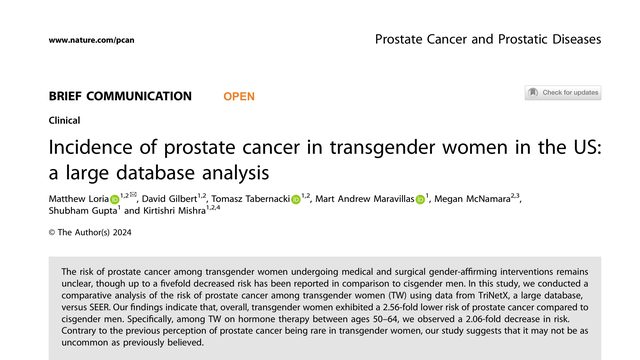
Matthew Loria, DAVID R. GILBERT, Tomasz Tabernacki, Mart Andrew Maravillas, Megan Ann McNamara, Shubham Gupta, Kirtishri Mishra
For transgender women, gender-affirming surgery does not remove the prostate. This study finds prostate cancer is less common than in cisgender men, but still common enough that it cannot simply be ignored.The prostate remains after gender-affirming surgery, so prostate cancer risk does not disappear. Yet the incidence in transgender women has been poorly understood, and this large analysis finds lower risk, but not zero risk.
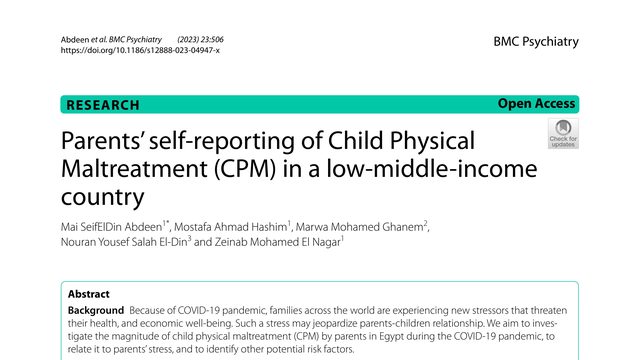
Mai SeifElDin Abdeen, Mostafa Ahmad Hashim, Marwa Mohamed Ghanem, Nouran Yousef Salah, Zeinab Mohamed El Nagar
During the pandemic, official reports of child harm went down, but that did not necessarily mean children were safer. A survey of Egyptian parents found a much darker picture inside the home.During the COVID-19 pandemic, official reports of child maltreatment went down even as concerns about risk went up. This study asks parents directly what happened inside Egyptian homes.
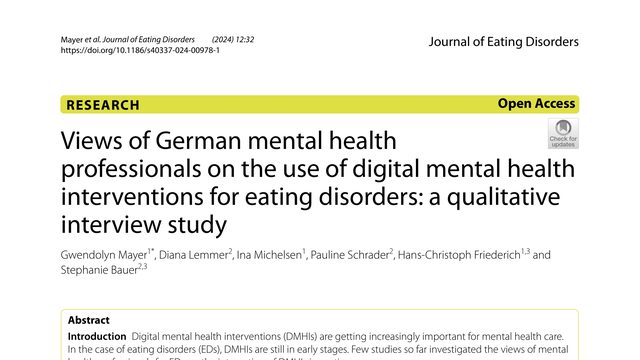
Digital tools could make eating-disorder support easier to reach, but the professionals in this study did not see an app replacing therapy. They saw something more careful: digital help working alongside a human relationship.Digital tools may make eating-disorder care easier to reach, but therapists do not see them as a replacement for treatment. Their strongest support is for carefully targeted tools added to an existing therapeutic relationship.
 4:07