Assessment of Hygiene Management Practices and Comparative Analysis of Regulatory Frameworks for Shared Kitchens across Different Countries
Curious3:58CCAI
paperi.ai
0:00 / 0:00
Yu Jin Na, Jin Young Baek, So Young Gwon, Ki Sun Yoon
A kitchen shared by many food businesses might sound like a recipe for contamination. But this study found that the more openly some kitchens were shared, the cleaner and safer they were.
Shared kitchens, where users share kitchen space, are becoming popular worldwide due to the economic cost savings of startup businesses. This study conducted monitoring of microbial and chemical hazards from prepared foods and the environment of shared kitchen facilities, sur-veyed shared kitchen operators, and compared shared kitchen regulations between Korea and other countries. The monitoring results indicate that the hygiene status of the facilities and the microbial and chemical hazards in the prepared foods were all within the standard specifications, showing significantly lower levels compared to regular restaurants (p < 0.05). In particular, concurrent-use and time-division types of open shared kitchens showed significantly lower levels of both hazards than separated-individual kitchens. Survey results of hygiene inspection also confirmed better hygiene management in concurrent-use and time-division types of open shared kitchens in Korea. However, more frequent cleaning and disinfection, hygiene inspections, and training are high economic burdens in the operation of shared kitchens compared to regular restaurants. Moreover, mandatory insurance subscriptions, the operator’s responsibility in hygiene-related incidents, and high operational costs collectively challenge shared kitchens’ competitiveness in the food service market. Critical reassess-ments of regulations utilizing the benefits of shared kitchens are needed to promote a safe dining culture and the growth of shared kitchen startup businesses.
Transcript
A kitchen shared by many food businesses might sound like a recipe for contamination. But this study found that the more openly some kitchens were shared, the cleaner and safer they were. Shared kitchens let food businesses share equipped space and property, reducing startup costs and providing efficient production spaces.
They are also seen as business incubators that help new entrepreneurs overcome the burdens of starting a business and move toward independence and success. In the United States, the average initial startup cost is much lower for a shared kitchen focused on takeout and delivery than for a restaurant.
That promise creates a safety question: can a shared kitchen remain clean when different businesses use it? The study set out to investigate shared kitchens in Korea. It also assessed possible biological and chemical hazards in prepared foods and kitchen environments, then examined overseas models for ways to improve the system in Korea.
The key idea is easier to picture as a library. Some kitchens let several businesses use the same room at the same time, while others schedule different users at different times. A third arrangement gives each business its own kitchen but keeps storage areas and hallways shared.
The kitchen environments contained no detected food-poisoning pathogens, yeast, or mold, regardless of the shared-kitchen type. Very low levels of other bacteria were detected in most environments, although contamination differed by kitchen type. The lowest levels were detected in kitchens where several businesses used the kitchen at the same time.
The prepared foods contained no detected food-poisoning pathogens, and coliforms and E. coli were also not detected except in two quinoa salads. Salads had the highest bacterial levels, while bread and snack items had very low levels.
The study suggests that ready-to-eat foods such as salads have higher contamination because they receive little special processing beyond washing. Some pesticide residues and heavy metals were detected in the two quinoa salads, while no preservatives were detected in the cheesecake and plain scone and no total aflatoxin was detected in the peanut butter cookies.
Among the pesticide residues examined, only four were detected in the quinoa salads. The amount of one residue in salads sold through shared kitchens was about one two-hundredth of the amount reported in earlier work. The rules do not line up across countries.
In Korea, shared kitchens do not always need the food-safety certification system, but products in categories that require certification must receive it. In the European Union, liability insurance is recommended rather than mandatory, unlike in Korea.
The main comparison was striking: kitchens where businesses shared an open space, either at the same time or in shifts, had significantly lower microbial and chemical hazards than kitchens with separate individual rooms. Hygiene inspections also found better management, workplace conditions, and compliance in open shared kitchens than in separated kitchens.
But safety has a cost. Operators reported that frequent cleaning and disinfection, shorter inspection cycles, and regular hygiene training create economic burdens. The comparison of overseas rules suggests that both operators and users must share responsibility for food safety.
The study therefore points toward simpler, more practical rules, including smaller-scale safety systems, simpler and more consistent menus, and business models that can support shared kitchens in Korea. Shared kitchens can be safe, and in some arrangements safer than separated ones.
The challenge is making cleaning, training, responsibility, and regulation affordable enough to keep that safety in place.
A derivative work by Paperi · AI-generated script, voice and captions
· pages and figures unaltered
Made with Paperi.
Drop in a research PDF — get a narrated video walkthrough like this one,
with highlights that follow the narration. Free to start.
Christian Leischner, Luigi Marongiu, Alban Piotrowsky, Heike Niessner, Sascha Venturelli, Markus Burkard, Olga Renner
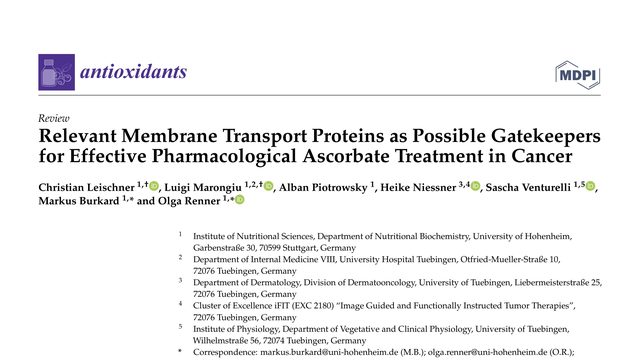
Vitamin C may help attack some hard-to-treat cancers—but the decisive question may be whether the cancer cell has the right doorways to let the treatment in. This review explains why those doors could guide treatment choices.High-dose vitamin C may not attack cancer cells simply by acting as an antioxidant. This review argues that membrane transport proteins could decide whether ascorbate, hydrogen peroxide, and iron enter the tumor cell—and whether oxidative damage becomes lethal.
Beaula Mutonhodza, Christopher Chagumaira, Mavis Precious Dembedza, Edward J. M. Joy, Muneta G. Manzeke‐Kangara, Handrea Njovo, Tasiana K. Nyadzayo, R. M. Lark, Alexander Kalimbira, Elizabeth H. Bailey, Martin R. Broadley, Tonderayi M. Matsungo, Prosper Chopera
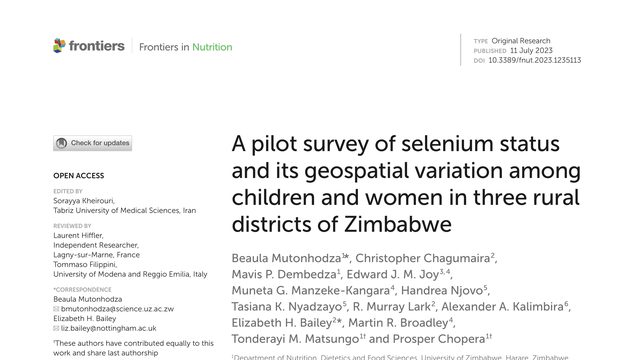
A hidden shortage of a tiny mineral may affect nearly every young child tested in three rural districts of Zimbabwe. And the risk is not spread evenly: where a family lives appears to matter.What if a nutrient deficiency was widespread across rural communities, yet still changed sharply from one district to another? This pilot survey maps selenium status in Zimbabwean children and women—and finds an especially serious risk among children.
Hao Liang, Chuang Xiong, Yuangang Luo, Jun Zhang, Yanran Huang, Runhan Zhao, Nian Zhou, Zenghui Zhao, Xiaoji Luo
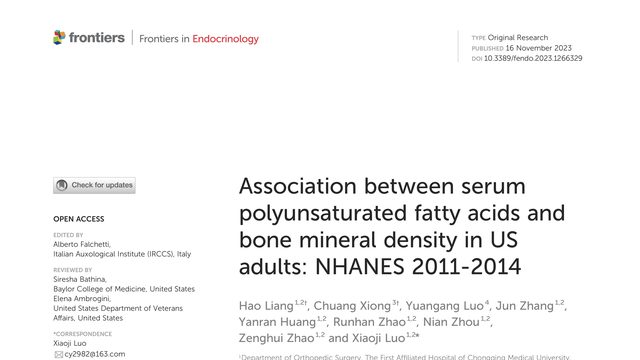
Could the fats circulating in your blood be connected with how strong your bones are? This study found one fat linked with denser bone in some places—but another linked with lower density elsewhere.Could a fatty acid in the bloodstream be associated with bone density—and could that relationship change depending on which part of the skeleton is measured? This study finds different patterns for different fatty acids and bones.
 5:37
5:37